Schools
UC Berkeley Program Trains New Breed of School Administrators
Administrators at Lupine Hills, Hanna Ranch, Hercules Middle and Hercules High are among those trained at the innovative Principal Leadership Institute.
There’s a dropout problem in schools that you don’t hear much about. In this case it isn’t the students who sometimes give up, but the principals. An administrator training program at UC Berkeley that works closely with the West Contra Costa, Berkeley, Oakland and San Francisco school districts has graduated 450 students in the past 11 years. Excluding retirements, only one has left education. Most are still working as principals and in other academic leadership posts. A few are teaching.
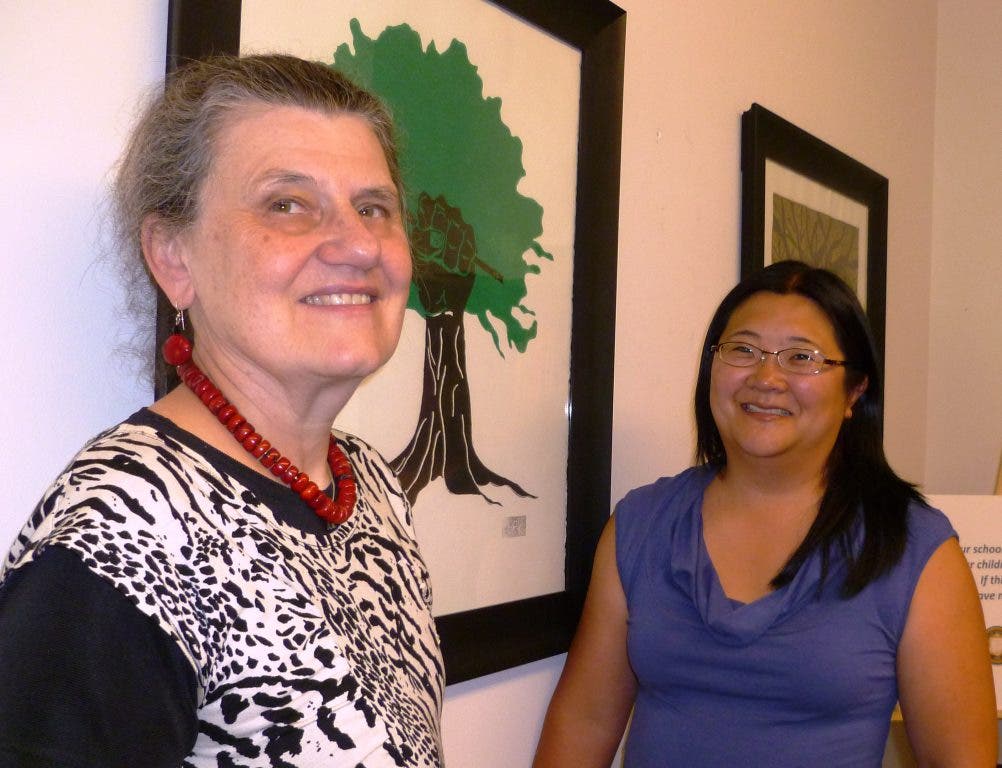
The retention data, said Lynda Tredway, is evidence that the Principal Leadership Institute is giving its students the training they need to be successful. Tredway is stepping down this summer after having served as the institute’s academic coordinator since its inception in 2000.
What the program doesn’t offer is one-size-fits-all quick fixes.
Find out what's happening in Pinole-Herculesfor free with the latest updates from Patch.
“There’s not one formula for reform. Because it worked in Texas doesn’t mean it will work here. Because something worked in Chicago that doesn’t mean it will work here,” said Linda Takimoto, who will take over as principal of Harding Elementary School in El Cerrito in the fall after completing the institute’s program this summer.
She is one of many PLI graduates working for the West Contra Costa Unified School District. Others include Hanna Ranch Elementary Principal Greg Santiago, Hercules High Assistant Principal Guthrie Fleischman, and Hercules Middle School Vice Principal LaDonna Williams. Incoming Lupine Hills Elementary Principal Cynthia Taylor is currently completing the program.
Find out what's happening in Pinole-Herculesfor free with the latest updates from Patch.
What the students in the program are taught, said Takimoto, is to be critical thinkers.
“When you give a PLI graduate a problem, they don’t just have one answer,” said Tredway. They will come up with several and do so by encouraging, not quelling, differences of opinion and working collaboratively with others in the school community to solve a problem, she said.
West Contra Costa Superintendent Bruce Harter is quoted on the institute’s website as saying, “The Principal Leadership Institute is the best preparation program I've seen anywhere, and I've been a school administrator in eight states.”
“We’re preparing them to deal with issues of race and class, to improve academic rigor and instruction, to lead a change process,” said Rebecca Cheung, who is taking over the coordinator role from Tredway after working in Berkeley and Oakland schools for 15 years.
A big factor in the program’s success, said Tredway, is its involvement with its students throughout their careers, from seeking applicants who share a commitment to making all students successful through continuing a close relationship with its graduates once they have completed the 14-month program.
The program encourages its students to use data but doesn’t just concentrate on a few highly publicized numbers from the state. The data might not even be numbers but might also include teacher observations, which could then be confirmed with further investigation. It may also involve looking at how two sets of statistics, such as attendance data and academic performance, relate.
The program involves a lot of role playing, simulations and case studies. Students might simulate different interactions that could occur with parents or teachers or be given a hypothetical profile of a school and be asked to identify areas for improvement and possible solutions. Students also practice giving presentations, including using data effectively to make a point. Work is often videotaped, then analyzed by the PLI student and classmates.
“A lot of the work is interpersonal,” said Cheung. ”It’s not just structural or organizational, like changing the bell schedule or moving rooms. It’s all people-based.” While teachers interact primarily with students, most of an administrator’s interactions are with adults, primarily teachers and parents, she noted.
In keeping with her PLI training, Harding Elementary's Takimoto said her first job as a new principal will be to learn about the community.
Being a principal can be isolating, but the institute aims to mitigate that both through encouraging its graduates to collaborate with teachers, parents, and others in their own school community and by facilitating a career-long connection to the program and other graduates.
“There were times earlier in my career when I felt that the last thing I wanted to be was a principal,” said Takimoto. “It’s my nature to work with people. I like shared decision-making and collaboration. I loved that as a teacher.”
A commitment to social justice that transcends a particular job assignment, Tredway said, also helps sustain the institute’s graduates. “It connects them to a larger vision,” she said.