Politics & Government
Meet Carin Elam, Candidate For California's 14th Congressional District
Patch reached out to all CA-14 candidates to hear about their ideas for the district.


PLEASANTON, CA — Patch reached out with identical questions to all candidates to represent California's 14th Congressional District, which comprises Hayward, Pleasanton, Livermore, Union City, Castro Valley, and parts of Dublin and Fremont. It was represented by Eric Swalwell, but is currently vacant after he resigned in the midst of a sexual abuse scandal.
A special election to replace Swalwell until January 2027 will take place Aug. 18. To be included in that election, candidates must file separately and participate in a primary on June 16.
The primary for the permanent seat will take place June 2, as planned.
Find out what's happening in Pleasantonfor free with the latest updates from Patch.
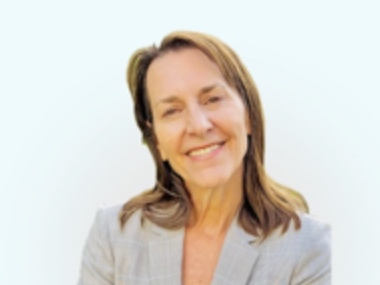
Here are the answers from Carin Elam, a health care consultant and political activist. Responses have not been edited.
Can you briefly describe your background, including your professional experience, public service, and connection to the district?
Find out what's happening in Pleasantonfor free with the latest updates from Patch.
My husband and I have lived in Pleasanton since 2010, raising my boy/girl twins. The twins attended Pleasanton schools, swam on local rec team, played soccer, participated in city-run summer camps, and joined YMCA programs. I volunteered in the classroom, served as team mom, and volunteer whenever possible while working full time.
Prior to moving to Pleasanton, I grew-up in the East Bay, graduating from Antioch High. I earning an life-changing academic scholarship to Barnard College, Columbia University - neither of my parents graduated college. I studied Political Economy then began a long career with Andersen Consulting (now Accenture) from their New York, Chicago, and San Francisco offices. Every week, I was on the road, working directly with healthcare clients throughout the country. I was both in the hospitals and health insurance companies. I saw both sides of payer/provider relationship. I saw firsthand caregivers working hard to deliver quality care, but also witnessed insurance companies that prioritize shareholder value over affordability.
After 2016 election losses, I was inspired to work in politics. In 2018, I returned to university to get a Master’s in Governance, researching the use of voter suppression tactics to swing elections. Following graduation, I began working for a nonprofit that registered military and overseas voters. I also founded my own not-for-profit that promoted Democratic Women running for U.S. House and U.S. Senate seats. During this time, my daughter was diagnosed with a retinal disease that leads to blindness. As a result, after the 2020 election, I shifted from my political endeavors to working for a major blindness nonprofit in San Francisco. During those three years, I led Development (Fundraising & Donor Outreach), then Workforce and Business Development. The nonprofit runs a Bay Area manufacturing facility that employs blind and low vision individuals who live in the District. These co-workers used public transportation to get to/from work, but commutes would take hours due to the ‘last mile’ problem (i.e., not having reliable bus service connecting work to BART, then getting from BART to home). Having lived in New York City, Chicago, Holland, I’ve regularly used good public transportation. Here in the Bay, it’s surprising that so many transportation deserts exist.
What makes you the best candidate for this seat?
The chaos of the moment has created tremendous uncertainty. Voters want to plan for their families, their work, and their businesses. They’re concerned about the future. And, they want something more than a fighter who talks about policy - they want results. I’ve done this my entire career. For more than 25 years, working healthcare clients, business leaders, and nonprofits. I’ve walked into countless uncertain situations, such as working with overworked hospital employees, understanding their issue, then working together to design a solution. My work doesn’t stop with design, it’s continued with writing policies, training, and communicating each step of the way.
To ensure success, the most important job was securing support from all levels. It involved building deep relationships that lead to trust over time. I will use these same skills to reach across the aisle and find common ground, and common sense solutions. I will not get stuck on idealogical positions that become talking points for every election cycle. Examples of reaching across the aisle include John McCain saving the Affordable Care Act, Ro Khanna & Thomas Massie leading the charge to pass the Epstein Transparency Act, CHIPS & Science Act, and, more recently, joint resolution ending a tariff tax on Canadian goods (signed April 2, 2026). Bipartisan solutions are lasting solutions.
What are the biggest challenges facing the 14th district, and how do you plan to address them?
High cost of everything is the biggest challenge. Gas, groceries, insurance, and rent continue to rise. This is not new to California, but it’s intensified in recent years. The current Administration is making it worse. The war increased energy prices, Trump’s tariffs placed a new tax on nearly everything, and executive orders ended tax incentives (that had just been negotiated in the prior administration) for solar, solar batteries, EV cars, and large-scale energy projects. Once in the House, I will vote against funding the war efforts in the middle east, and fight to restore tax incentives for independent energy capture, EV cars, and large-scale energy projects. In general, I will co-sponsor any legislation that allows homeowners and renters the ability to capture and store their own energy needs, decreasing reliance on the grid.
To address high cost of health insurance, We need to eliminate perverse profit incentives in the system. While living overseas, I was diagnosed with breast cancer. I used Dutch healthcare for treatment. Care was excellent. My monthly premium was $135 and out of pocket was less than $800. The reason: written into Dutch law, “healthcare cannot have a profit incentive”. To get there, I will look at everything that is not directly involved in the delivery of patient care. I will co-sponsor legislation that gradually expands Medicare, adding younger, healthier enrollees who pay a higher premium for their coverage. It will not be free but more affordable. It will not end private insurance or the ACA exchange but offer options. Options equals competition. Competition traditionally lowers prices.
Home and auto insurance pricing needs to be investigated. Most pay premiums but never use because insurance companies severely penalize those who actually file a claim, either by dropping coverage or dramatically increasing rates. It’s essentially evolved into catastrophic coverage. This is unsustainable.
District 14 has recently made national headlines. What do you think voters are most concerned about, and how would your leadership address that?
Although the Democratic Party acted quickly in calling for Congressman Swalwell to end his gubernatorial campaign, as well as resign from office, voters are most concerned about reporting that this was an open secret in some circles. Voters would like to understand why he received key endorsements, and why he wasn’t pressured to resign from Congress earlier. Voters want transparency and trust in their leaders.
Today, as a candidate, I’m walking the district and showing-up to events whenever possible - from events at the Livermore rodeo to city bike rides in Hayward, raising awareness about safer streets. I’m listening to voters, especially those who disagree. I’m considering all ideas in forming my policy positions, If elected, I will represent the entire District, and strive everyday to regain trust.
Do you plan to run in the special election?
Last weekend, I was approached, like all other candidates, to discuss the running of a single Democratic candidate, a caretaker, one who could win in a first round of voting on June 16. To immediately fill the seat, one candidate needs to win more than the 50%. For the good of the District, to ensure that we had representation as soon as possible, I was one of the seven who agreed to sign. One candidate refused to sign. Now, we move forward with a messy, more costly process. I don’t believe that I’ll run but I have until 5 PM tomorrow to make a final decision.
Outside of politics, what do you enjoy doing?
I love spending time with family, hiking, cycling, volunteering, and working in my yard.
Please provide any links you’d like to share.
Get more local news delivered straight to your inbox. Sign up for free Patch newsletters and alerts.