Seasonal & Holidays
More Than Faded Memories, a Fate She Cannot Avoid: Alzheimer's and My Mother
Alzheimer's is the only leading cause of death in this nation that is not preventable or curable. Three editors, three memories, one cause.

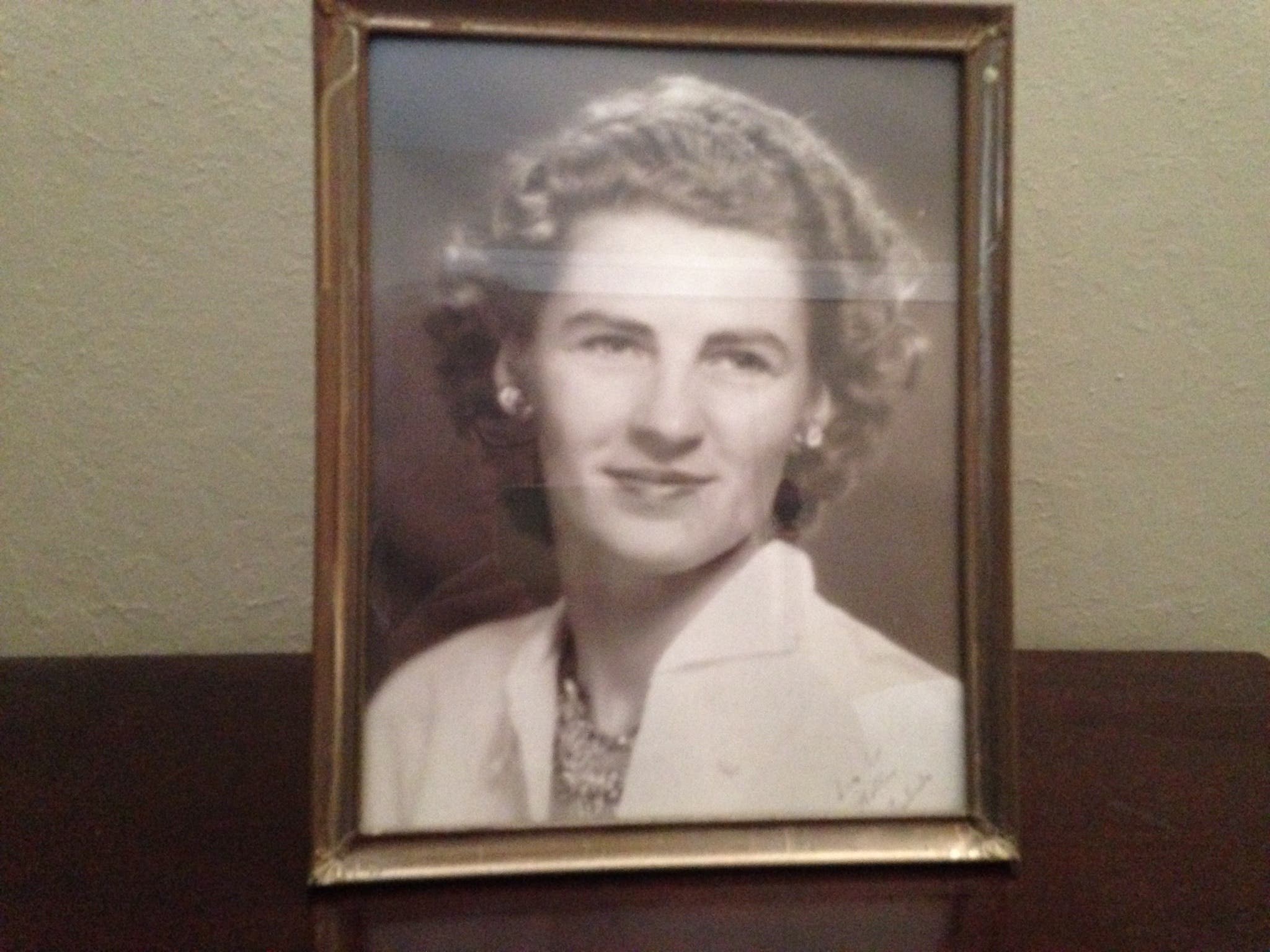
Thanksgiving is all about traditions and memories. Gathering in the kitchen to help prepare the sage dressing. Arguing about whether it’s “dressing” or “stuffing.” The aroma of roasting turkey, the laughter of family members, cheering for touchdowns. The same family favorites shared year after year, until the years turn into decades.
Thanksgiving will be low-key for us this year. A quiet household where the only memories my 86-year-old mother shares are from her childhood in the 1930s. She doesn’t remember my childhood, or my children’s. My mother has Alzheimer’s disease.
Find out what's happening in Pleasantonfor free with the latest updates from Patch.
I cried the first time I went to the Alzheimer’s Association office to get information about the disease. No, I sobbed. Those deep, uncontrollable sobs that you feel in your soul. As I worried about my mother forgetting minor details about our family vacations, the counselor had bigger things to share. Such as telling a “little white lie” to my mother if she asks where my late father is--that telling someone with Alzheimer’s that their spouse/parent/sibling is no longer living hits them with the same impact as if they’re first learning of the loss.
I was also advised that people with Alzheimer’s retain memories better when they remain in homes they’ve been in for decades. Every room, every piece of furniture holds a memory. And then there’s muscle memory--a patient who says during the day, “I want to go home,” referring to the home they left seven decades before, will awaken during the night and walk straight to the bathroom without assistance because their bodies remember the way even if they’re not consciously thinking, “Where’s the bathroom.”
Find out what's happening in Pleasantonfor free with the latest updates from Patch.
This was good news for my mother, who has lived in the same home since 1958. I lived in Colorado at the time, in the home where my husband, children and I moved when my daughter was three and my son was an infant. Mom lived in California. Heart-bearing conversations followed with my husband. Our daughter had graduated from college and moved to Texas. Our son was a senior in college in Arizona. We decided that our empty nest would shrink by one more--I would move to California to care for my mother while my husband remained in Colorado. He was too close to retirement age to quit his job and move to California where, at the time, the unemployment rate was still over 10 percent. We needed his paycheck and health insurance. Thank goodness for Skype.
Our decision was unusual, but we’re not alone in making sacrifices. Care giving is tough. It is emotionally draining. It is isolating. An estimated 5.3 million Americans have Alzheimer’s in 2015. Such a small number for such a devastating impact.
Without fail, when I tell someone that my mother has Alzheimer’s, they tell me stories about their own parent or grandparent who also suffered from the disease. Alzheimer’s is 100 percent fatal. Dementia is the most well-known symptom, but not the only one. The victim’s brain physically shrinks. Since the brain is the body’s control center, the impact on the body’s systems--from movement to digestion to breathing--gradually increases. I can’t even think about what the future holds. I can only take one day at a time and find the strength I need to deal with the challenges in front of me.
Autumn’s Family
I consider myself incredibly lucky to work for Patch, a work-from-home job that keeps my mind busy. Other Patch editors have also experienced Alzheimer’s in their families. Autumn Johnson, also in California, watched the disease claim her grandmother:
“My grandmother’s Alzheimer’s was a part of our life for a long time before she started to completely forget names and words for everyday items around the house. She would actually tell people she was ‘dumb.’ She got confused very easily and would wander, constantly losing her belongings and often tripping and falling. The grandma who had always been so sweet and kind took to using profanity and at times became combative. During one of her rare coherent moments, she actually told me she knew it was happening to her and said she was scared.
“I think the most difficult part this terrible evolution, was when we realized she forgot that my grandfather was her husband. She also no longer remembered her own children and grandchildren. Although she couldn’t actually remember who I was during our last few visits, she would scream my name once I left. Sometimes I can still hear her voice calling for me.
“As the mentally crippling disease progressed, she slipped further and further out of our reach and into the dark, stifling chasm that is Alzheimer’s. The best way to describe the tragic finale of her life is to say that it was as if an evil hand had gripped her soul tighter and tighter until she was simply snuffed out and left a shell of the woman she had once been. One day my grandmother closed her eyes, stopped eating and drinking until her body surrendered to Alzheimer’s.”
Sherri’s Family
And in Florida, editor Sherri Lonon shared this poignant story of her grandfather:
“My grandfather, Godfrey J. VandeSande, ‘Fred’ to his friends, was diagnosed with Alzheimer’s when I was a child. He was a native of Breskens, Holland, who came to this country at the age of 9. He was born in 1898. (My parents were OLD when they had me).
“I remember Grandpa as a pure gentleman, who always wore a proper hat when he left the house and went to great lengths to share stories of his homeland and childhood with his grandchildren. As a young girl, I was so fond of him, I would spend most of my free time next door at his home, reveling in his stories and companionship.
“Always kind, always gentle and always with a smile on his face, Grandpa was a role model to myself and my five siblings. All of that began to change when I was about 10 and the first real signs of Alzheimer’s began to appear. By the time I was 12, Grandpa, as we knew him, was gone. The loving, kind words and even-temper that once defined him had been replaced by violent outbursts, an inability to recognize those he loved and harsh words that cut like knives.
“Grandpa eventually reverted to speaking almost solely in Dutch, barring communication with his family. (He always flatly refused to teach any of us Dutch because he was “an American” now).
“Grandpa’s body died when I was about 13. I remember the day like it was yesterday, and remember thinking that the man I loved so dearly had passed years before when he could no longer recognize his wife of 60 some odd years, his only son and the six grandchildren he cared so deeply for.
“Alzheimer’s slowly stripped a great man of everything he was and robbed those who loved him of precious time in getting to know him more. I remember thinking it was so unfair that I was the youngest of the six children and had so little time with the man he truly was.
My deepest hope is that a cure will be found and that no one will ever have to suffer the personality-robbing cruelty of this disease again.”
Alzheimer’s Awareness
Reading Autumn’s and Sherri’s stories made me cry. Just as I have shed many tears for my own mother as I’ve written about her journey. Like Sherri, I desperately hope for a treatment or cure for Alzheimer’s. It is the only leading cause of death in this nation that is not preventable or curable. The Alzheimer’s Association reports that a full 28 million Baby Boomers will develop Alzheimer’s, and the disease will consume 25 percent of Medicare spending by 2040.
And yet, the National Institutes of Health spending on Alzheimer’s research this year pales in comparison with other diseases. Cancer, AIDS and cardiovascular research each receives billions of dollars in funding. For Alzheimer’s, the figure is $580 million. Not insignificant, but foolish when one ponders the impending bill from Medicare.
Day By Day
After four and a half years of living 1,200 miles from my husband, he has retired and joined us in California. I am so grateful to be under the same roof again, even as I fret about selling our Colorado home during the off-season. Our children will spend Thanksgiving together in Texas, carrying on the traditions passed from my parents to me to them.
As for me, I will have a lovely Thanksgiving meal at a local restaurant with my mother and husband, grateful that my mother is still alive, still enjoys food, still loves me.
And I remain mindful of the final admonition from the Alzheimer’s counselor who waited patiently for me to stop sobbing. With a piercing look, she said, “I bury a lot of Alzheimer’s caregivers.”
“That’s not surprising,” I responded. “Most of the patients are elderly and so are their spouses. It’s only natural that caregivers will pass away before the patients.”
“No, I bury their children. Caregiving is hard. You have no idea what you’re in for.”
She was right.
--Family photo provided by Bea Karnes
Get more local news delivered straight to your inbox. Sign up for free Patch newsletters and alerts.