Business & Tech
Two Ramona Gas Stations Among 36 Fined for Violations
Stars Petroleum and the 7-Eleven station were found to have either inaccurately dispensed gasoline or used an incorrect measuring instrument.


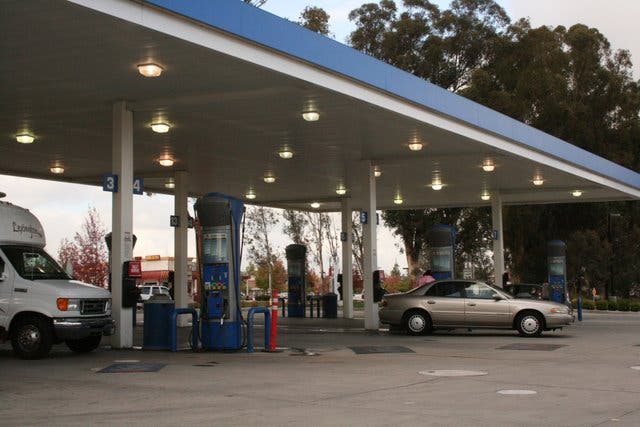
Two Ramona gas stations are on a list of stations that have been fined for a variety of violations since January 2010, including not dispensing the correct amount of gas. They are Stars Petroleum and the 7-Eleven gas station, both on Main Street.
The 7-Eleven station was fined for one incidence of "meter creep." Stars Petroleum was fined for using a weighing and measuring instrument that was out of compliance with design regulations.
Thirty six stations in San Diego county are on the list.
Find out what's happening in Ramonafor free with the latest updates from Patch.
When a meter starts ticking off charges before any gas has actually been dispensed, it's a violation known as "meter creep" which falls under the category of abnormal performance.
Early morning commuters who are the first to stop at a gas station may be most at risk for meter creep, said Jim Byers, deputy agricultural commissioner/sealer of weights and measures for the county Department of Agriculture, Weights and Measures. The premature charging for gas not yet dispensed is typically caused by an undetectable leak in the hose or a seal on the meter, he said. Regulations stipulate that the pump hose is supposed to be full of gas so that as soon as a person starts to pump, gas is dispensed. But a leak can prevent the hose from remaining full. When the pump is started, the hose must first fill up and the meter will "creep"—start charging the customer as gas is filling up the hose, before it reaches the car.
Find out what's happening in Ramonafor free with the latest updates from Patch.
Byers recommends drivers keep an eye on the computer screen showing the charges to make sure it doesn't start ticking before the gas starts to flow. If the numbers change before customers have squeezed the handle, they should immediately stop pumping and notify the gas station, he said.
Other times, drivers will think they're getting less gas than they paid for but they may not know how much their tank can hold. People complain that their gas tank can only hold a certain number of gallons but they were charged for more when filling up—for example, charged for 13 gallons on a 12-gallon tank.
"What happens 99.9 percent of the time [is] we find that the dispenser is actually accurate; what is not accurate is the amount they think their tank can hold," Byers said.
"You can probably get a little more than what your manufacturer's book says you can," he said.
Often, consumers don't take into account the headspace, piping and hoses leading to their cars' gas tanks that also will hold gas, Byers said. Drivers can check with their car's manufacturer to get a better idea of how much gas beyond the stated capacity of the tank the car can receive.
This common misunderstanding, however, doesn't discount the times consumers are right about not receiving what they've paid for. To determine if gas dispensers are outside of the accepted parameters for inaccuracy—called "out of tolerance"— inspectors dispense five gallons of gas into a certified testing container. Errors beyond 6 cubic inches, or greater than 0.3 percent, are considered out of tolerance, according to the state Department of Food and Agriculture. There are 231 cubic inches in a gallon.
But the out-of-tolerance violation goes both ways for consumers: Stations that dispense too much gas, just like those that dispense too little, are also fined. About half of the time, violators have been pumping out more than 6 cubic inches of extra gas to consumers, Byers said.
Do people complain about that?
"No, they never do that," Byers said, laughing.
Gas stations are fined for the violations and required to fix the issues. Not all violations relate directly to the amount of gas dispensed. A list of violations since January 2010 is attached to this story. Below are descriptions of the violation terms.
For complaints, email sdcawm@sdcounty.ca.gov or download a complaint form here and mail it to:
Department of Agriculture, Weights and Measures
5555 Overland Ave., Suite 3101
San Diego, CA 92123
- Abnormal Performance: This violation applies to specification requirements, such as "meter creep" or "computer jump." Meter creep is when the meter begins to track how much people are being charged even before gas has begun dispensing. Other possible causes: nozzle not working correctly; indicator light burned out.
- Use of Incorrect Weight, Measure, or Weighing or Measuring Instrument: A piece of equipment is “correct” when, in addition to being accurate, it meets all applicable specification (design) requirements. Equipment that fails to meet any of the requirements for correct equipment is “incorrect.” One of the user requirements for owners of retail motor fuel dispensers (gas pumps) is the requirement to maintain their equipment. All equipment in service shall be continuously maintained in proper operating condition throughout the period of such service.*
- Maintenance of Equipment: The county has standards for the condition in which equipment must be kept. Violations of those standards fall into this category.
*Source: Steve Lyle, director of public affairs for the California Department of Food & Agriculture.
Julie Pendray contributed to this report.
Get more local news delivered straight to your inbox. Sign up for free Patch newsletters and alerts.