Arts & Entertainment
RB Documentary Filmmaker Strives to Enlighten World
Local documentary filmmaker, Farheen Umar, educates and inspires with her independently produced films.
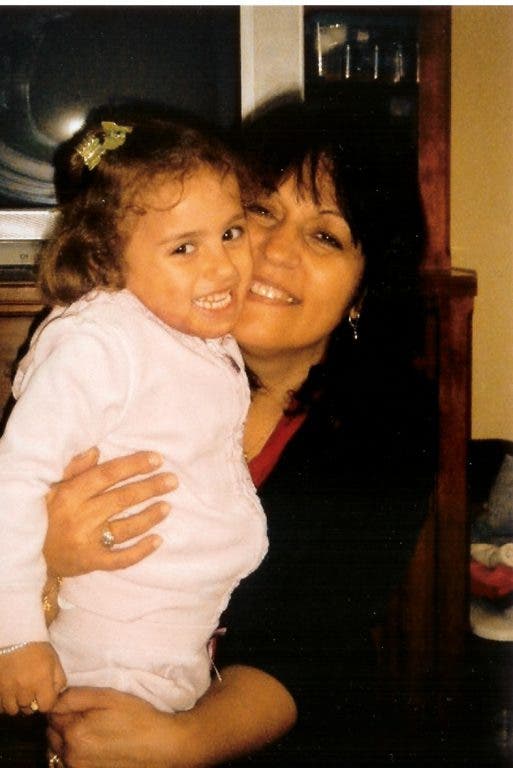
In documentary films, everything is more intimate because life takes part in the directing. Local documentary filmmaker Farheen Umar is a rising talent that creates art, from truth, in motion with her touching films about the beauty of the human condition. Her latest film is a documentary entitled Farah, a film that dives into the life of a 3-year-old Palestinian girl who comes to San Diego, looking for treatment for her war injuries.
Umar’s parents come from India, leading her to spend most of her childhood in South Asia, but she made a move to the United States at an early stage of her life.
Her passion to become a documentary filmmaker sprouted, in the United States, from a calling to share the world’s beauty.
Find out what's happening in Rancho Bernardo-4s Ranchfor free with the latest updates from Patch.
“I like to see the beauty in everything and share that beauty with people. I like to challenge stereotypical thinking,” Umar said in an email interview with Patch.
Independent filmmakers, like Umar, have much more control over their art than Hollywood heavyweights, often making for more sincere pieces. Growing up, she was influenced by filmmakers that independently produced their films, such as the very talented Ismail Merchant and Mira Nair, whose films are essential viewing for aspiring filmmakers across the world.
Find out what's happening in Rancho Bernardo-4s Ranchfor free with the latest updates from Patch.
"Mira Nair’s Salaam Bombay and Monsoon Wedding are all time inspirations,” Umar said. “I don’t have a particularly favorite documentary filmmaker but several documentaries that I like. A recent film, Quran by Heart, is my new favorite."
Like the legendary Quentin Tarantino and the unrivaled Pedro Almodovar, Umar is a mostly self-taught filmmaker.
“My education is in business. I got my media education from the UCSD extension program. I am mostly self-taught in the field of directing. I have read many books and closely studied works that I have found inspirational,” Umar said.
Umar’s very first documentary film was on the practice of "covering" in different Islamic countries, titled Women of Islam: Veiling and Seclusion. The film took more than two years to complete, blending footage from Pakistan, Iran, Turkey, Saudi Arabia and the United States.
Women of Islam: Veiling and Seclusion gave audiences an opportunity to catch an intimate glimpse of a life beyond their own. The film was rather successful for a debut documentary film, becoming a PBS release in 2005-2008 and being distributed to over 50 universities and libraries nationwide.
“It turned out to be a bigger success than what I had anticipated for my first film, but I think people responded well to a film that enlightened them about an aspect of Islamic society that most westerners are curious about, and usually get a very skewed perception from mainstream media,” Umar said.
Taking great care in choosing her projects, Umar only takes on subjects that she is passionate about, as well as ones that would be worth projecting to the world. After the subject is chosen, Umar goes on to “research characters that illustrate that story.”
Her latest documentary, Farah, was recently screened locally. It differs from her very first documentary, which covered characters from different countries, as it focuses on the viewpoint of a sole person.
“It’s about a 3-year-old Palestinian girl who comes to San Diego for free treatment of war injuries. She is brought here through an organization called Palestine Children Relief Fund. Farah lives with a host family, the Jubrans, and develops a deep attachment with them but eventually has to return to her home and family in Palestine,” Umar explained.
Filming Farah was quite a blistering, impassioned experience for Umar, as the story that unfolded before her eyes was truly inspiring. Umar mentioned that the process was “an intense emotional experience, not only because of the difficult medical procedures the little girl goes through, but also because of the highly emotional nature of her story.”
Farah is a film that reflects the agony of people beyond what’s immediately in front of us, and beyond the United States in general. Umar said that the purpose of Farah is “to inform the world, in a very human and personal way, about the suffering resulting from the Middle East (Israel/Palestine) conflict, and also to have people thinking about the role the USA plays in this.”
The screening of Farah took place on June 5, 2011 at the Four Points by Sheraton. The screening was sponsored by the Palestine Children's Relief Fund (PCRF), and the event was free. Umar is happy with the result of the first screening of the film, since the reaction was a powerful one.
For many filmmakers, touching people’s lives in one way or another or providing people with a new window to view the world from, is the best reward. Umar is no different, as she says that she is proudest about her films when she “gets feedback from people saying that they have been informed or are enlightened after seeing" her films.
For those that are aspiring filmmakers, trying to capture reality or just wanting to make their imaginative ideas fully-realized on celluloid, Umar is proof that perseverance is essential to the art of filmmaking.
“It’s a very difficult journey so choose your topics carefully. Do something that is close to your heart and try to offer a perspective that may be missing on the subject,” Umar said.
Trailers for Women of Islam: Veiling and Seclusion and Farah can be found on the Pasha Films website.