Neighbor News
CSUSB police part of county-wide text-to-9-1-1 system
Hearing- and speech-impaired members of the community, or those in a situation where it's too dangerous to dial 9-1-1, can now text to 9-1-1

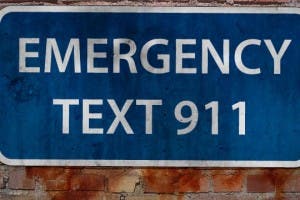
SAN BERNARDINO, Calif. – Hearing- and speech-impaired members of the community, or those in a situation where it is too dangerous to dial 9-1-1, now have another option to call for help in an emergency – Text to 9-1-1.
“Call if you can – text if you can’t” technology made its debut Dec. 15 in San Bernardino County.
The San Bernardino County Sheriff’s Department, the California Highway Patrol and state Emergency Communications 9-1-1 officials said local San Bernardino County law enforcement agencies and fire agencies public safety 9-1-1 dispatch centers and Cal State San Bernardino police will be equipped to receive and respond to mobile phone SMS Text-to-9-1-1 messages.
This service is available for use by the deaf, hard-of-hearing or speech impaired, and in situations where it is too dangerous to make a voice call to 9-1-1. All phones or devices must include a text or data plan to send a text to 9-1-1.
“We’ve known for some time that this technology was coming,” said county Sheriff John McMahon. “It is great to now see it come to fruition, giving the public another option to call for help when they need it.”
CHP Inland Division Chief Bill Siegl said, “Inland CHP dispatchers are trained and ready to assist callers who, for whatever reason, are unable to call 9-1-1. While the technology is evolving, it is another tool to help those who are often the most vulnerable in our communities if they cannot call 9-1-1.”
CSUSB Police Chief Nina Jamsen said the 9-1-1 text implementation will further aid the police department’s efforts.
“I’m proud to announce that the CSUSB University Police Department’s dispatch center now can receive text via 9-1-1. We continue to provide the best possible service to our campus community,” Jamsen said. “Campus safety is a community effort. If you see something, say something and now you can text 9-1-1.”
The implementation of Text to 9-1-1 is the result of a 2012 agreement between the nation’s four largest wireless service providers – AT&T Mobility, Sprint, T-Mobile, and Verizon Wireless – in cooperation with the FCC, National Emergency Number Association and the Association of Public Safety Officials to provide Text-to-9-1-1 as a nationwide interim solution until the next generation of 9-1-1 is deployed.
Text-to-9-1-1 technology will provide the public with an additional means of requesting emergency services and will provide additional support to the deaf, hard-of-hearing, and the speech-impaired community.
The benefits to consumers are significant, especially in cases when the caller cannot communicate verbally. Examples include not only the hearing-impaired, but also when a crime is in process, the caller is facing domestic abuse, the caller is injured and cannot speak, and other similar scenarios.
Below are the FCC guidelines for how to contact 9-1-1. If you use a wireless phone or other type of mobile device, make sure to do the following in an emergency:
• If you can, always contact 9-1-1 by making a voice call, “Call if you can – text if you can’t.”
• If you are deaf, hard-of-hearing or speech disabled, and Text-to- 9-1-1 is not available, use a TTY or telecommunications relay service, if available.
• If you text 9-1-1 and text is not available in your area, you will receive a bounce back message advising “text is not available please make a voice call to 9-1-1.”
• Location accuracy varies by carrier and should not be relied upon. Be prepared to give your location.
• Text-to-9-1-1 service will not be available if the wireless carrier cannot ascertain a location of the device sending the message.
• Text-to-9-1-1 is not available if you are roaming.
• A text or data plan is required to place a text to 9-1-1.
• Photos and videos cannot be sent to 9-1-1. They cannot be received at the 9-1-1 center at this time.
• Text messages should be sent in plain language and not contain popular abbreviations (SMH, LOL, ICYMI) or emoji’s, which will not be recognized.
• Text-to- 9-1-1 cannot be sent to more than one person. Do not send your emergency text to anyone other than 9-1-1.
• Texts must be in English only. There currently is no language interpretation for text available. This is still in development.
Along with Cal State San Bernardino police, the following law enforcement and fire agencies are currently equipped to receive Text-to-9-1-1 for San Bernardino County:
• Barstow Police Department;
• Chino Police Department;
• California Highway Patrol – Barstow;
• California Highway Patrol – Inland Empire;
• Colton Police Department;
• Confire Communication Center (San Bernardino County Fire Department, Apple Valley, Big Bear, Colton, Loma Linda, Montclair, Rancho Cucamonga, Rialto, Running Springs, Twenty-nine Palms, and Upland fire departments);
• Fontana Police Department;
• Montclair Police Department;
• Ontario Police Department;
• Redlands Police Department;
• Rialto Police Department;
• San Bernardino Police/Fire Department;
• San Bernardino County Sheriff’s Department Valley Control Center/dispatch;
• San Bernardino County Sheriff’s Department Desert Control Center/dispatch; and the
Upland Police Department.
The following is a list of law enforcement agencies who are currently equipped to receive Text-to-9-1-1 for Riverside County:
• Banning Police Department;
• Beaumont Police Department;
• Cathedral City Police and Fire Department;
• Desert Hot Springs Police Department; and the
• Palm Springs Police Department
For additional information regarding Text-to-9-1-1, please contact the local law enforcement agency where you reside.
For more information on Cal State San Bernardino, contact the university’s Office of Strategic Communication at (909) 537-5007 and visit http://news.csusb.edu.
-30-