Community Corner
Mormon Period Built Region In Early Years
Just when the Lugo family is ready to give up on the valley, members of the Church of Jesus Christ of Latter-day Saints arrive to settle in.
In our last installment we looked at the ending years of the Lugo Period of our valley’s history. Discouraged by the loss of horses due to high-desert raiders, and the loss of cattle due to a freak blizzard in 1848, the Lugo family was ready to abandon their vast inland empire.
They didn’t realize that their real estate was about to change hands – into American hands. Their purchasers were members of the Church of Jesus Christ of Latter-day Saints (commonly called Mormons then and now). Why they came to the San Bernardino Valley is a somewhat-complicated story.
The Latter-day Saints church was formally-organized in 1830. During the next 20 years, its leaders were often distrusted, persecuted, jailed and even assassinated. Following the murder of their first Prophet, Joseph Smith, most Mormons joined their new leader, Brigham Young, in Utah. Establishing Salt Lake City in 1847, the Mormons set out to missionize the world. Many missionaries traveled back and forth from Utah to the port of San Diego. It seemed proper to set up a way-station somewhere in Southern California where missionaries could rest from their voyages or desert travels. With a ranch of some kind in California, it was argued, the church’s mission could be fulfilled more efficiently.
Find out what's happening in Redlands-Loma Lindafor free with the latest updates from Patch.
The idea for a California settlement came from members of the Mormon Battalion, who had marched to California in 1847 to aid in the war with Mexico. Arriving too late to affect the outcome of the war, they still managed to travel throughout Southern California. When members of the Battalion stayed with Isaac Williams on his Chino Rancho, he was impressed with them, and offered to sell his ranch to them. Robert Clift wrote to Brigham Young, enthusiastically describing the advantages of buying Williams’ ranch. Young apparently thought it was a good plan, and agreed to a settlement of about 20 families.
With Young’s blessing, missionary leaders Amasa Lyman and Charles Rich announced that they would lead a group of volunteers to California. Expecting a small company, church Prophet Brigham Young gave his approval. When more than 400 people answered the call for volunteers, Young was dismayed, but begrudgingly allowed them to leave Utah. Young was worried that many of those leaving were trying to evade his authority, and in some cases that was true. It would be hard to direct the California settlers from Utah, just as Brigham Young had feared.
Find out what's happening in Redlands-Loma Lindafor free with the latest updates from Patch.
The massive wagon train left Utah in high spirits, but the massive deserts they crossed took away energy and enthusiasm. By the time the company arrived in Sycamore Grove (Glen Helen), they were tired and weary of traveling. To make matters worse, Isaac Williams had changed his mind and now refused to sell his Chino Ranch to them.
Negotiations with the Lugos ended Sept. 22, 1851, with the Mormon leaders agreeing to buy the Rancho de San Bernardino. They believed that they were buying 80,000 acres, but the property would later be surveyed to be about 37,000 acres. They agreed on a price of $77,500 in cash and promises to pay. Amasa Lyman and Charles Rich would own the property, and carry the entire burden for payment.
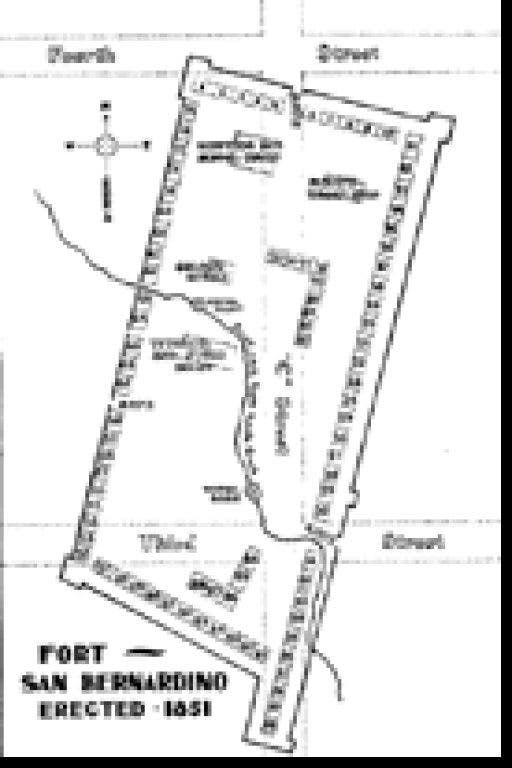
Over the next six years, the settlers transformed the San Bernardino Valley from cattle ranch to city. They laid out city streets in a copy of Salt Lake City’s form, dug irrigation ditches, built water-powered mills for sawing lumber and grinding flour and meal. They lumbered extensively in the San Bernardino Mountains and planted thousands of acres in various grains. They set out fruit trees, planted gardens and started schools.
The development of San Bernardino from log cabins to established city happened almost overnight. As the economy of Utah struggled, San Bernardino was booming. Lumber was flowing to Los Angeles in a steady stream, prompting people to call the boards “Mormon currency.” The same kind of community spirit that created Salt Lake City was replicated here, with immediate success. Despite all the progress, though, not all the settlers in the area were Mormons, and many of them rebelled at the monopolies the Latter-day Saints held over the economy and city government. We’ll talk about the events at “Fort Benson” in another installment.
This settlement of the valley affected what is now Loma Linda. Several families settled along the zanja, the only reliable source of water in the south valley. The Van Leuvens, Mormon settlers from Missouri, established their growing family along what is now Mountain View Avenue. The beautiful mansion of Elizabeth and Anson Van Leuven still stands on Mountain View Avenue, as the clubhouse and managers’ home of the Mountain View Mansion Apartments. Bishop Nathan Tenney settled into the Asistencia as Mormon families carved out homesites and ranches all over the valley.
The Van Leuvens were responsible for building the first school on the south side of the valley, our own Mission School, on Mission Road, in 1853. Anson and Elizabeth’s son, Pulver Van Leuven, was the first teacher.
While the community was growing and succeeding, its progress was being viewed harshly in Utah. Church President Brigham Young became increasingly concerned about reports he heard about drinking, gambling, and general “worldliness” in the San Bernardino colony. Afraid that he was losing control, he pulled the plug in 1857, ordering Lyman and Rich to leave, and directing the colonists to return to Utah. While the majority complied, about a third remained in our valley. Families like the Van Leuvens would be a mighty force in Valley society for several generations. The Mormon Period, lasting only from 1851-1857, was short, but transformed the valley into the urbanized place we know today. The loss of Mormon leaders in 1857 left the valley in a pretty lawless state, a time we’ll discuss in a later installment.
For further reading: San Bernardino. The Rise and Fall of a California Community. Edward Leo Lyman (published 1996, Signature Books)
Mormons in San Bernardino. Arda Haenszel. A Quarterly Publication of the San Bernardino County Museum Association. Pioneers of San Bernardino. 1851-1857, Nicholas Cataldo and Arda M. Haenszel. All of these are available in the museum gift store.