Health & Fitness
Blog: Home Fitness Programs: The Good, the Bad and the Ugly
Thinking about getting one of those super-intense DVD workout programs you see on those infomercials? You might want to read this first.
If you watch late-night TV or even happen to be tuning in during the day, you’ve probably come across an infomercial for P90X, Insanity or some other home fitness program. All of these programs make some pretty impressive claims about the revolutionary changes that you can achieve in both your fitness level and your body composition in record time if you follow the programs that are laid out to a T. If you’ve ever taken a look at the programs or tried them out, you’ll understand why. They’re no joke! They’ll have you huffing and puffing and, in some cases, upchucking your way to the body you’ve always dreamed of. These programs are no magic bullet. You will work your butt off to achieve the results that you see on TV. So to answer one question, do they work? Yes, if you are willing to put the time and effort in you will see results. But are they safe? Depends on what you mean by “Safe.”
First off, I don’t want to come off as knocking someone else’s innovation. In an industry where the majority of people fail and move on to other things, innovation is one way to achieve wealth. The problem with the majority of these programs, in my opinion, is in their lack of consideration for the individuals who will be purchasing them. Note that I’m not only talking about those people who are severely out of shape and are biting off more than they can chew, but also those who really don’t understand good exercise mechanics. Exercise techniques are a lot more complex that most people give them credit for.
Most of these programs are based on the interval concept; that is, periods of intense work followed by periods of rest that allow limited recovery. It’s a great concept if it’s done right. The problem is that as a person begins to fatigue, technique starts to degrade and the individual begins to compensate to complete the movement; and that’s assuming that the exercise mechanic is performed properly in the first place. There’s no feedback and no real coaching to correct flaws in exercise technique, and when you consider the number of people that don’t understand how to perform exercises properly (believe me, the last time you went to the gym you probably did something wrong) it’s a perfect formula for injury.
Find out what's happening in Redondo Beachfor free with the latest updates from Patch.
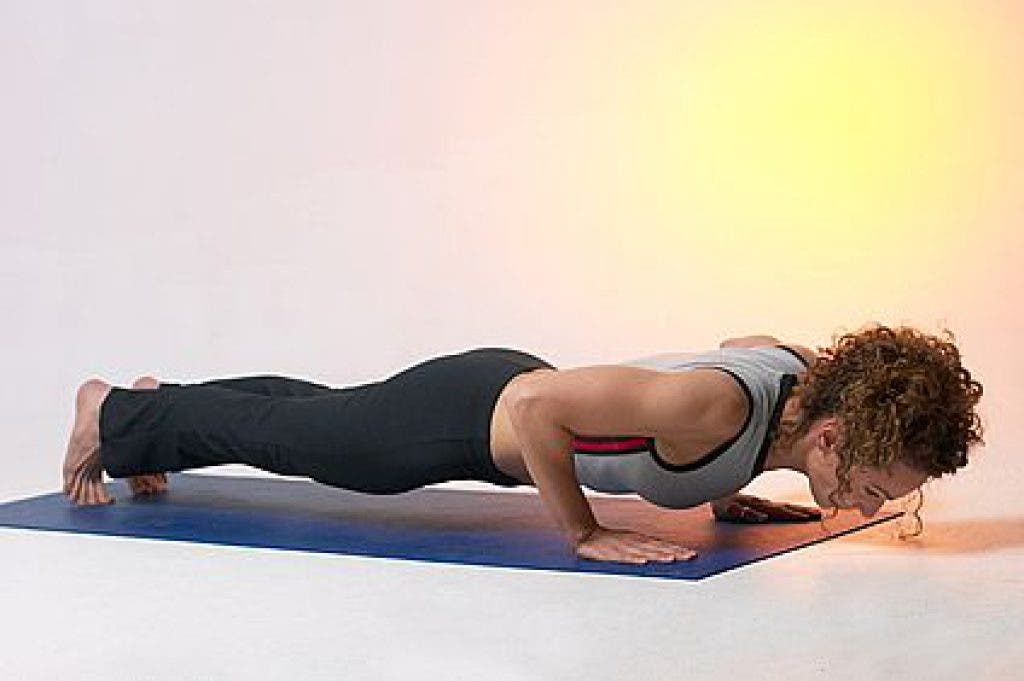
Take an exercise as simple as your standard push up. When a push up is performed properly, the core had to be engaged to prevent hyperextension of the spine, the shoulder blades have to be depressed and downward rotated to stabilize the shoulder and the hands should be in a position slightly wider than shoulder width directly below the chest. Assuming that you are performing the movement correctly to begin with, and I’d say about 50 percent of the people I observe do, when you are going balls out, you will begin to fatigue and start making mistakes. Your hips will begin to sag which puts pressure on your lumbar discs. Your shoulders may begin to elevate towards your ears which will minimize room in the subaccromial space which can damage or inflame the tendons of the rotator cuff; and in all likelihood you will begin to hang your head which can put pressure on the cervical discs of the neck. These things can happen even if you start with good technique. If you are already making these errors and are starting a home fitness program, it won’t be long before ibuprofen and bufferin end up on your weekly shopping list a lot more often.
Also consider that a push up is a pretty standard exercise that just about everyone has done at some point in their lives. When I was a kid you couldn’t make it through high school without knowing how to do a push up, a pull up or a crunch. When you consider how common this type of exercise is and how much the basic execution is still messed up, you can only imagine what could happen when you move on to some of the more explosive exercises like plyometrics.
Find out what's happening in Redondo Beachfor free with the latest updates from Patch.
If you’re not familiar with the term, plyometrics or plyos for short are explosive exercises designed to develop speed and power among athletes. The most common are those that involve various methods of jumping, landing, skipping and shuffling. Recently they have become more common in the general fitness field as the practice of plyometric exercises can be extremely intense.
My problem with plyometrics in this type of program revolves primarily around a lack of proper coaching. There are other issues to consider though. In the athletic world most coaches will not incorporate plyometric exercises until an athlete has developed sufficient strength and stability to handle them. Proper coaching is integral to teach the technique effectively and safely. Now imagine someone 60 pounds overweight buying one of these programs and attempting to perform jumping exercises to fatigue. It won’t be long before he’s making a trip to ER.
Proper plyo training requires sufficient strength and stability to maintain proper spinal, hip, knee and ankle alignment, especially when landing. Even among some of my more highly trained clients, I constantly have to coach them to correct their positioning. Someone with no experience, no coach and who is overweight could easily inure their back, hips, knees or ankles by simply landing wrong.
Another interesting element of plyometric training is how they are performed. When used for the development of speed and power, the idea was to perform a set number of reps with 100 percent all out effort. The concept being to push with absolutely everything you had, as fast and as hard as you could for a limited number of reps. Only by doing that would you get faster and more powerful. Technically speaking, you don’t get to 110 percent by working at 65 percent. You only did a set number of reps because you can’t maintain an all out effort for more than 10 reps or so, depending on training level. The body slows down, begins to fatigue and you make mistakes that can lead to injury. Because of this, extremely long rest periods were given between sets to allow another set to be performed with the same effort and intensity as the first.
Now when you consider that some of these home fitness programs have you performing exercises such as squat jumps for 30, 45 or even 60 seconds with little to no rest between sets; you’re going to see a degradation in proper performance. Over time the repetitive compressive forces on the joints of the body can lead to minor and major injuries.
Effective fitness programs that can produce rapid results don’t have to tear the body down to do it. Good coaching along with proper injury prevention techniques are the hallmark of most high level trainers and coaches. Using foam rolling and self myofascial release techniques to keep the muscles healthy and balanced as well as corrective exercises to restore proper movement patterns are important components to any strength, fitness or fat loss program. Plus the education an individual would get from a good coach could prove invaluable in the future.
Most people don’t stay with a fitness trainer all their lives. They eventually go their own way. Maybe they decide they want to hit the gym on their own. Maybe they just lose interest in the whole fitness thing; or maybe they see a copy of one of these fitness programs on TV and decide they want to try something new. That being the case, those people who have worked with a coach or trainer would be better prepared for what the home program had to offer and could discern those things that are safe and effective from those that are not.