Community Corner
Groups Reach Out to Growing Homeless Population
Volunteers offer food and clothing as advocates say the number of needy is on the rise in the beach cities.


Despite the fact that Redondo Beach's median household income is 45 percent higher than the state average, the city is seeing its homeless and impoverished population increase in the midst of a sluggish economy.
On the first and third Thursday mornings of each month, families line up outside St. Paul's United Methodist Church on Nelson Avenue to receive bags of groceries.
Adriana Romero-Estrella, volunteer coordinator for the church's homeless outreach program called Project Needs, said the number of families that come to the biweekly food pantry has soared from 70 to 120 in the past couple of years. The group has struggled to keep food in stock.
Find out what's happening in Redondo Beachfor free with the latest updates from Patch.
"It hit us really hard a year ago, from one month to another. Suddenly, we were like, 'What are we going to do?' " she said. "Now we know what to expect, and we have been trying to look out for resources."
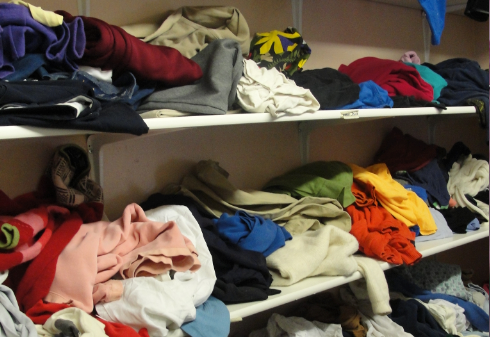
Volunteers also serve a hot meal Tuesday nights and offer donated toiletries and clothes to anybody who comes by the church.
Find out what's happening in Redondo Beachfor free with the latest updates from Patch.
Romero-Estrella said that the volunteers often develop personal relationships with people in need, and they have recently welcomed a new group of families.
They include a single mother who just experienced a cut in pay and benefits from her teaching job, and as well as parents who have lost their jobs and houses and have had to move in with relatives.
"Those are the people we never expected [to see at the pantry]. They're just like us," Romero-Estrella said.
A 2009 report by Los Angeles Homeless Services Authority showed that there are about 4,000 homeless people, including 700 children under 18, living on the streets of the South Bay on any given day. Approximately 80 percent of them have no opportunity for shelter due to a lack of temporary housing in the area.
In Redondo Beach, there are several faith-based organizations, such as Project Needs and Shared Bread (at First United Methodist Church of Redondo Beach), providing them meals and other necessities.
Lauren Nakano, chair of the South Bay Coalition for the Homeless, said those figures always undercount the homeless because it can be hard to identify and locate them.
"But pantry and meal programs have been a really good indicator for us about the needs," Nakano said. "Most of them have seen the same doubling of participants."
Romero-Estrella said that it is a common misconception that the beach cities have no homeless issues. This misconception has led to the South Bay being ill-prepared to advocate on behalf of the homeless.
Katie Lozano's husband lost his construction job a few months ago. The longtime resident of Redondo Beach said it has been tough trying to make ends meet every month with the income from the occasional side jobs her husband gets. Lozano recently started coming to the church for the food pantry and clothes, but her husband is having a hard time coming for the hot meals.
"My husband has a thing about that," Lozano said as she went through a pile of secondhand clothes. "It's embarrassing and humiliating for him to do that."
Marian Thomas, whose husband lost his job after a motorcycle accident, has been supporting her family of four by taking housekeeping work. Thomas, 62, says her pride often makes it difficult for her too to take advantage of the available help. Standing in line and waiting to be fed is hard to take, she said.
Nakano, who also works at the Beach Cities Health District, explained that being financially needy affects people emotionally, especially for those who never had to ask for help before. Providing them with resources, such as food stamps and welfare programs, helps them regain a level of control although they may not have the same standard of living they had before.
"It is sort of giving them the tools they need to feel like they can still support their family in a way," she said.
Romero-Estrella encourages them to volunteer, do something for others.
"When they feel that they are giving back, it makes them feel like they are not just taking," she said. "That's what they are afraid of."
Thomas donates her own clothes and asks the families she works for to make donations.
"I don't want to take more than what's fair to me," she said. "[By donating] I feel like I'm paying back."
Donations for Project Needs can be dropped off at:
St. Paul's United Methodist Church
2600 Nelson Ave., Redondo Beach, CA 90278.
Get more local news delivered straight to your inbox. Sign up for free Patch newsletters and alerts.