Politics & Government
Residents Envision More Open Space
Those involved in bringing more open space to the South Bay are eager to see Studio 606's final report.
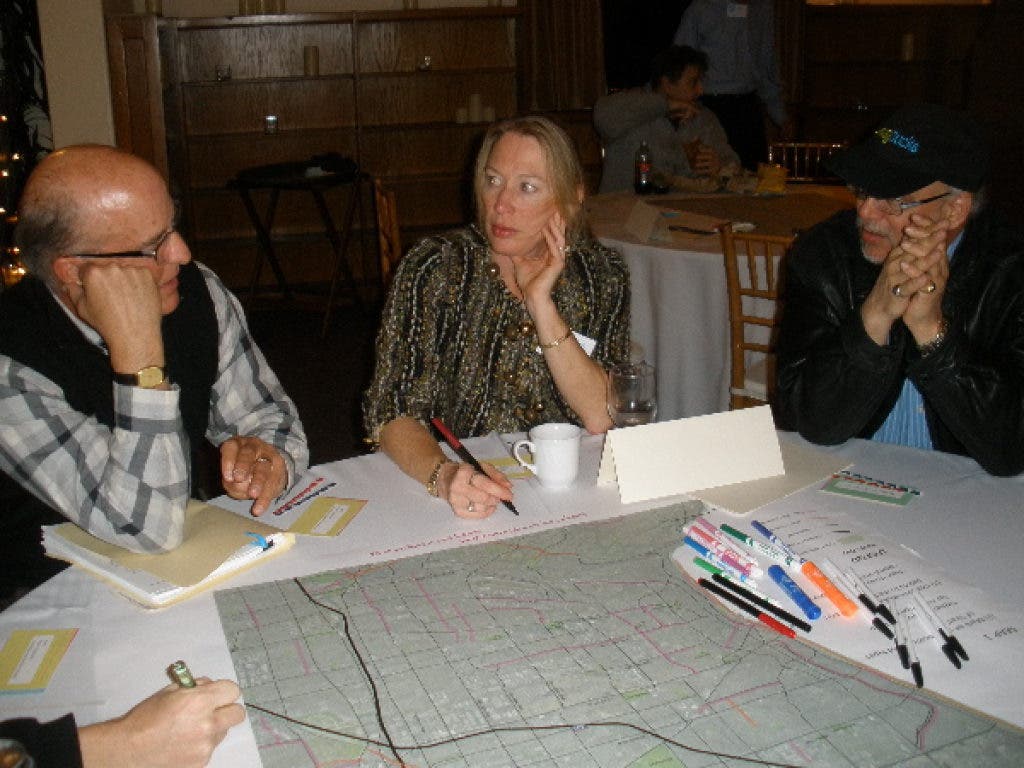


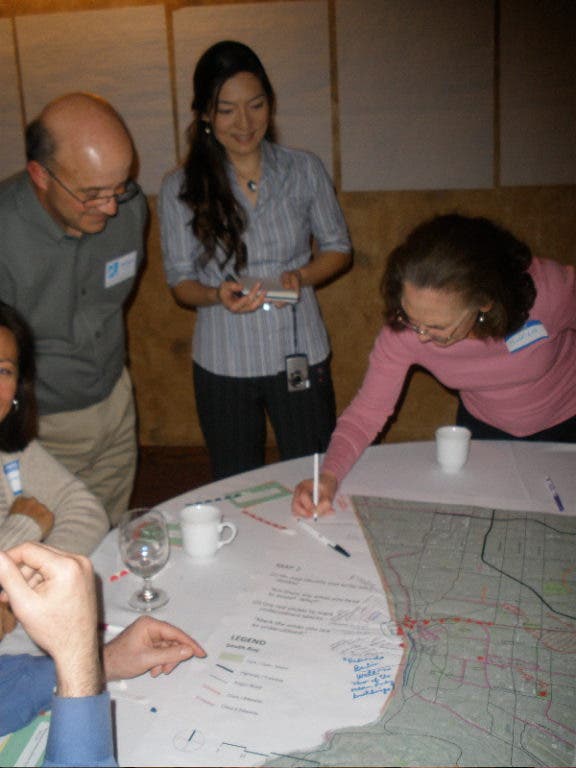
The organizers of a public hearing at the Veterans Park Library in Redondo Beach were graduate students who, along with their faculty advisers, are exploring ways to create more open space and parkland in the South Bay.
The sponsor of the workshop was the South Bay Parkland Conservancy who welcomed a member of the California State Coastal Conservancy as the night’s featured speaker.
And among the more than 50 participants at Wednesday night’s gathering were two 12-year-old boys who seized the opportunity to lobby for a skateboard and BMX bike park to be included in any plans for new recreational areas.
Find out what's happening in Redondo Beachfor free with the latest updates from Patch.
“Skating is a big part of the South Bay’s culture and we have few places to go, none in our city though allowing scooters and BMX bikes,” Griffin Keith, a student at Parras Middle School, told the group. “Redondo has a lot of youth with nowhere to skate.”
His classmate, Jaydon Abate, then took his turn to read a list of suggested sites for such a park. Afterwards, he told Patch he appreciated the opportunity to voice his opinions and to hear others. “It was pretty fun. It was cool to hear everyone’s ideas,” he said.
Find out what's happening in Redondo Beachfor free with the latest updates from Patch.
That exchange of ideas was a theme of a workshop that was designed to examine ways to create more open space and parkland in the South Bay. And the varying ideas – ranging from forming native plant gardens and exercise parks to establishing skate venues and waterfront parks – flowed through the night.
“I think we had good representation from different stakeholders throughout the community,” said Jim Light, president of the South Bay Parkland Conservancy, following the meeting. “The turnout was more than we had expected.”
Light’s organization is pushing for a waterfront regional park in Redondo Beach among other things. But he said the hearing showed that the public is interested in not just the waterfront park but other ecological and environmental approaches as well including connecting area bike paths and extending the existing greenbelt.
Light added that exploring those varied options and producing a feasibility study are now the mission of Studio 606, a consortium of faculty and graduate students from California State Polytechnic University in Pomona.
The students and faculty from the school’s department of landscape architecture ran the two-hour workshop and are working with the California State Coastal Conservancy to identify opportunities for parks and open space throughout the South Bay.
Peter Brand, senior project manager at the state Coastal Conservancy, said his agency is working closely with the Studio 606 group – whose name derives from the course number – and is paying the university’s nearly $50,000 cost of the South Bay analysis. Brand said he invited Cal Poly students to take part in the analysis after viewing their earlier work in other communities.
“In this case, we’re trying to come up with a feasibility study that essentially says: ‘Is it possible. What are things to consider? What does your community want? What are the benefits?” he said of the parkland and open space study.
Although the project will look closely at the local waterfront project, Brand said there are other issues to consider including coastal access and how it benefits other communities.
“This is not just about Redondo beach and adjoining communities,” he said. “We’re also trying to help people from inland communities get to the coast.”
Professor Susan Mulley, one of three faculty advisers on the Studio 606 project, said the four students working on the South Bay project started gathering information in September. They researched the area’s biophysical characteristics and sociocultural data before meeting the community to hear the views of local residents, she said.
The four graduate students and their faculty advisers will produce a “vision plan” or feasibility study, she added. “We have to think about things now,” Mulley said following the meeting. “Now the real work begins of analyzing the data.”
One of those third-year graduate students who will be doing that analysis is Brian Baldauf who said there is a clear need for additional parkland and open space.
“The South Bay is critically underserved in terms of the state looking at the amount of parkland per thousand people,” he said, adding that Redondo Beach, with 2 1/2 acres per thousand people falls below the state minimum threshold of 3 acres per thousand people.
During the workshop, Baldauf and the other students joined Mulley in walking around the room as participants talked about their beach experiences, their park suggestions and their overall concerns. The attendees also used colored markers to write on maps, identify routes or note comments along with the table conversation.
Among those who found the evening’s experience helpful was Jennifer Didlo, a project director for AES Southland, whose company finds itself in the middle of some community efforts to build a waterfront park.
“It’s very helpful that we understand what the community wants because we are very interested in working together,” she said, adding she looked forward to the Studio 606 report.
Jim Light of the South Bay Parkland Conservancy, agreed. “We’re looking forward to what results they put in,” he said. “I think it’s good that we brought in someone independent and from outside the community to pull all this together.”