Schools
Will Jefferson Keep Its 6th Grade?
The decision whether to eliminate the sixth-grade class at Jefferson Elementary School has been more controversial than expected.
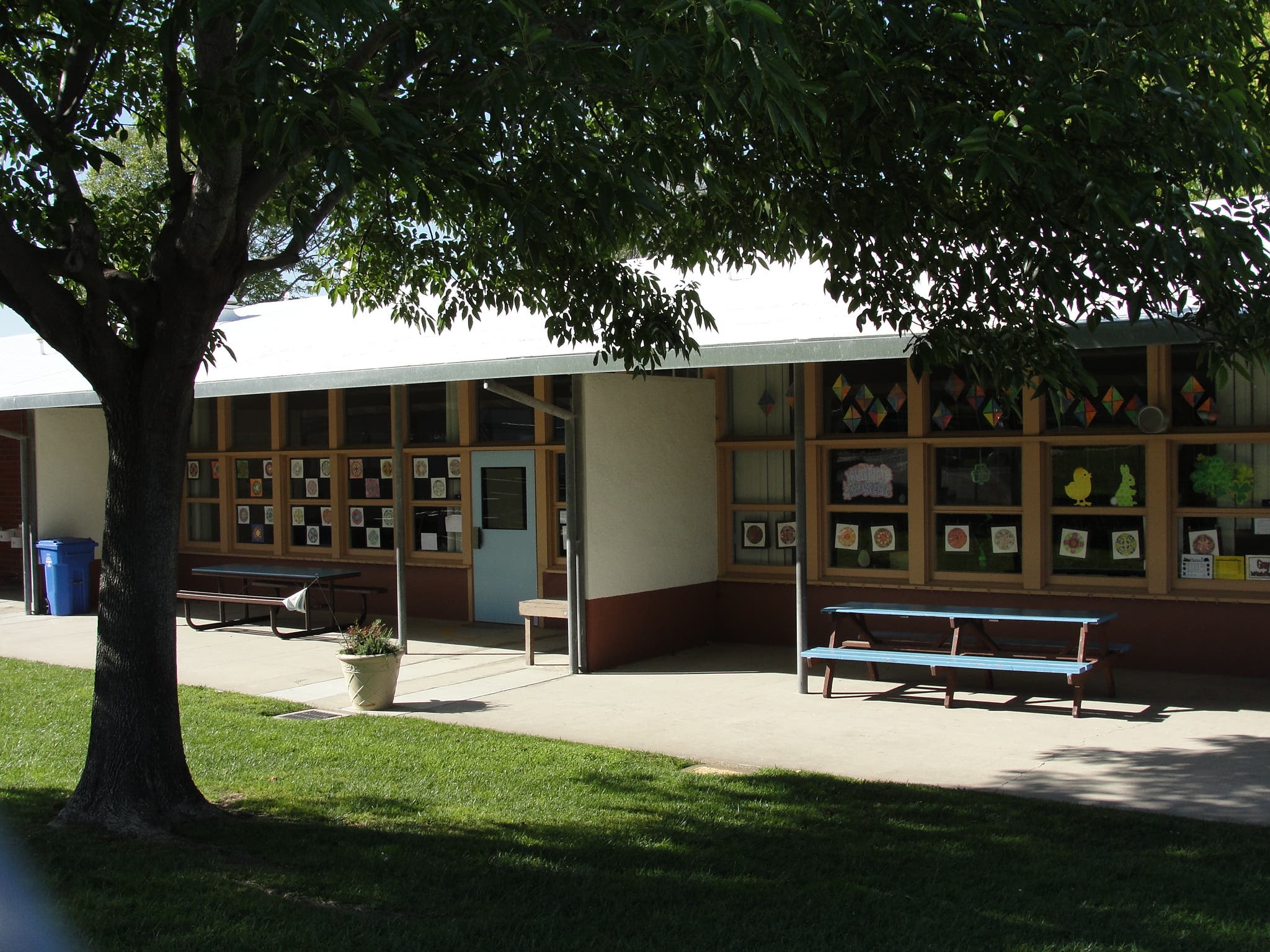
The Redondo Beach Board of Education is set to decide the fate of the sixth-grade program at during Tuesday's board meeting.
Right now, Jefferson is the only elementary school in that offers a sixth-grade program; if the program is eliminated, fifth-grade students would attend after graduating from Jefferson.
The transitions from offering kindergarten through sixth grade to offering kindergarten through fifth grade at and in prior years were largely met without outcry, school officials have said.
Find out what's happening in Redondo Beachfor free with the latest updates from Patch.
During the school board's Jan. 11 meeting, Assistant Superintendent Frank DeSena of eliminating Jefferson's sixth grade at the end of the 2011-2012 school year. The idea of changing Jefferson to a K-5 school was met with resistance from parents, especially those of current fourth-grade students.
On May 10, parents Deborah Dicochea and Sandra Fuchs of sixth grade in elementary school and asked the school board to reconsider any decision to eliminate the class.
Find out what's happening in Redondo Beachfor free with the latest updates from Patch.
In both their presentation and their conversations with Patch, Dicochea and Fuchs pointed to two academic studies to support their stance. One, produced by the Los Angeles Unified School District and called "Implications of Attending a K-6 Elementary School on Sixth and Seventh Grade Achievement," concluded that students showed more improvement between fifth and seventh grade when attending a K-6 elementary school than when attending a standard middle school.
"I have a seventh grader that went through the sixth-grade program at Jefferson, and it was the best year of his school career ... he's at Parras right now and is excelling, and that is due to the academically [rigorous] curriculum that they go through [at Jefferson]," Dicochea told Patch.
The second study—"Should Sixth Grade be in Elementary or Middle School? An Analysis of Grade Configuration and Student Behavior"—suggests that disciplinary infractions are more likely to occur among students who attend sixth grade at a middle school than students who attend sixth grade at an elementary school. The study, however, was based on responses from rural and mid-sized cities in North Carolina, and the largest city that could have been relevant to the study—Charlotte, North Carolina—was excluded due to incomplete information.
"The studies really said that ... if you can keep K-6, that's good," Fuchs said.
The parents told Patch that keeping sixth grade at Jefferson would be a plus for the district because children mature at different rates.
"One of my children has an early birthday—or a late birthday, depending on how you want to look at it," Fuchs said. "Some parents like the fact that they don't want their 10-year-old starting in middle school, they feel that is way too young. This gives them another option ... there are some kids that are on the younger side, and this gives them a chance to stay in a smaller environment for a year longer and develop and grow."
Dicochea also expressed concern about a sixth-grade student's contact with older children.
"When you're in the locker room, in PE, you're with eighth graders," she said. "From what I've heard is that my seventh grader is exposed to what the eighth graders talk about ... There's a lot of sex and drugs that they talk about.
"I'm not trying to be naïve, but I'd just like to think that my son is a little more sheltered at a sixth grade in elementary school than a sixth grade in middle school."
Fuchs, who has a student at Parras, wasn't necessarily as concerned about whether her fourth-grade student would be exposed to sex-and-drug conversations.
"I have not experienced [a sex and drug culture at Parras], but I think we are in an environment where our kids get older, it does come into play," she said. "I'm not that naïve to say that it doesn't exist at all, but I don't think that it's any different than any other school in the South Bay. There's not a story out there that's been rumored to that effect."
Nevertheless, district official DeSena opposes the notion of keeping sixth grade at Jefferson. Moving Jefferson's sixth graders to Parras would save RBUSD about $60,000 because it wouldn't have to pay for the additional sixth- or fifth/sixth-grade teacher.
"The primary reason for this is not financial, " DeSena said. "But it's possible it could have produced staffing that would have been one less teacher, and it's possible that it would have been no different at all."
More importantly, eliminating the class would finally standardize the grades offered at each school—and report cards used for each grade—across the district. Despite parents' concerns about academic standards, he noted that the school's small, now-unique community could be a disadvantage.
"I'm looking for all of our elementary schools to be K-5 so they are all on the same page as far as our instructional program," he told Patch. "The sixth graders at Jefferson and the sixth-grade teacher there are unique in that all of our elementary schools have multiple teachers at a grade level [with whom] they can team ... they can discuss, they can plan. We would have one elementary sixth-grade teacher in the district."
After his presentation in January, school board member Arlene Staich, who has since termed out and is no longer on the board, emphasized this point.
"[Jefferson's sixth-grade students] missed out on a lot," Staich said after the assistant superintendent's presentation. "There's so much more opportunity at a middle school to expand your knowledge than there is at an elementary school. The longer you have time to assimilate—moving to different classes, moving to different teachers—then when you get to high school it's not totally unfamiliar."
She referred to Jefferson students as "the last of the Mohicans," adding that while participating in a scholarship review process, she had met graduating high school seniors that felt they missed out being in Lincoln's K-8 program instead of a standalone middle school.
Fuchs and Dicochea, however, said the school's strong academics and tight-knit community are reasons why the school should remain K-6.
"Everyone says, 'What's so special about Jefferson?' and you can't explain it until you're there or you have a kid that's gone through it," Dicochea said.
Despite these parents' enthusiasm for keeping the class, Jefferson's sixth grade may "die off" gradually on its own. There are only 13 students in the 2010-2011 sixth-grade class.
"In our particular situation, last year was kind of an odd year—there were several reasons" sixth-grade students decided not to attend Jefferson, said Fuchs. She explained that there were only 78 fifth graders in the 2009-2010 class—according to the California Department of Education STAR test results website—which was unusually low for Jefferson.
Fuchs also claimed that Parras' Learning Center offered better opportunities for multiple students, which dealt another blow to the size of the incoming sixth-grade class at Jefferson.
Finally, rumors in April 2010 about Jefferson instituting a fifth/sixth-grade combination class made parents "very nervous," she said. The district "did not hold [an informational] meeting for parents."
"Parents just started dropping like flies," said Fuchs. "Not getting the information that they were requesting and not understanding really made them feel uneasy, and so they left...
"This sixth-grade class we have today of 13 students was really caused by non-communication between parents and the school district."
DeSena begged to differ on whether the school district had any responsibility to hold a meeting to address rumors.
"Parents start rumors," said DeSena. "The school district didn't start rumors ... Some parents wanted to have a town-hall meeting, and for me, I'm like, 'For what purpose?' I'm not going to try and have some parents intimidate to try to convince other parents to stay at Jefferson school.
"What was happening was totally parents deciding to go to Jefferson or go to Parras ... Parents were making their own decisions," he said. "[The school district] just said, 'You can go to Parras; you can go to Jefferson. It's your choice.'"
Ultimately, the issue boils down to parents wanting options for their children's education.
"I know what I want for my child—but the district really can't look at my child and do this just because [it] wants to do this," Fuchs said.
Tuesday's school board meeting is scheduled for 6:30 p.m. at the at 1401 Inglewood Ave.