Health & Fitness
Kaiser Permanente's Dr. Beekley gets her wish, helps needy
Redwood City Kaiser Permanente MD reflects on medical care mission to Guatemalan village

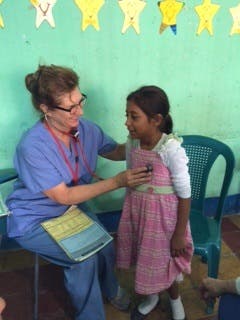


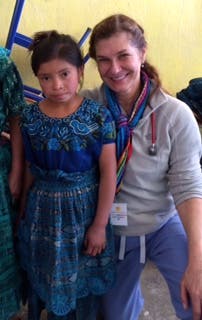
When she was a junior in college, Kaiser Permanente’s Dr. Sarah Beekley volunteered for a health promotion project in Guatemala, an experience that left such a deep and lasting impression that she decided to become a physician.
She wished then to return to Guatemala to help with people’s health care needs.
Dr. Beekley, a pediatrician at Kaiser Permanente Redwood City Medical Center, got her wish – 37 years later – recently completing a week-long volunteer mission in Guatemala where she saw hundreds of patients in a mobile clinic based at a village school.
Find out what's happening in Redwood City-Woodsidefor free with the latest updates from Patch.
Working in 107 degree heat, she saw infants and teens.
““This is full-circle for me,” said Dr. Beekley, “It’s been challenging, but rewarding”.
Find out what's happening in Redwood City-Woodsidefor free with the latest updates from Patch.
Dr. Beekley, along with a group of other Kaiser Permanente physicians and caregivers, were part of a medical team organized by Faith in Practice (www.faithinpractice.org) , a non-governmental organization that has brought life-changing, sustainable high quality medical care to rural areas of Guatemala for 20 years.
This is Dr. Beekley’s second year of volunteering in Guatemala with Faith in Practice. “Ever since I first came here during college, the people and places have been dear to my heart,” said Dr. Beekley, who worked with a multidisciplinary team of pediatricians, internal medicine physicians OB-Gyns, optometrists and pharmacists.
They set up their first clinic in the community of San Antonio La Paz, about 4,000 feet above sea level in the state of El Progresso. Located several hours east of Guatemala City, it is a rural community that has been drought-stricken for more than five years.
“In California, we can ration water. Here, in Guatemala, the drought has caused an increase in poverty, displacement of former farm families, malnutrition, infant mortality, disease and death,” said Dr. Beekley.
Other Kaiser Permanente physicians on the team included Dr. Corina Glover, a pediatrician and Dr. Hilary Bartels, an Emergency Medicine physician, both of Kaiser Permanente Santa Rosa.
Shortly after setting up in the school, Dr. Beekley’s team had its first emergency case, a young girl with severe cerebral palsy, fever, dehydration and seizures.
“Working with supplies out of a portable trunk, and with a team who had only met the day before, the girl was quickly started on intravenous fluids and medications, and transport to a local hospital was arranged,” said Dr. Beekley. “The conditions were austere but the care was good and it was a lesson in doing more with less.”
The days were long and the cases often heartbreaking. Dr. Beekley saw many children with cerebral palsy, birth defects, and microcephaly. She saw spinal disorders that are rarely seen in the United States because of the use of prenatal vitamins and preventive prenatal care. She saw severely developmentally delayed children being carried by their parents: Faith in Practice provided them with specialized wheelchairs. In the first three days, the team saw 1,500 patients.
“All services and medications at our clinics are free of charge and obligation,” said Dr. Beekley, “but patients reward us with hugs, laughs, and tears.”
Dr. Beekley said the oppressive heat left her stethoscope and other medical equipment almost too warm to touch, and the same mosquitoes causing Dengue fever among the Guatemalans were also buzzing around the medical team.
But she and the team aren’t strangers to challenging medical missions.
After the devastating 2004 Indonesia tsunami, Dr. Beekley was among the first Kaiser Permanente volunteers who helpedsurvivors. She volunteered with other Kaiser Permanente doctors to help Gulf Coast hurricane victims.
“The motto of Faith in Practice is ‘whom much is given, much is expected’,”said Dr. Beekley. “Working in an austere medical environment, in another culture and language is challenging, but intensely rewarding.”