Neighbor News
Opinion: Riverside County's' failure to enforce Street Vendor rules create hazards for cars and pedestrians
Clear rules. Uneven application. No accountability. Code Enforcement Not Living Up To Code-Grand jury report finds.

Riverside County’s Failure to Enforce Regulations on Street Vendors mirrors Civil Grand Jury findings
In June 2026, the Riverside County Civil Grand Jury released a 19-page report titled “Code Enforcement: Not Living up to Code.” The investigation painted a troubling picture of a department plagued by inconsistent enforcement, a dysfunctional workplace culture, and allegations of political interference that allowed certain violations to go unaddressed.
The Grand Jury found that “fair enforcement of laws” was not the consistent behavior of the department—either with the public or within its own ranks. That finding should sound familiar to anyone who has tried to get action on obvious right-of-way and public safety violations in unincorporated areas.
Find out what's happening in Riversidefor free with the latest updates from Patch.
Nine Months, No Enforcement
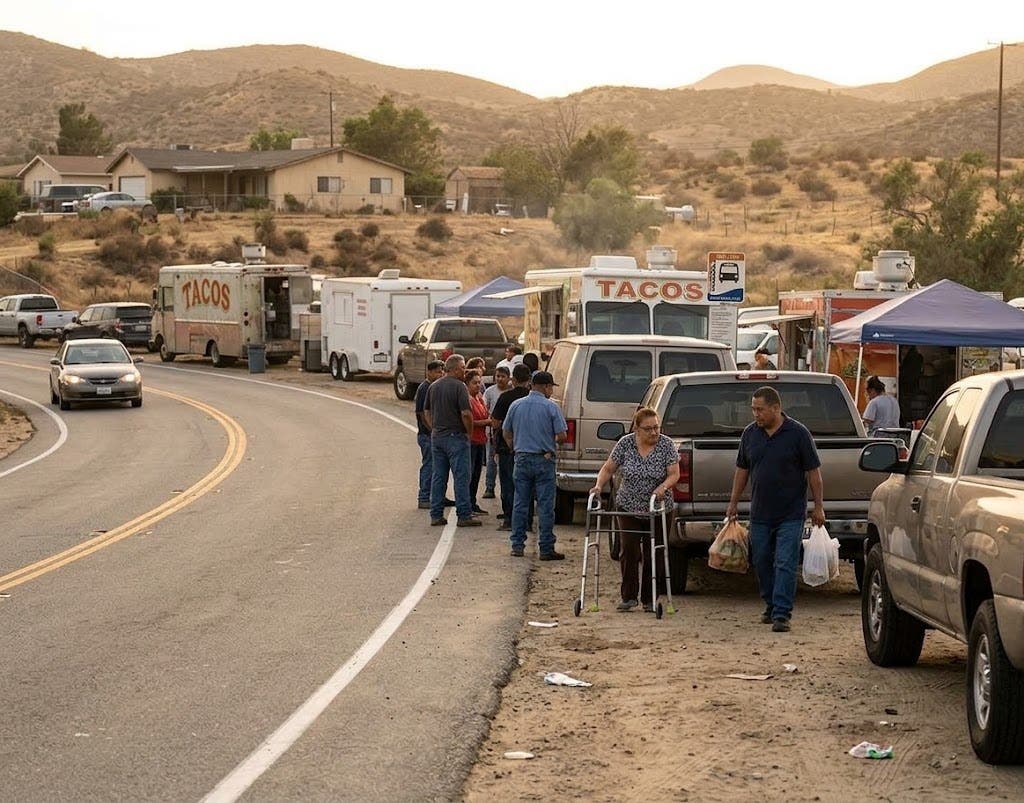
Residents of Good Hope, have for nine months reported mobile food vendors & their customer traffic occupying the dirt shoulder at Ellis Avenue and Marshall Street in Good Hope, blocking the public right-of-way.
Find out what's happening in Riversidefor free with the latest updates from Patch.
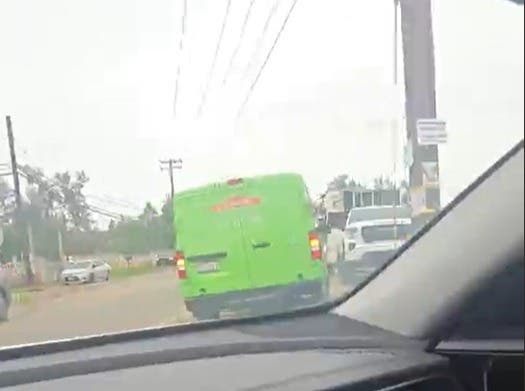
Pedestrians, including people with mobility aids, are forced into the active travel lane to pass the vendor operations. Emergency vehicles may be slowed due to drivers not having room to pull over because of the vendors' customers parking on the dirt shoulder.
Multiple complaints to Code Enforcement, TLMA, and other agencies produced the same result: delay, deflection, and the claim that the vendors are “legally operating.”
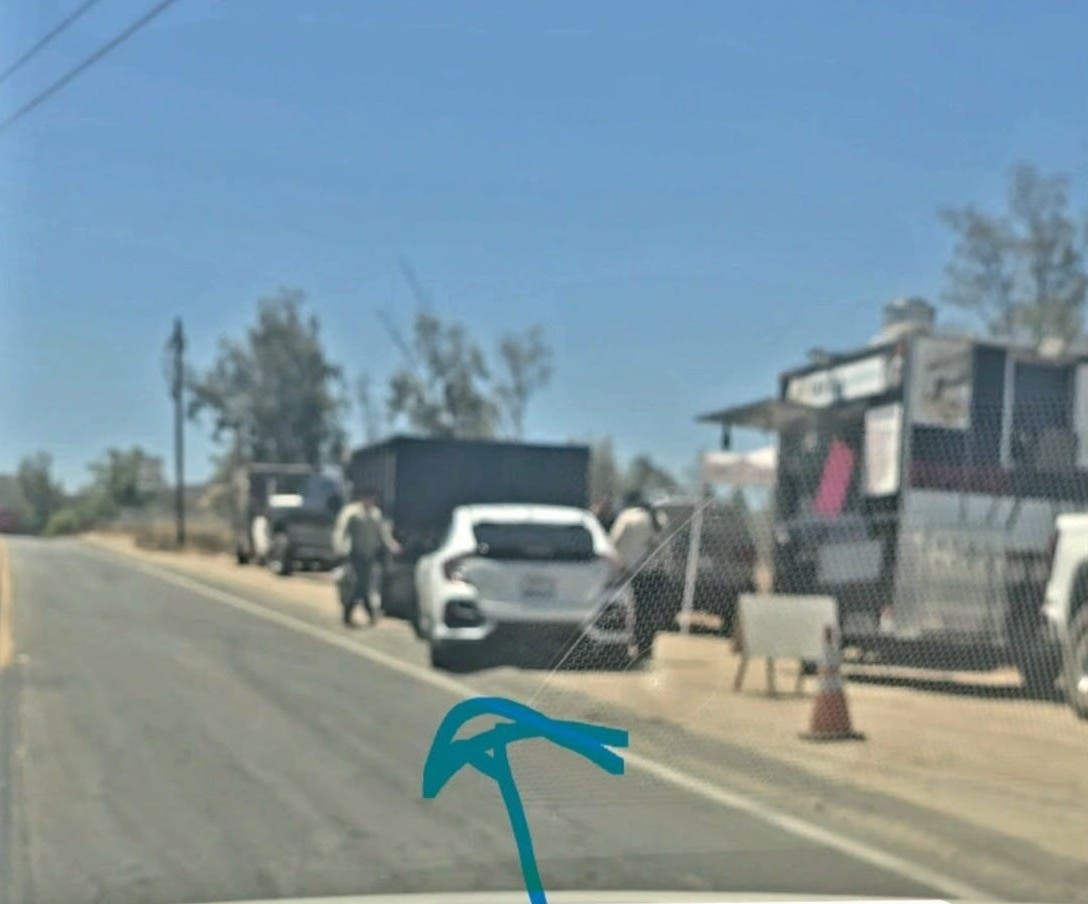
A formal request to meet with First District Supervisor Jose Medina about the hazard in his own district was declined. A Notice of Dangerous Condition was submitted to County Counsel. And, a civil rights complaint alleging ADA and equal access violations have all been filed. Still the commercial encroachment remains.
The parallels with the Grand Jury’s findings are difficult to ignore. The report described selective enforcement and instances in which political considerations appeared to influence which violations received attention and which did not.
It documented a culture in which complaints were not always taken seriously and accountability was lacking. Residents dealing with blocked rights-of-way, illegal dumping, or other quality-of-life violations have described similar patterns for years: clear rules on the books, uneven application on the street, and little consequence when enforcement fails.
The Board of Supervisors later approved an Executive Office response that pushed back on some of the Grand Jury’s conclusions regarding political pressure and workplace issues. That is the Board’s prerogative. But dismissing or minimizing the report does not erase the lived experience of residents who continue to encounter the same non-enforcement the Grand Jury flagged.
Public rights-of-way are not optional amenities. They are basic infrastructure that must remain open and reasonably safe for everyone who uses them. When a county department charged with protecting those spaces repeatedly declines to act—whether because of internal dysfunction, excessive deference to certain operators, or simple inertia—the public absorbs the risk.
People with disabilities absorb it most acutely when the only path forward is the traffic lane. California’s sidewalk vending laws were never intended to create zones of impunity. They limit criminalization of vendors; they do not require local governments to surrender control of the public right-of-way or ignore genuine safety and accessibility hazards. Riverside County still has both the authority and the responsibility to keep those rights-of-way clear.
The Grand Jury has now put the department’s problems on the official record. The question is whether the Board of Supervisors and County leadership will treat the report as a call to restore consistent, impartial enforcement—or as an inconvenience to be managed and moved past.
Residents in Good Hope and across unincorporated Riverside County are still waiting for the basic service Code Enforcement is supposed to provide: fair enforcement of the rules that protect the public. Until that happens, the gap between the department’s stated mission and its performance will remain exactly what the Grand Jury described—not living up to code.
.jpg)
Citizen Jane is a Community Resident and Advocate Focused on Public Safety, Accessibility, and Accountability.