Crime & Safety
Project Lifesaver Helps Locate Missing Persons in Roseville
A missing person wearing a Project Lifesaver bracelet is typically found within 30 minutes, compared to three hours without the bracelet.
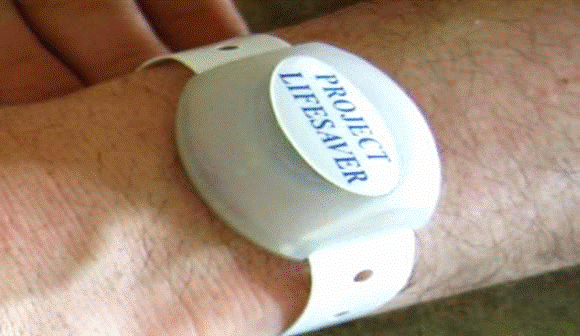
When a 7 year old child with autism wandered from his Roseville home in the dark during the middle of winter a few years ago, there could have been a tragic outcome. Instead, the child was found near a creek, but safe within 28 minutes and returned home, thanks to Project Lifesaver.
The Project Lifesaver Program in Roseville is operated out of the Roseville Police Department.
Originally Project Lifesaver started in Virginia in 1998 and was developed to help locate individuals at risk who wander from their home. According to the Project Lifesaver website, about 2,400 people have been located throughout the country as a result of the program.
Find out what's happening in Rosevillefor free with the latest updates from Patch.
Project Lifesaver started in Roseville in 2006.
“We were the first city in California to implement the program," said Denise McElvaine, program director for Project Lifesaver in Roseville. "Now other jurisdictions in California and other western states are picking up the program."
Find out what's happening in Rosevillefor free with the latest updates from Patch.
According to McElvaine, individuals enrolled in the program wear a battery-operated bracelet, which emits an individualized tracking signal on the 216 MHz frequency range. The signal is used to locate the citizen if he or she wanders from home.
If the citizen wanders from home, the caregiver calls 911 and the police are dispatched to the area where the resident was last seen. The receiver can track a signal up to five miles.
All Roseville Police officers are trained to use the radio frequency receivers to locate the individual. As the police search the area, the signal becomes stronger as they get closer to the missing person.
Volunteers also play a crucial role in the success of the Project Lifesaver program. Volunteers go out monthly to change the batteries on the bracelets and make sure everything is functioning properly.
Although the program is operated by the Roseville Police Department, initial start-up funding was from community donations and grants from organizations, such as Walmart, Sutter Health and Union Pacific.
“While the bracelets cost about $500 each and batteries run about $10 a month, the program is free for participants,” said Teresa Murray, Roseville Police Department Support Services Commander.
In order to enroll in the program, participants must have been diagnosed with Alzheimer’s disease, or some other form of dementia, Down syndrome or autism. They must also reside in Roseville and have a caregiver who can check the device daily to ensure it is working. The citizen must also have a history of wandering from home.
According to Murray, when an at-risk citizen wanders from home and goes missing, the average search cost is about $300,000. Several law enforcement agencies and other agencies, such as the fire department, usually are dispatched to the scene. The average time to find a citizen is about three hours. In that time, a lot can happen, which puts the individual in danger.
“With Project Lifesaver, the tracking signal allows citizens to be found much quicker, usually in less than 30 minutes," Murray said. "A large number of officers are also not needed to conduct a search. This helps keep police officers on the street where they are also needed."
Caregivers interested in getting someone enrolled in the program can contact Project Lifesaver to start the application process. A physician’s note, which states the citizen meets the criteria for enrollment in the Project Lifesaver program, will be needed.
Individuals interested in volunteering or making a donation can also e-mail Project Lifesaver at projectlifesaver@roseville.ca.us or call 916-746-1077 for more information.