Politics & Government
Report To CA Legislature: Prepare For Sweeping Effects Of Climate Change
The Legislative Analyst's Office report provides a litany of sobering climate change impacts for California legislators.

April 5, 2022
In summary
Find out what's happening in Rosevillefor free with the latest updates from Patch.
From housing and health to transportation and education, the Legislative Analyst’s Office report provides a litany of sobering climate change impacts for California legislators to address as they enact policies and set budgets.
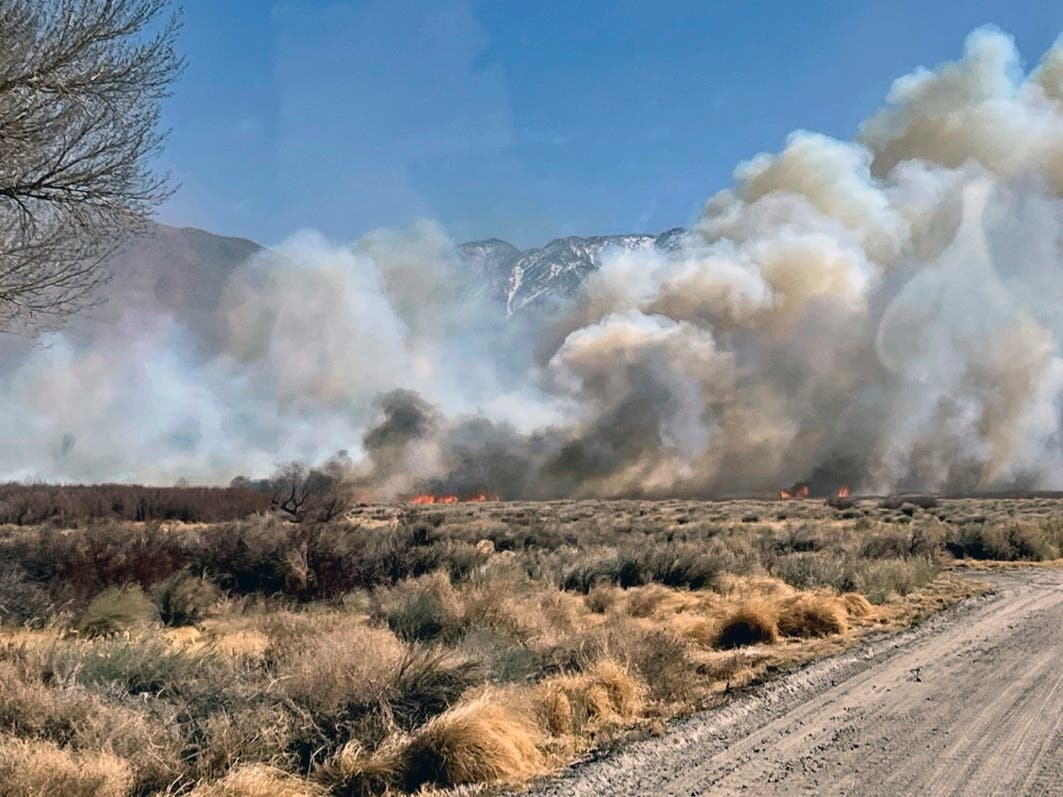
Painting alarming scenes of fires, floods and economic disruption, the California Legislature’s advisors today released a series of reports that lay out in stark terms the impacts of climate change across the state.
Find out what's happening in Rosevillefor free with the latest updates from Patch.
The typically reserved, nonpartisan Legislative Analyst’s Office outlined dire consequences for Californians as climate change continues to alter most aspects of daily life. Much of the focus of the six-part series is detailing the economic cost as the changing climate alters where and how Californians build, grow food and protect the most vulnerable residents.
- Wildfires, heat and floods will force more frequent school closures, disrupting education, child care and availability of free school lunches. More than 1,600 schools temporarily closed because of wildfires each year between 2017 and 2020, affecting nearly a million students a year.
- Workers in outdoor industries like agriculture, construction, forestry and recreation — 10% of California’s workforce and mostly made up of Latinos — will continue to bear the brunt of extreme heat and smoke.
- Wildfire smoke may have killed about 20 people among every 100,000 older Californians in 2020, and is projected to become more deadly. A 50% increase in smoke could kill nine to 20 more people among every 100,000 each year.
- Housing, rail lines, bridges, ports, power plants, freeways and other structures are vulnerable to rising seas and tides. “Between $8 billion and $10 billion of existing property in California is likely to be underwater by 2050, with an additional $6 billion to $10 billion at risk during high tide.”
- Extreme heat is projected to cause nine deaths per 100,000 people each year, “roughly equivalent to the 2019 annual mortality rate from automobile accidents in California.”
- Lower-income Californians, who live in communities at greater risk for heat and floods because of discriminatory housing practices, will be hit especially hard by climate change and have fewer resources to adapt.
- Housing will be lost: For example, in the San Francisco Bay Area alone, 13,000 existing housing units and 104,000 job spaces “will no longer be usable” because of sea rise over the next next 40 to 100 years.
- Beaches will disappear, too: Up to two-thirds of Southern California beaches may become completely eroded by 2100.
The report’s unsaid but unambiguous conclusion: Climate change could alter everything, spare no one in California, so legislators should consider preparing for sweeping impacts.
“These hazards will threaten public health, safety, and well-being — including from life-threatening events, damage to public and private property and infrastructure, and impaired natural resources,” the analysts say in their report.
“The pain, and costs, will be shared among state, regional, local, private and industry sectors,” the report continues.
Scientists say it’s not too late to stop the most severe effects, although the clock is ticking. Technologies and other solutions already exist to reduce greenhouse gases from fossil fuels and other sources and prevent more irreversible harm, according to a landmark international scientific report released Monday. But international accords and plans continue to fall far short, with emissions expected to keep increasing.
“These hazards will threaten public health, safety, and well-being — including from life-threatening events, damage to property and infrastructure, and impaired natural resources.”
legislative analyst’s office report
California’s legislative analysts did not conduct new research; instead, they compiled existing data and projections, providing a comprehensive clearinghouse for legislators as they enact policies and approve budgets.
State Sen. Bob Wieckowski, a Democrat from Fremont and chair of the budget subcommittee on resources, environmental protection and energy, said he plans to turn to the reports as references and rationale for the subcommittee’s budget proposals.
“It’s impressive,” he said. “(It) turns the climate conversation into an all-hands-on-deck versus, ‘Oh, this is just some tree hugger over here.’”
The analysts make no explicit policy recommendations but they advise legislators to consider such questions as: How can the state avoid exacerbating climate impacts? How can lawmakers protect the most vulnerable Californians? And how should California pay to prepare and respond to climate change?
Assembly Speaker Anthony Rendon, a Democrat from South Gate, asked the Legislative Analyst’s Office to assess the impacts of climate change on a variety of policy sectors, and the reports grew from there. They frame climate change as a complex, multi-disciplinary problem that requires response from all of the state’s agencies.
Project manager Rachel Ehlers said the aim is to assist lawmakers incorporate climate change into decisions outside of traditionally environmental realms, including housing, health and education. For instance, would a new housing policy “have the potential to inadvertently worsen climate change impacts?” she said.
Last year’s budget package reflected the overarching scope of the problem, proposing to spend $9.3 billion over three years to bolster the state’s responses to drought, floods, fire and sea level rise.
Despite the state’s climate-forward reputation, critics and many legislators note that California’s follow-through has been inconsistent.
The reports come in the lead-up to California Gov. Gavin’s Newsom’s May revision to his January budget blueprint, when the administration can reframe and update its proposals. Thus far, the proposed budget included more than $22 billion for climate change efforts that include protecting communities against wildfires and extreme heat.
Despite the state’s climate-forward reputation, critics and many legislators note that California’s follow-through has been inconsistent.
“I don’t at all feel that we are leading the world anymore,” Rendon, a Democrat from South Gate, told CalMatters last year.
Although the state passed a $15 billion climate budget, California Environmental Voters, an advocacy group, gave California its first “D” grade for what it called its climate inaction last year.
“We’re plagued by ‘climate delayers’ in Sacramento – members of the Legislature who talk about climate change but don’t back up those words with action,” CEO Mary Creasman wrote in a CalMatters commentary.
Last month, a coalition of California’s environmental justice advocacy organizations pushed for a phase-out of fossil fuels, and warned that clean air regulators have failed to adequately consider public health in crafting the state’s blueprint for curbing greenhouse gas pollution.
California is already reeling from climate change
The analysis made clear that many of the worst consequences are already here, even as it noted that future impacts are coming sooner and may be worse than scientists had predicted.
Summer temperatures scorched records as the state’s second-largest wildfire tore across Northern California during the third-driest year on record for rain and snowfall. California must brace for yet more climate hazards, the reports warn, from extreme heat to more severe wildfires, whiplash from drought to flood and sea level rise along the coast.
Drought clutches California and a statewide heat wave forecast for Wednesday is poised to sap the remaining snowpack that supplies about a third of the state’s water. California’s firefighting arm warns that a record-dry start to the year could spell a devastating fire season ahead.
It’s a disaster drumbeat Californians have heard many times before. The Legislative Analyst’s Office has released report after report assessing the state’s climate policies and spending. It has warned that sea level rise will submerge billions of dollars in homes, roads and businesses by 2050, and that the state must accelerate planning to protect state assets including college campuses, prisons and even state workers from soaring heat, flooding, fire and extreme weather.
Newsom’s administration launched a preemptive response to the reports, with the Monday release of its updated climate adaptation strategy. The guidelines pull together plans from 38 departments and address priority issues, such as protecting communities vulnerable to climate change and combating risks to health and safety.
California Natural Resources Secretary Wade Crowfoot said the strategy is “a matter of protecting our residents and our communities or natural places from climate threats that are already here.”
State officials regularly recalibrate the official response to climate change, often in response to dire reports. Four years ago, California’s Fourth Climate Change Assessment released under former Gov. Jerry Brown warned that climate change would lead to death and property damage on the order of tens of billions of dollars by 2050.
Though today’s reports were focused largely on how California must adapt to the ravages of climate change, the Legislative Analyst’s Office has also warned repeatedly that California’s landmark greenhouse gas market, cap and trade, will fail to meet California’s goals to reduce emissions.
more on environment
Sierra snowpack worsens, falls to lowest level in 7 years
The April snowpack, key to how much water flows into reservoirs, is 38% of average statewide, proving that drought hasn’t relaxed its grip on California.
by Rachel Becker
April 1, 2022
Newsom imposes new California water restrictions — leaves details to locals
Still resisting statewide water rationing for parched California, Gov. Gavin Newsom is asking local suppliers to tighten water limits.
by Rachel Becker
March 28, 2022
Audit: California utilities aren’t doing enough to reduce wildfire threats
Regulators approved “seriously deficient” fire prevention plans, including from PG&E, which sparked California’s deadliest wildfire, state auditor says.
by Julie Cart
March 24, 2022
We want to hear from you
Want to submit a guest commentary or reaction to an article we wrote? You can find our submission guidelines here. Please contact CalMatters with any commentary questions: commentary@calmatters.org
CalMatters.org is a nonprofit, nonpartisan media venture explaining California policies and politics. Sign up for our newsletters and follow us on Facebook, Twitter and Instagram.