Community Corner
Flooding, Undercut Cliffs Likely As CA Is Lashed With 'Highest Sea Levels Ever' This Winter
Higher sea levels, powerful waves and winter storms could increase flooding and erosion along the California coast.


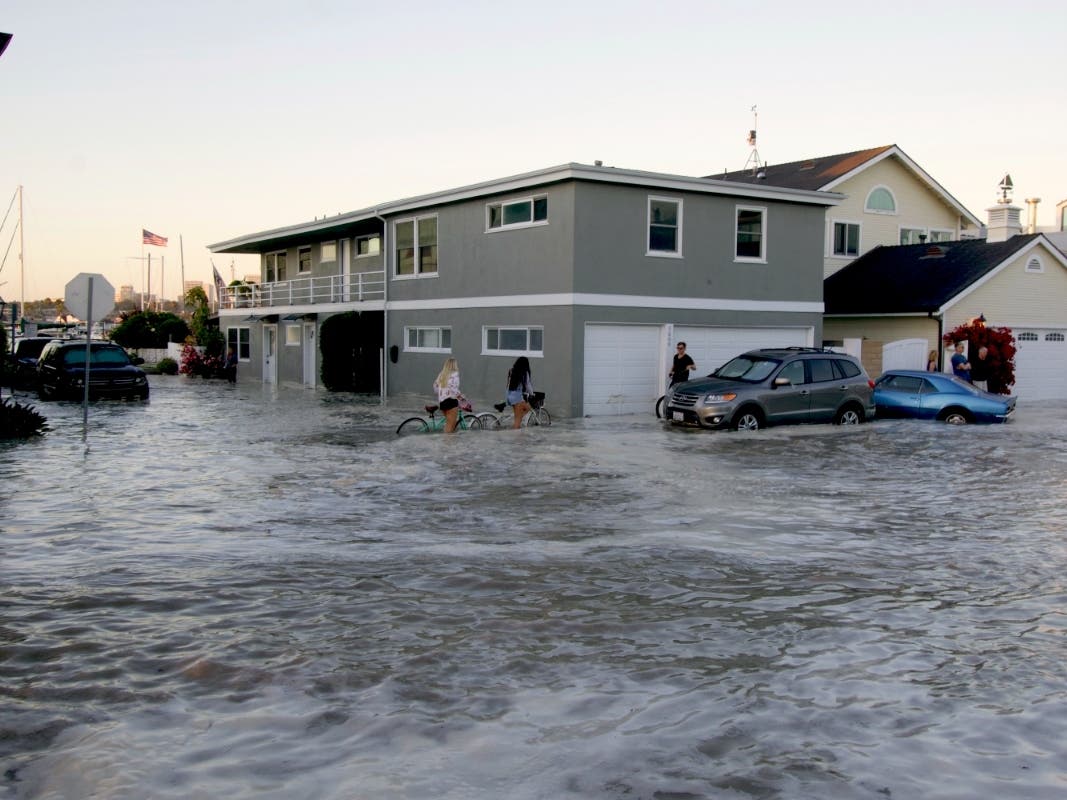

Experts are sounding the alarm in California, where a 'Super' El Niño is expected to exacerbate already rising sea levels in what could be a catastrophic storm season for many coastal communities.
Already this summer, high tides have washed away whole stretches of beach, lifeguard towers, heavy equipment, and threatened portions of the state's famed Pacific Coast Highway and beachfront homes.
According to scientists at the National Oceanic and Atmospheric Administration's Climate Prediction Center, El Niño is strengthening, with more than a 90% chance of becoming a very strong event this fall and winter. There's a 69% chance of a "historic event" that could exceed the strength of any El Niño since 1950.
Find out what's happening in San Diegofor free with the latest updates from Patch.
RELATED: 'Super' El Niño Now Poised To Shatter Records
During a virtual town hall hosted by state Sen. Mike McGuire, oceanographer Mark Merrifield of UC San Diego's Scripps Institution of Oceanography said the developing El Niño is expected to bring unusually high sea levels to California this fall and winter.
Find out what's happening in San Diegofor free with the latest updates from Patch.
"We're expecting likely the highest sea levels ever recorded on the California coast associated with this event," said Merrifield, who serves as director of Scripps Institution of Oceanography's Center for Climate Change Impacts and Adaptation.
He said the combination of elevated sea levels, high tides, large waves and winter storms could create significant challenges for coastal communities.
The threat is already visible.
During the town hall, Merrifield displayed a NASA satellite image showing that sea levels in some parts of the eastern Pacific are already more than 6 inches above the reference level. He said sea levels along the California coast are expected to rise further this fall and winter, reaching levels "far above the average seasonal cycle."
In Malibu, a section of Point Dume Beach was closed earlier this month after high tides and large swells caused severe erosion. The erosion created unstable bluff edges and drop-offs, according to Los Angeles County's Department of Beaches and Harbors.
"The bluff edge is unstable, with drop-offs approaching 8 feet in some locations, creating a significant safety hazard," the department said in an advisory.
Erosion is also threatening Pacific Coast Highway in Malibu, particularly in areas where seawalls were destroyed when homes burned in the Palisades Fire. The city urged Caltrans to install permanent protections before winter.
"Left unaddressed, the erosion trend will continue to accelerate, removing the material that supports the roadway embankment," Malibu officials said in a news release. "The onset of El Niño conditions this storm season significantly raises the likelihood of heavy rainfall, high surf and wave events that could compress months of expected erosion into a single storm cycle."
In Carlsbad, powerful swells recently stripped much of the sand and damaged portions of a parking lot at Tamarack State Beach. Several lifeguard towers have also been relocated because of the erosion, KTLA reported.
In Long Beach, crews have been reinforcing sand berms along the Peninsula as high tides and large waves threaten the shoreline lined with homes.
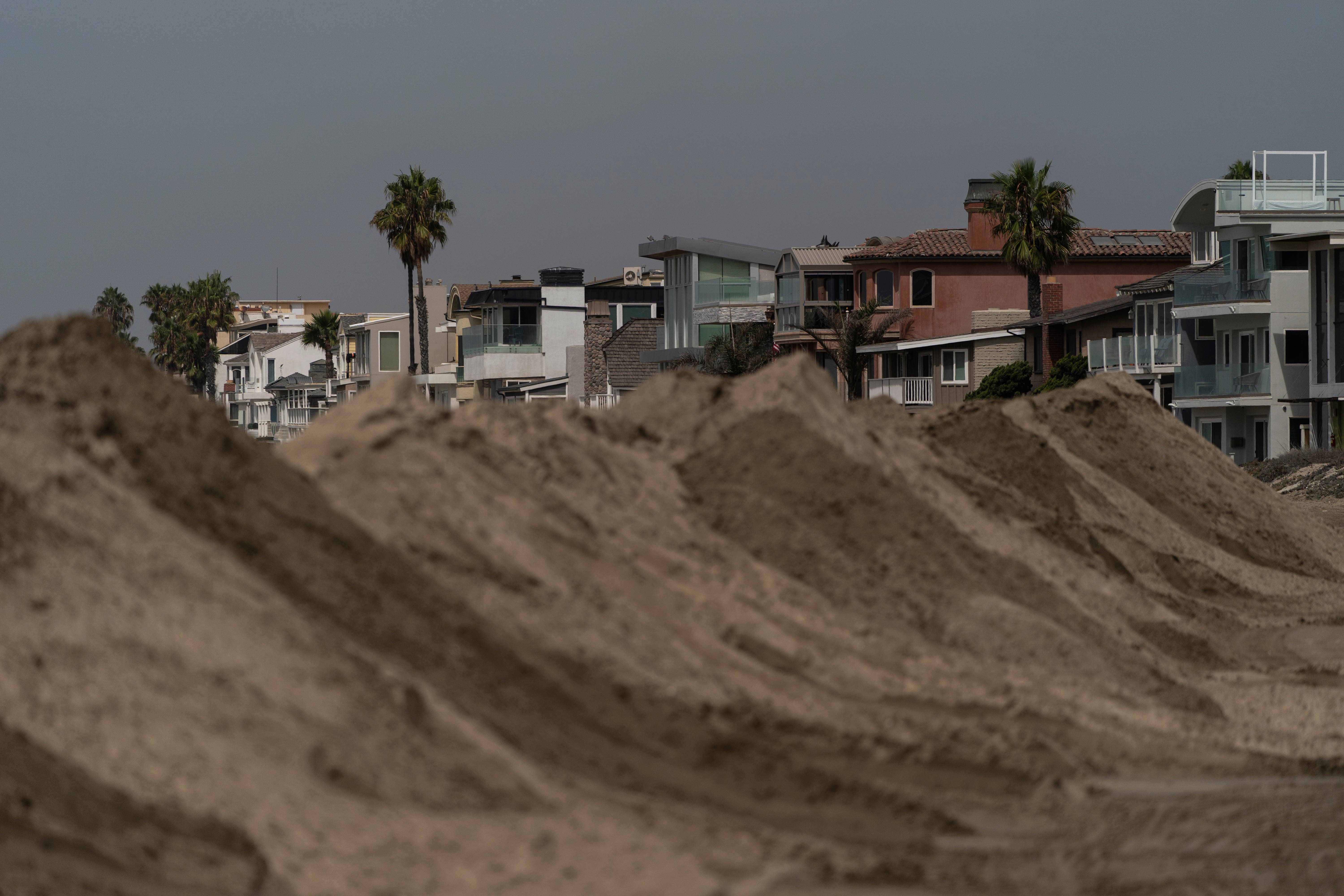
A section of the berm was breached during Hurricane Genevieve, and crews rebuilt it ahead of additional high tides, the Long Beach Post reported. City officials said they now maintain the berms year-round, rather than only occasionally, because of increasingly frequent high tides.
"The tides that we're seeing now, we did not see in the past," Todd Leland, manager of the city's Marine Bureau, told LAist.
Those events offer a glimpse of what sea-level rise can mean for California.
For beach communities, one of the most visible effects of rising seas is the loss of sand.
Merrifield said El Niño events have historically produced powerful waves that move beaches inland and reduce the natural buffer between the ocean and coastal development.
"It's well documented that during El Niño events, beaches across the entire state tend to move landward by about 30 meters or so," he said during the town hall.
El Niño is a natural climate pattern caused by warmer than normal ocean temperatures in the central and eastern tropical Pacific. It can influence weather around the world, including bringing wetter conditions and stronger storms to California.
That loss of beach can allow waves to reach roads, homes and coastal bluffs more easily, increasing the risk of flooding and erosion.
Higher seas can also push flooding farther inland, threaten roads and utilities, damage wastewater systems and increase saltwater intrusion. Coastal cliffs and bluffs can become more vulnerable to erosion and collapse.
.jpg)
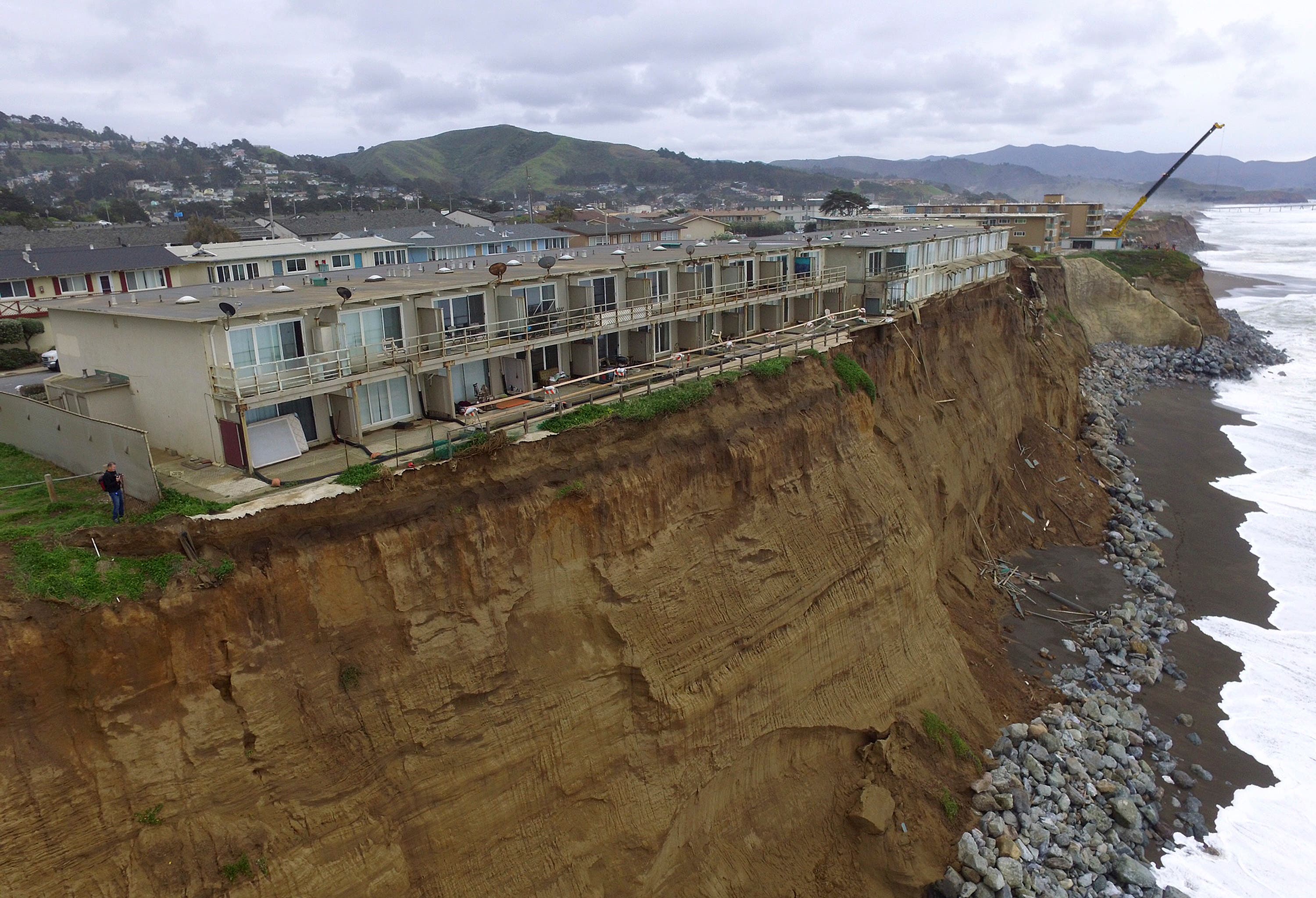
Sea-level rise poses different risks across California. Low-lying communities around the San Francisco Bay face increasing flooding risks, while communities around Humboldt Bay face both rising seas and areas where the land itself is sinking.
Along the coast, communities from Santa Cruz and Monterey to Malibu, Long Beach, San Diego and Imperial Beach face varying threats from beach erosion, bluff collapse, coastal flooding and wave damage.
Public safety is another concern. Higher water, large waves and narrower beaches can leave less room for people to escape sudden surges.
"Flooding along the Southern California coast is likely to be a major issue for the winter season," Merrifield said.
The elevated sea levels associated with El Niño typically begin to peak around November and December, Merrifield said.
But the greatest potential for broader weather impacts comes later. The Los Angeles Times reported that El Niño's effects on Southern California rainfall and snowfall become more apparent from December onward. January to March is considered "the prime season for impacts" Michelle L’Heureux, the El Niño team lead for the Climate Prediction Center, told The Times.
That means communities have time to prepare for the possibility of high tides, large waves, flooding and winter storms arriving together.
Officials encouraged Californians to sign up for local emergency alerts and create disaster plans through the state's Ready California site.
"Do the prep work," said Nate Ortiz, assistant director of planning and preparedness with the California Office of Emergency Services.
Ortiz recommended that residents prepare a go-bag with important documents, cash, food, water, pet food and other supplies, medication and clothing. Families should discuss emergency plans. Residents should also keep vehicles fueled or charged and mobile devices powered.
"While the forecasts continue to evolve, our approach is to prepare early, coordinate often, and remain ready to respond," Ortiz said. "We're always leaning into it and trying to get ahead of it."
Get more local news delivered straight to your inbox. Sign up for free Patch newsletters and alerts.