Weather
Perseid Meteor Shower Peaks Thursday In California
The Perseids peak starts Thursday, but 2022's final supermoon could hamper viewing conditions.


CALIFORNIA — Stargazers will have a chance to catch summer's must-see astronomical show when the Perseid meteor shower peaks this week over California.
The Perseids have been active for weeks, but the meteor shower will peak Thursday night into the early morning hours of Friday.
Skywatchers spotted the first fireballs in late July, according to AccuWeather. Activity will gradually wane through Sept. 1.
Find out what's happening in San Diegofor free with the latest updates from Patch.
The Perseids produce about 50 to 100 meteors an hour at the peak, according to NASA. The shower is produced by the comet 109/P Swift-Tuttle, discovered in 1862.
Hoping to catch a glimpse of the Perseids? AccuWeather predicts mainly clear skies in California.
Find out what's happening in San Diegofor free with the latest updates from Patch.
Meanwhile, skywatchers across the Intermountain West, Southeast and the Upper Midwest hoping to witness a shooting star or two might step outside and see only clouds, according to AccuWeather.
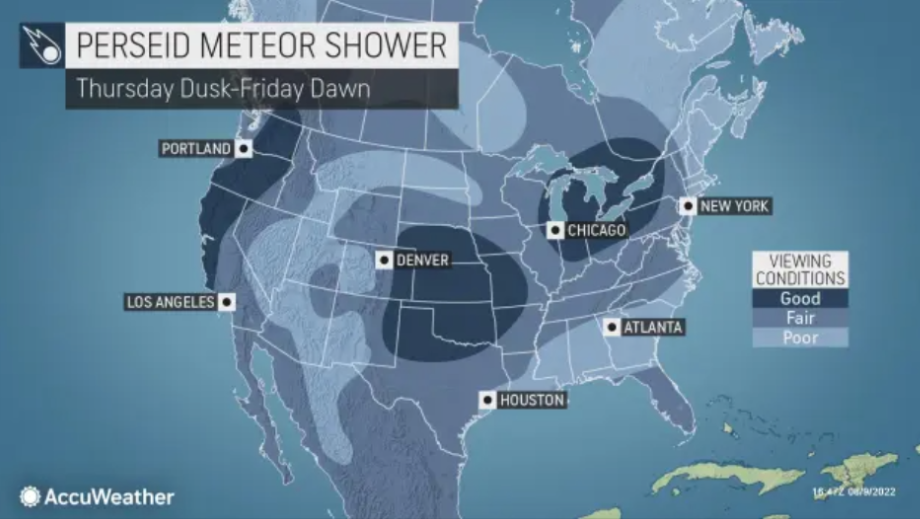
Weather aside, the Perseids will have other competition this year. On Thursday, the third and final supermoon of 2022 will illuminate the sky, shining all night long amid the peak.
"Sadly, this year's Perseids peak will see the worst possible circumstances for spotters," NASA astronomer Bill Cooke said in an agency blog post. "Most of us in North America normally see 50 or 60 meteors per hour, but this year, during the normal peak, the full moon will reduce that to 10-20 per hour at best."
While it might not be the best year for a memorable trip to see the Perseids, consider watching the skies just before dawn. If that's not possible, NASA suggests focusing on the darkest spots in the sky where the moon is not visible.
The Perseids are known for their fireballs, which are "larger explosions of light and color that can persist longer than an average meteor streak," NASA said, explaining, "This is due to the fact that fireballs originate from larger particles of cometary material."
The shower is called the Perseids because its radiant point is near the prominent constellation of Perseus the hero.
Get more local news delivered straight to your inbox. Sign up for free Patch newsletters and alerts.