Community Corner
Rare, Painful-Stinging Sea Creature Washes Up On San Diego County Beaches
It's rare that the unusual creatures show up in Southern California. Scientists say El Niño may be to blame.


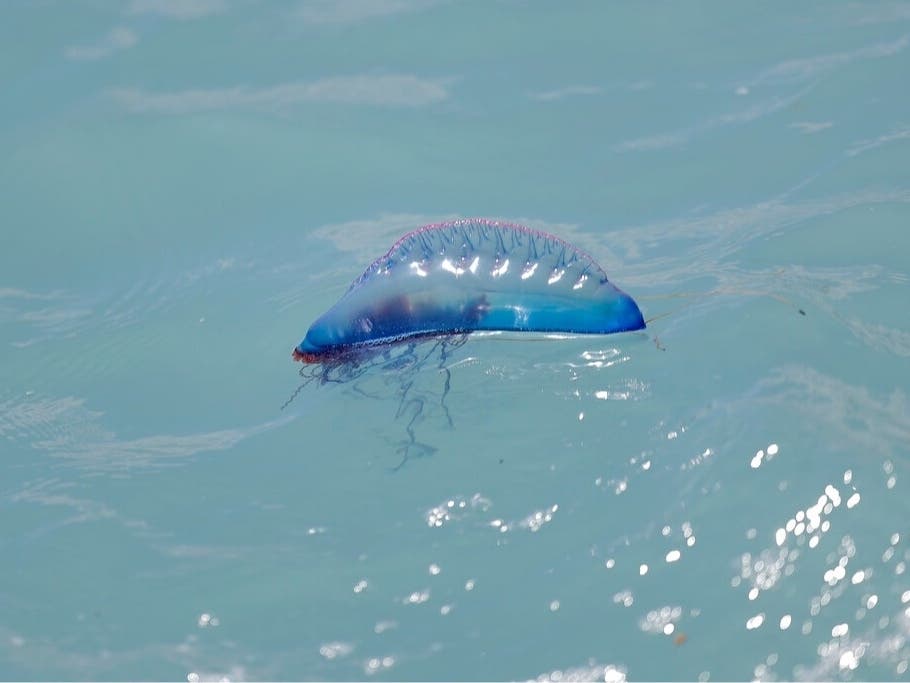
SAN DIEGO, CA — A rare marine creature capable of delivering a painful sting has been washing up along beaches in Southern California, prompting oceanographers to warn beachgoers to watch where they step.
The Portuguese man o' war has been spotted near tide pools at Cabrillo National Monument and along beaches in Del Mar and La Jolla in San Diego County, according to UC San Diego's Scripps Institution of Oceanography.
The unusual blue-to-purple creatures, known scientifically as Physalia, are siphonophores, a group of marine animals closely related to jellyfish. They have specialized stinging cells that can deliver painful stings to people who come into contact with their tentacles. Their sting is severe.
Find out what's happening in San Diegofor free with the latest updates from Patch.
" While the man o’ war’s sting is rarely deadly to people, it packs a painful punch and causes welts on exposed skin," the National Ocean Service warned. "Found mostly in tropical and subtropical seas, men o' war are propelled by winds and ocean currents alone, and sometimes float in legions of 1,000 or more."
Sightings of Portuguese man o' wars are extremely rare in San Diego, but scientists believe warmer ocean waters associated with El Niño may be bringing the creatures to the Southern California coastline.
Find out what's happening in San Diegofor free with the latest updates from Patch.
“This is an exciting occurrence for this region, and we are grateful to the curious and careful naturalists who reported them,” said Linsey Sala, manager of the Pelagic Invertebrate Collection at Scripps Oceanography.
Despite their painful sting, Sala said beachgoers don't need to panic.
“Knowledge is power, and knowing that these gorgeous animals may periodically be here allows us to keep an eye out and aim to avoid touching them while on beach walks or swims,” Sala said.
Portuguese man o' wars are common in other parts of the world, including Hawaii and Australia.
They resemble another marine creature occasionally seen along Southern California beaches, the by-the-wind sailor, which also has a blue-to-purple appearance.
Portuguese man o' wars can be distinguished by their gas-filled floats and long, trailing tentacles, according to Scripps.
Beachgoers who encounter the creatures should avoid touching them.
For those who are stung, experts recommend rinsing the affected area with seawater, carefully removing any visible tentacles and immersing the area in hot water until the pain subsides, KTLA reported.
SEE ALSO:
- Watch: SoCal Swimmer Surrounded By 6 Great Whites
- Rare Sea Snails Spotted Along San Diego Beaches
- Jellyfish Sightings Rising In OC Due To El Niño, Rising Temps
- Venomous Sea Snake Slithers Onto SoCal Beach, Video Shows
- Sea Turtle Nests On OC Beach For The First Time In CA History, Experts Say
- Mysterious Jelly-Like Blobs Wash Ashore In Southern California
- Elusive Monster 'Serpent of the Deep' Washes Ashore