Politics & Government
San Clemente Green Gets Feedback from City Council Candidates on Decommissioning and Tree/View Issues
The next City Council will need to have all the facts about decommissioning San Onofre. They can't just trust the "experts" at Edison. BLOG

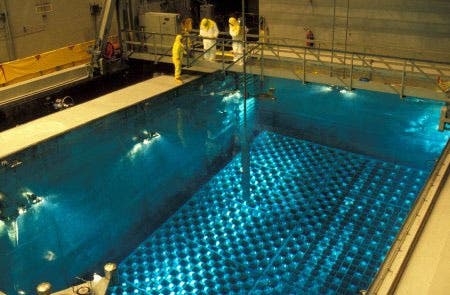
Make an informed decision about our city council election. Read about their views on decommissioning here:
Also: try your best to attend an important Nuclear Regulatory Commission meeting in Carlsbad tonight.
Help us get our message out;
Find out what's happening in San Clementefor free with the latest updates from Patch.
DON’T ACCEPT EDISON’S INCOMPLETE AND INADEQUATE DECOMMISSIONING PLAN
San Onofre’s Decommissioning Plan is not what it’s cracked up to be
Find out what's happening in San Clementefor free with the latest updates from Patch.
Are the nuclear waste dry storage canisters at San Onofre cracking?
No one knows, but Edison wants to buy more of these inferior canisters.
October 27, 2014 (Carlsbad, CA) – The Nuclear Regulatory Commission (NRC) should not approve Southern California Edison’s San Onofre Decommissioning Plan.[i]
The NRC has scheduled a public meeting today from 6:00 p.m. to 9:00 p.m., to receive public comments on this plan. Meeting location is the Omni La Costa, Poinsettia Ballroom, 2100 Costa Del Mar Road in Carlsbad.
The NRC recently approved leaving the nuclear waste at San Onofre and all other nuclear plants in the nation for 60 years (short-term), 100 years (long-term) and indefinitely. Edison’s plan does not address this new reality.
A 2014 partial surface inspection of a two year old Diablo Canyon nuclear waste dry storage canister found conditions for stress corrosion cracks – a low enough temperature for ocean salts to corrode and crack the ½” thick stainless steel canister.[ii] The NRC originally said it would be at least 30 years before cracking might occur.[iii] Now both the NRC and Edison know better, but have not addressed this issue.
The NRC has not revised its spent fuel dry cask storage system requirements or its aging management plan given the above new realities. They plan to revise it in 2015.
Edison’s decommissioning plan does not address many major issues. The ratepayers could be set up for another billion dollar boondoggle similar to the steam generator boondoggle where metal tubes failed within one year in a system that was supposed to last 40 years. We’re facing similar problems with Edison’s decommissioning plan. However, the consequences could be much worse. The NRC needs to do their job and not approve Edison’s plan.
No technology exists to inspect or repair the thin steel canisters Edison wants to procure. Not even the outside of these thin (1/2” to 5/8”) canisters can be inspected.
Cracked canisters must be replaced. Edison has allocated no money to replace cracked canisters and these welded canisters were not designed to be opened. Instead, Edison wants to eliminate the spent fuel pools even though this is the only on-site method to transfer fuel into another canister.
No seismic rating for cracked canisters exists. The NRC proposes allowing up to a 75% crack before canisters must be taken out of service. However, cracked canisters have not been evaluated for earthquake conditions. And cracked canisters are not approved for transport.
Unknown if existing San Onofre canisters are cracked. Edison and the NRC do not know if the existing thin canisters are cracked, yet they want to buy more of this same inferior technology and have no money allocated to replace the existing canisters with better technology over the many decades they plan to leave them on our coastline.
There is no early warning monitoring system. We won’t know the canisters have failed until after they leak radiation into the environment. If one fails, they all could fail and yet there is no contingency plan for this possibility.
Edison refuses to allow bidding from vendors with the most widely used dry storage technology in the world (e.g., ~20” thick Castor ductile cast iron casks), even though this technology does not have the problems of the thin canisters. Germany, Japan and other countries use thick casks and house them in reinforced buildings for additional environmental and other external hazards. Edison should do this.
The NRC has no aging management plan for stress corrosion cracking or other degradation issues with these canisters – either short-term or long term. And they plan to require inspection of only one canister per facility and only of the exterior surface. The NRC is relying on non-existing technology that someday might be able to inspect the exterior for cracks. If they do find cracks they still have no way to fix this type of canister.
Recommendations
The NRC failed us on the steam generator debacle, but Edison did the right thing to shutdown SONGS for economic reasons. Now we want Edison to do the right thing again by using the money they collected from us ratepayers to buy the best dry cask storage system that is available today. Even so, this will only buy us more time to locate a permanent or interim nuclear waste site that will take decades to prepare. They must do this, even if the NRC continues to be lax in their oversight. To do otherwise, risks the future of California and threatens the food supply, health and economy of our nation and our families. The NRC must not approve this incomplete and inadequate decommission plan until these issues have been resolved.
[i] NRC webpage: Plans for Decommissioning of San Onofre Nuclear Generating Station Units 2 and 3 http://www.nrc.gov/info-finder/reactor/songs/decommissioning-plans.html
[ii] Diablo Canyon: conditions for stress corrosion cracking in 2 years, D. Gilmore, October 2014 https://sanonofresafety.files.wordpress.com/2011/11/diablocanyonscc-2014-10-23.pdf
[iii] Summary of August 5, 2014 Public Meeting with the Nuclear Energy Institute on Chloride Induced Stress Corrosion Cracking Regulatory Issue Resolution Protocol http://sanonofresafety.files.wordpress.com/2013/06/ml14258a081-8-5-14meetingsummary.pdf