Crime & Safety
Is Climate Change Affecting Fire Season Across California?
Climate change, invasive insects & no longer accurately predicting weather patterns are factors in a now yearlong fire season. Here's why.


The joke in California used to be instead of summer, winter, spring and fall, we had mudslide, earthquake and fire season. Now, with record statewide drought conditions across the state and a ho-hum El Niño, there is nothing funny about a wildfire season that lasts all year long.
Orange County Fire Authority public information officer Lt. Larry Kurtz has commented that firefighters prepare for yearlong wildland fire readiness.
According to the Department of Water Resources, climate change has had a lasting effect on both the expected weather and the ability for meteorologists to predict weather patterns. Put them together, and there is a case for an extended wildfire season in California.
Find out what's happening in San Juan Capistranofor free with the latest updates from Patch.
A recent report by Climate Central states that in the near future the Southwestern United States will see more days with high wildfire potential than not.
“As spring and summer temperatures in the west have gone up and snowpacks have gone down, the potential for wildfire has been steadily increasing at tremendous risk to our health and the economy,” said Alyson Kenward, wildfire expert and vice president of Climate Central.
Find out what's happening in San Juan Capistranofor free with the latest updates from Patch.
This new Wildfire Tracker Tool released by Climate Central shows not just the active burn areas but also the smoke visualization to explain how a wildfire burning in one part of the state can affect air quality across the state.
Where There is Smoke
Wildland fire potential for most of coastal California and the Sierra Nevada Mountains is above normal and is expected to remain that way through October, according to the National Interagency Fire Center.
Currently, California firefighters are battling five active burns across the state.
New album uploaded for the #SandFire @LACoFDPIO @LACoFireAirOps @lacfd @Angeles_NF https://t.co/ah85afbenP @tdunfee pic.twitter.com/oViBEHZRML
— socalfirephoto.com (@SoCalFirePhoto) July 30, 2016
The Sand Fire — currently 98 percent contained — in the Magic Mountain Wildland. The evacuations caused by the Sand Fire have been a case study in wildland fire management, with active burn areas in close proximity to highly populated residential areas. The Sand Fire is still smoldering, with hotspots, burning stumps and vegetation adding to smoke that has tinted the southern California sunsets into Riverside and San Diego counties.
Further north, the Soberanes Fire — now at more than 53,500 acres and only 35 percent containment — continues to veil central California in smoke.
#SoberanesFire [update] near Big Sur (Monterey County) is now 53,690 acres & 35% contained. https://t.co/FJ5RyubWl6 pic.twitter.com/1BEfO0cq6n
— CAL FIRE (@CAL_FIRE) August 5, 2016
Climate factors have contributed to the now year-round fire season, including prolonged drought and a disappointing El Niño in southern California. With significant northern California rainfall totals from spring storms, grass and brush are now ample wildfire fuel.
According to the National Interagency Fire Center, August’s wildland fire potential for California will remain above normal for most of the state.
“Primary concerns continue to focus on the abundant and fine fuels and their ability to carry fires more effectively than in a typical year,” the report states. California will remain at elevated fire risk though November, according to the NIFC report, with La Niña conditions being introduced and drier than normal conditions adding to wildfire woes.
Prolonged Drought Conditions and Climate Change
State reservoirs are down, even as the snowpack returned to near normal in 2016. However, even with the better than average rain totals for the northern part of the state, experts-- such as Department of Water Resources Chief of Snow Surveys, Dave Rizzardo--say that it will take more than a few years to get out of the prolonged dry period.
“We’ve been predicting water levels in California for 80 years,” Rizzardo said in a Climate Central report. Climate change, according to Rizzardo, may affect factors used in forecasting resulting in error or inability to collect sufficient data for weather modeling.
Where There is Fuel
At Cal Fire, the counties of San Diego, Riverside and San Bernardino remain on a year-round preparedness schedule. More than 66 million trees are dead from the influx of the bark beetle.
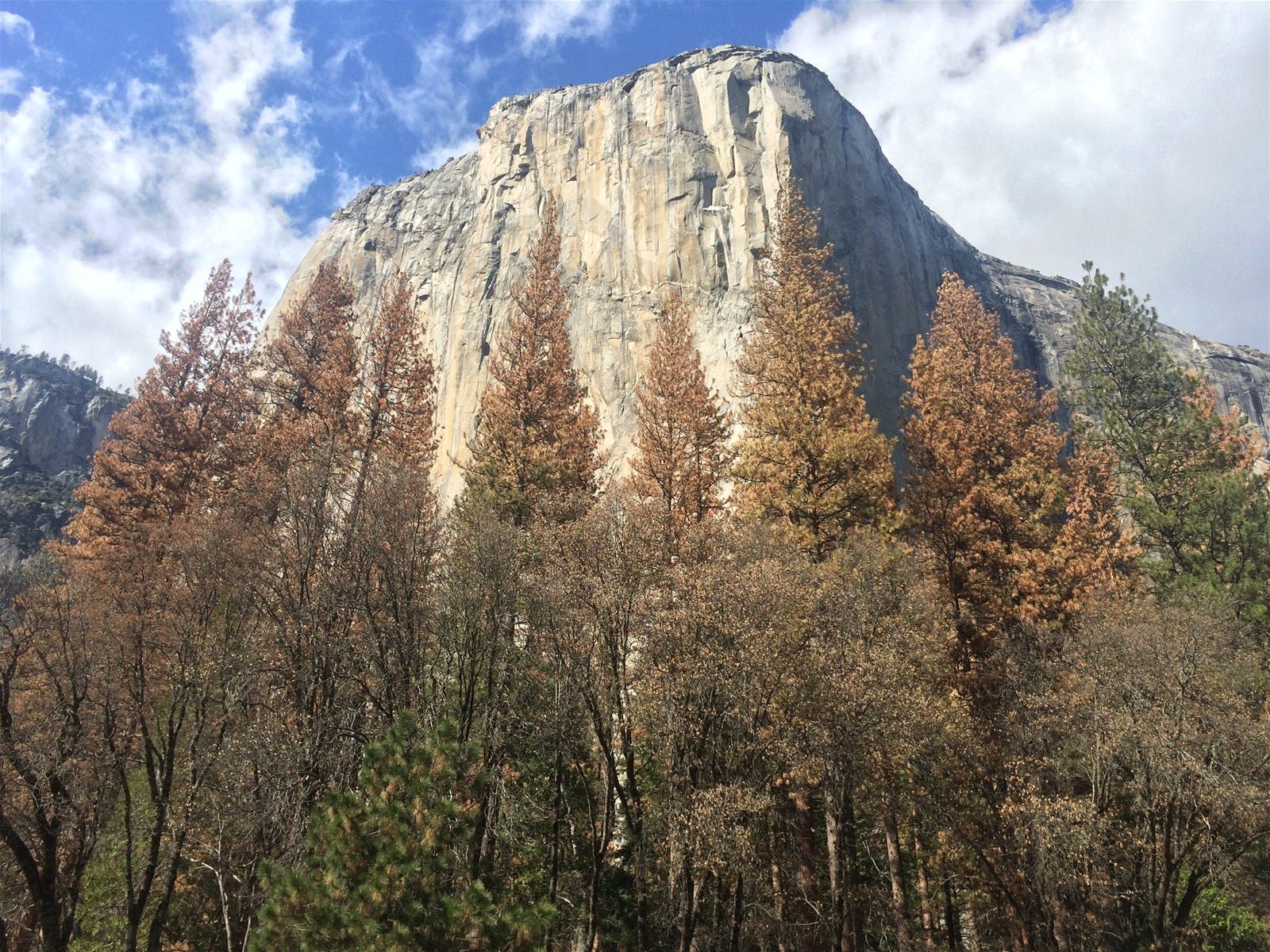
"The sheer number of dead trees is hard to imagine, but it’s real and what we have been anticipating for some time now,” said Chief Ken Pimlott, CalFire director and state forester. “We must continue our work to remove dead trees around roadways and critical infrastructure, while homeowners remove dead trees around their homes."
One Little Spark
Regardless of drought, dry fuel and climate change humans living in remote areas and interacting with nature continue to expand the issue of wildfires. According to CalFire, 95 percent of all wildfires begin with some sort of human activity.
In the 1970s, Smoky the Bear proclaimed that “only you can prevent forest fires.” Now, that question remains, should controlled burns have been kept in place? Time will tell, but meanwhile, wildland firefighters will continue to work together, as our last line of defense.
Here's how to help prevent wildfires by learning how to properly:
- Use outdoor equipment
- Burn debris
- Start, maintain, and extinguish a campfire
- Maintain a vehicle and tow safely
- Practice fire-safe target shooting
Image credits: Cal Fire, SCV Sheriff, Los Angeles County Fire Department Air Operations, LA County Fire Department
Get more local news delivered straight to your inbox. Sign up for free Patch newsletters and alerts.