Politics & Government
Commissioners Not Ready to Decide Fate of Remaining Lacouague-Owned Land
The Lacouagues want to divide up a 5.18-acre parcel in way that's not compatible with city standards.

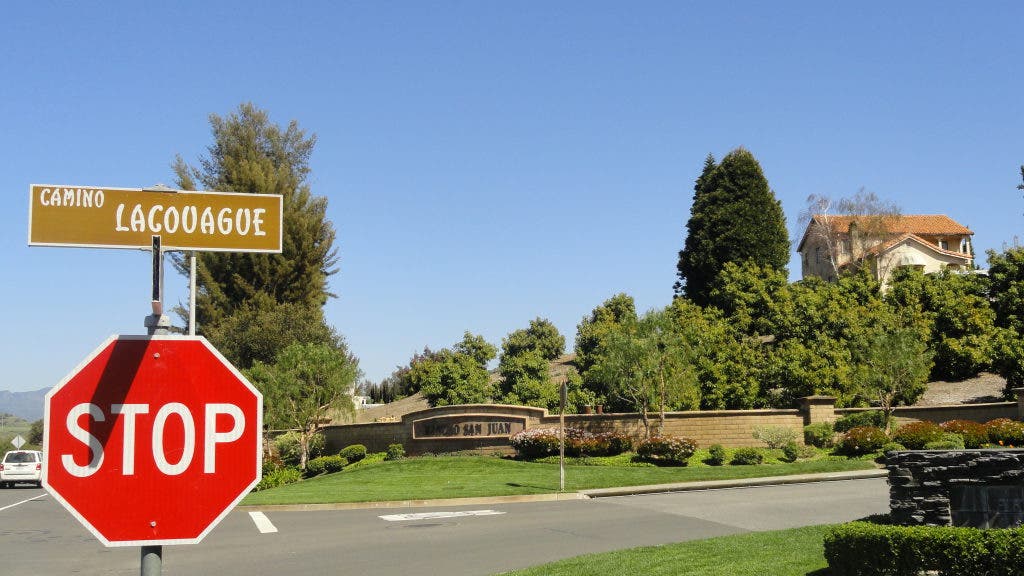
The Lacouague family's simple desire to leave small pieces of their historic farm property to future generations is proving to be a complicated matter in City Hall.
The family is proposing the construction of four new homes on the 5.18-acre property and its division into eight separate lots (four homes already exist on the land)—a move that is not compatible with city standards. To avoid a change to San Juan Capistrano's "general plan"—which would require City Council approval—the Lacouagues are instead asking the Planning Commission to allow them to develop and break up the land in accordance with a nearby housing tract's development standards.
But planning commissioners said Tuesday night they weren't ready to OK the incorporation into the Rancho San Juan housing tract, a subdivision that was built on a big chunk of the family's venerable 265-acre farm in the late 1980s. The commissioners forwarded the proposal along to the city attorney to evaluate what the most appropriate course of action should be.
Find out what's happening in San Juan Capistranofor free with the latest updates from Patch.
Commissioner Robert Williams said that because the City Council in 1986 intentionally allowed for the 5.18-acre parcel to be carved out of the Rancho San Juan tract, the commission should look at the land as its own stand-alone parcel, not part of the development standards of the housing subdivision.
"Based on the zone that it falls under today, which is low-density—1 unit per acre—they couldn’t do this … without going through a general plan amendment," he said. "I understand where the family is coming from, but I think breaking it up into four or five parcels might be the best route."
Find out what's happening in San Juan Capistranofor free with the latest updates from Patch.
It's a suggestion that the other commissioners agreed with, although some said they'd even be OK with six or seven parcels. Eight parcels, they said, would be too high-density.
Daniel Lacouague, who represented his three sisters and 80-year-old mother at Tuesday's meeting, said he'd likely be agreeable to having the land broken up into the proposed eight parcels.
"The absolute impetus is to get each house under its own lot," he said. Right now the homes are on one parcel—that gets problematic when you try to pass it onto future generations."
He said his grandfather purchased the farm in 1820 to grow walnuts and oranges. When walnuts became disadvantageous in 1845, he began growing only oranges. The Lacouagues were the last family to making a living off of oranges when they sold off much of the property and deeded another chunk to the city in 1986.
Daniels' father remained on the 5.18-acre property until his death a few years ago. "The fact is my dad didn’t want to move … so we carved out 5 acres for him to build his house and live out his life … He passed away within a couple feet from where he was born," he said.
Commissioner Roy Nunn said he was involved with 1986 decisions that determined the future of the ranch. He took a different position than his fellow commissioners Tuesday.
"It was always the intent that this was a slice of the pie for the family … it was always intended [the Lacouagues would] come back and request the division," he said. "I think it’d be wrong to go back on the deal. It wasn’t written down as it should have been, but it was a definite understanding with the city."
Get more local news delivered straight to your inbox. Sign up for free Patch newsletters and alerts.