Community Corner
Fire Resistance Study Investigates Non-Native Shrubbery Removal
A look at native plants vs. their invasive cousins has local ecologists considering the removal of non-native shrubs from Orange County land


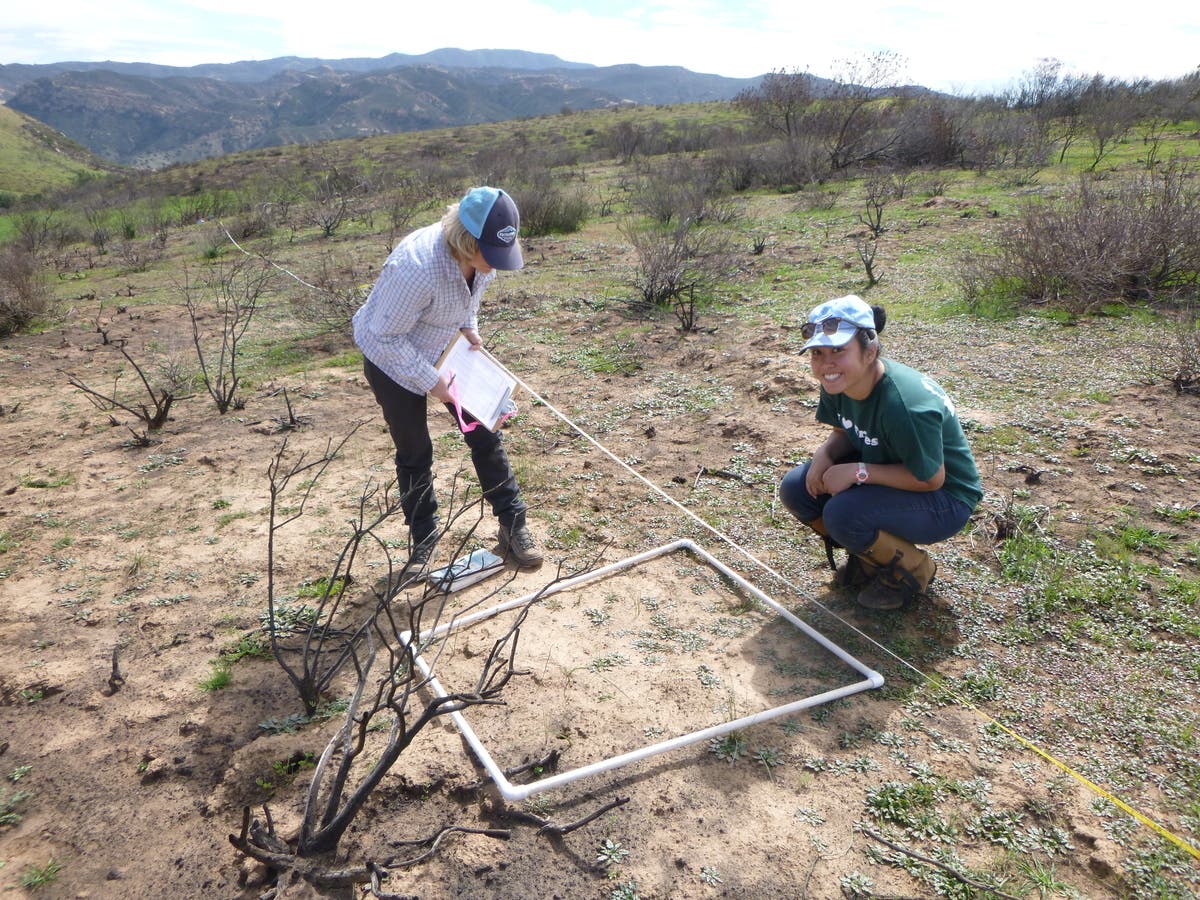
IRVINE, CA — It's no secret. California is now living in a 365 day long fire season. After years of study, ecologists have recently published on the resilience of native plants after wildfire. Coincidentally to recent events, the area they researched was the Orange County area burned in 2007's Santiago wildfire, also affected by the 2011-2015 drought.
Ecologists from the University of California, Irvine, Center for Environmental Biology and San Diego State University engaged in 10 years of vegetation monitoring funded by The Nature Conservancy and the Natural Communities Coalition. Partnerships between academic institutions and land management organizations such as this provide valuable opportunities to monitor and evaluate data to help predict future outcomes of Orange County vegetation after extreme disturbances.
The research team used data from areas of long-term vegetation to compare changes in native and non-native (for example, wild oat and ripgut brome) plant cover in burned and unburned areas as well as responses to drought in regions with different native shrub densities. They found that coastal sage scrub, the dominant native plant community in southern California, was generally resilient to wildfire, reaching pre-burn cover within four years. However, invasive non-native grasses increased in abundance in burned areas, suggesting long-term impacts of fire on native plants.
Find out what's happening in San Juan Capistranofor free with the latest updates from Patch.
Native plants were overall resilient to drought, but areas with dense shrubs were more impacted, suggesting drought conditions can have a negative impact. Meanwhile, native wildflowers had the highest diversity in wet years that were preceded by dry years, suggesting they face less competition from invasive non-native grasses, which are also abundant in wet years.
“Our results demonstrated the resilience of native shrub cover to fire along with the susceptibility of dense native shrubs and native grasses to drought and increases in non-native species,” said Dr. Sarah Kimball, first author and researcher at the Center for Environmental Biology at UCI. “They also highlight that land monitoring efforts sponsored by institutions like The Nature Conservancy can help ecologists test hypotheses regarding long-term dynamics in community vegetation.”
Find out what's happening in San Juan Capistranofor free with the latest updates from Patch.
The data suggest that it may be helpful to remove non-native species during fire recovery.
The data also show that grasslands in Orange County are heavily invaded by non-native species, indicating that restoration of those areas should be a priority. As a follow-up to the study, experimental plots have now been set up to test whether removal of non-natives during the first few post-fire years will lead to lower non-native cover in burned areas.
Study authors were Sarah Kimball, Megan Lulow, Travis E. Huxman and Kathleen Balazs with UC Irvine’s Center for Environmental Biology; Zachary Principe with The Nature Conservancy; and Spring Strahm and Doug Deutschmann with San Diego State University. The research was funded by The Nature Conservancy and the Natural Communities Coalition.
For information in the UCI School of Biological Sciences, visit www.bio.uci.edu.
Photo, courtesy UC Irvine: Dr. Sarah Kimball (l.) and Priscilla Ta of the UCI Center for Environmental Biology working in the Baker Canyon area of the Santa Ana mountains as part of the center’s study on the resilience of plant communities in Orange County.
Get more local news delivered straight to your inbox. Sign up for free Patch newsletters and alerts.