Politics & Government
Looks Like San Juan Capistrano's Redevelopment Agency Is Stayin' Alive
Under new legislation, San Juan Capistrano will have to pay more than $1.9 million to continue the agency that rejuvenates blighted areas.

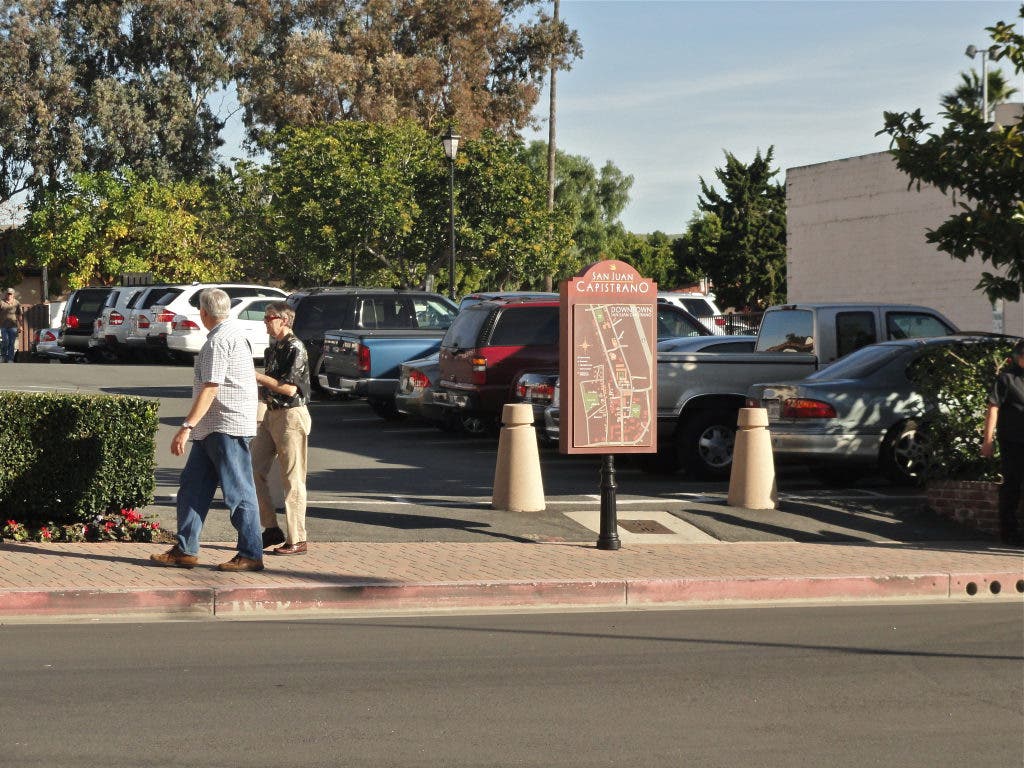
City leaders chose what they considered a "lousy" situation over a "lousy" situation when they signaled Thursday their support for keeping alive the mechanism that—now under threat of annihilation—has for 28 years perked up San Juan Capistrano's blighted areas.
San Juan Capistrano would have to pay the county and local schools $1.9 million next year under a new state budget that requires community redevelopment agencies to either fork over a substantial portion of their agencies' revenue or disband.
For the San Juan Capistrano Community Redevelopment Agency to stay alive, its payments would continue in subsequent years to the tune of $451,000 annually.
Find out what's happening in San Juan Capistranofor free with the latest updates from Patch.
Dissolving the agency comes at a price, too.
All of the properties in its possession—valued at more than $40 million—would have to be sold off: the affordable-housing units in the Los Rios Historic District and four downtown parking lots, among others. The assets would be sold and the proceeds used to pay its approximately $50 million in debts.
Find out what's happening in San Juan Capistranofor free with the latest updates from Patch.
The public would likely be able to retain the parklands that the agency owns, including , the and the Kinoshita Farm.
But the agency owes the city $5.3 million that it would not be able to pay. The city and redevelopment agency keep two separate bank accounts but are each run by the City Council, which acts as the agency's board of directors.
“It just keeps getting better and better,” Councilman Derek Reeve quipped during a presentation from city staffers Thursday.
Since its formation in 1983, the San Juan Capistrano Community Redevelopment Agency has seen the completion of 39 projects, according to city estimates. It did so with what is called "tax increment"—the increase in property taxes within a project area, which results from the rise in the project area's assessed value that exceeds the base year's value.
But the projects have diverted coveted property tax revenues away from schools and the county, which provides basic services to San Juan residents, such as public safety and health and welfare programs.
"In some ways, I think they have always been a sham," said resident Orrie Brown, a founder of a local citizens group critical of "runaway" spending and big government.
"In our city, the [community redevelopment agency] has been used to purchase blighted areas," but it's also been used to buy the and to , she continued.
"Then there's [also] a connection to affordable housing," Brown said. "I don't believe we—as taxpayers—have an obligation to provide housing to people."
Mayor Sam Allevato said in rebuttal that although he understands the history of abuse within redevelopment agencies across California, "when you have abuses, you cure them—you don't throw the baby out with the bathwater."
If the agency stays alive, however, and decides to invest in new projects, it will be forced to pay more to local school districts. For every million dollars in new bonds it sells, half of the revenue would end up with the school districts. The agency would pay the schools using its tax increment.
"Essentially, it really financially would not allow us to issue any new debt, because it would be so cost-prohibitive," said City Manager Karen Brust.
On the other hand, aside from retaining all of its assets, maintaining the agency would mean the completion of already planned projects, such as and for possibly .
To move forward with sustaining the agency, there needs to be an ordinance adopted next month and an execution agreement with the city, pledging to reimburse it for the $1.9-million payment.
If the council moves in the opposite direction, it must establish a debt payment schedule by Aug. 28 and establish a successor agency—most likely the city—to administer those payments by Sept. 1.
Get more local news delivered straight to your inbox. Sign up for free Patch newsletters and alerts.