Community Corner
Great-Granddaughter Of Booker T. Washington Helps Local Youth Find Their Way
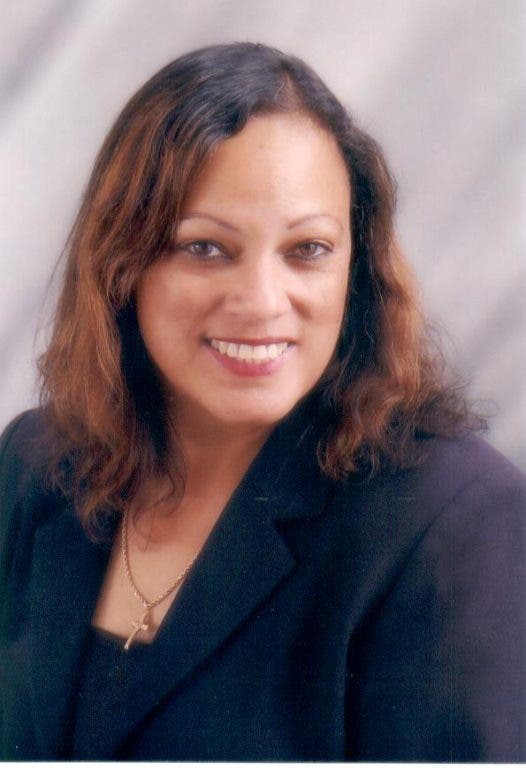
Sarah O'Neal Rush, a descendant of the African-American legend, lives in San Lorenzo and works in San Leandro, Oakland and throughout the East Bay helping at-risk teens.




(Editor's note: Booker T. Washington was the pre-eminent African-American leader of the late 19th and early 20th Centuries. The first president of the famed Tuskegee Institute, Washington was born into slavery. His tacit acceptance of white supremacy does not play well in retrospect but may have been in keeping with the times. This latest installment in Patch's coverage of Black History Month is written by one of Washington's local ancestors.)
Find out what's happening in San Leandrofor free with the latest updates from Patch.
By Sarah O’Neal Rush
Growing up in Oakland, California, my late mother, the granddaughter of Booker T. Washington, never talked much about our family history, although she was born and raised across the street from Tuskegee University.
Find out what's happening in San Leandrofor free with the latest updates from Patch.
It took nearly 20 years after I graduated from high school to realize the significance of my lineage. It happened in the summer of 1996, when I arrived on the campus of Tuskegee University for the first time in my life. I was there for our first ever-Booker T. Washington family reunion. When we first stepped foot on this campus, students, faculty, news reporters, journalists, and community leaders were all there to welcome us.
Some were awe-struck that his descendants were still alive. And I was awe-struck that they cared so much. They were inspired simply by our presence. They asked for autographs and interviews. They asked to take pictures with us. And some just wanted a chance to talk and get to know us.
It was at this reunion that I began to understand how important my great-grandfather’s work was. On campus I was struck by the original buildings—built by hand, brick by brick, by Booker T. Washington and his students, all former slaves—using bricks that they made.
After I returned home I set out to learn everything that I could about my history. I read Up from Slavery for the first time, I studied, I did research, and I asked questions. My whole life has changed since that day in Tuskegee and making that connection to my great-grandfather. And that’s why I do the work that I do today.
Today I work with inner-city “at-risk” youth. Not only because I was one, but more importantly, I was inspired and taught through the legacy of my great-grandfather.
I have since founded a nonprofit organization, Booker T. Washington Empowerment Network, BTWEN, which empowers youth, ages 14 to 18 to achieve their own extraordinary legacy.
Through character education and leadership workshops we prepare them to take a trip across country, following the footsteps of Booker T. Washington from slavery to freedom.
We make several stops tracing his footsteps, beginning on the plantation in Franklin County, Virginia, where he was born a slave, and ending at Tuskegee University in Alabama, the school he founded for former slaves and their descendants in 1881.
Today I share my personal story with audiences all over the country from all walks of life. From affluent communities, to recovering women, to incarcerated teenagers, to third grade classrooms.
I encourage others to delve into their own history because I know there is tremendous strength that can be found there.
Get more local news delivered straight to your inbox. Sign up for free Patch newsletters and alerts.