Politics & Government
CA Hits Fuel Tax Jackpot: Here's How San Leandro Spends Cash
New taxes on gasoline and diesel fuel are generating billions of dollars for hundreds of state and local transportation projects.

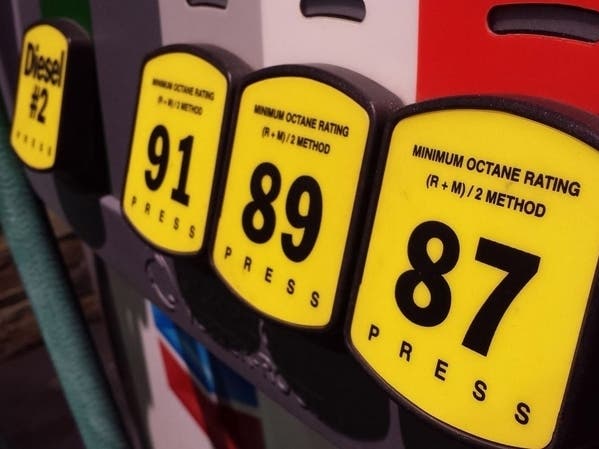
SAN LEANDRO, CA — While California motorists and truckers are busy pumping billions of gallons of gasoline and diesel fuel into their tanks, the state taxman has been stuffing billions of dollars in new fuel tax revenues into the bank — so far nearly $4 billion and counting.
It’s been two years since passage of the Road Repair and Accountability Act of 2017, better known as Senate Bill 1, or simply SB1, that tacked an additional 12-cents-per-gallon tax on gasoline beginning in November 2017, followed by another 5.6-cents that kicked in this past July 1 — bringing the total state tax on a gallon of gasoline to 47.3 cents and cementing California’s position as being the highest gas tax state in the nation.
SB1 also imposed an additional 20-cents-per-gallon tax on diesel fuel in addition to increasing the sales tax on diesel by 1.75 percent and raising annual vehicle registration fees ranging from $25 to $175.
Find out what's happening in San Leandrofor free with the latest updates from Patch.
When all the new levies imposed by SB1’s 48-pages of legislative prose are tallied up, hundreds of millions are pouring into state coffers every month. It was one of the most contentious California tax issues in the nearly two decades since former Gov. Gray Davis was recalled from office for trying to raise auto registration fees. SB1 survived a bitter repeal attempt and resulted in the recall of state Sen. Josh Newman, a Democrat representing a heavily Republican district in Southern California, for voting in favor of the bill.
Although an attempt to repeal the tax was defeated in June 2018, voters did approve Proposition 69, a state constitutional amendment requiring all SB1 tax revenues to be used solely for transportation related purposes. However, money generated from already existing gas taxes and the increased vehicle registration fee will continue going to the state’s general fund.
Find out what's happening in San Leandrofor free with the latest updates from Patch.
According to the most recent state statistics, since November 2017, when the new tax became effective about 24.3 million gallons of gasoline and 4.8 billion gallons of diesel have been sold in California. By comparison, during roughly the same period, Californians guzzled a little more than one billion gallons of beer, wine and hard liquor generating less than half-a-billion dollars in tax revenue. Where did all this new fuel tax revenue go?
The lion’s share was distributed to Caltrans for a variety of alphabet soup state transportation projects including the Solutions for the Congested Corridors Program (SCCP), the Trade Corridor Enhancement Program (TCEP), two Local Partnership Programs (LPP), the State Highway Operation & Protection Program (SHOPP) and the Active Transportation Program (ATP).
Between January 2018 and last June 30, Caltrans received about $2.8 billion in SB1 gas tax revenues alone. The agency collected millions more from the increased diesel fuel tax and the attendant diesel fuel sales tax increase. Caltrans from the transportation improvement fee imposed through increases in annual vehicle registration fees. So far, increased vehicle registration fees have raised $1.4 billion.
According to the most recent California Transportation Commission reports, through last March 160 projects had been approved under the various Caltrans programs and 129 construction contracts had been awarded. Projects included highway repaving, construction of bicycle lanes, erecting sounds walls and HOV toll lane construction.
But the state doesn’t hog all the money. Local governments get their share from the Road Maintenance & Rehabilitation Account, a special fund established by SB1 and administered by the State Controller. Distribution of the money is divided about equally between cities and counties.
Since distributions from this account began in January 2018, through last July 22, some $1.6 billion was doled out based upon population — $803 million to cities and $751 million to counties, not including revenue from the additional gasoline tax increase on July 1.
For example, sparsely-populated Alpine County high in the Sierras received just $541,000, while Los Angeles, the state’s most populous county received $140 million. Cities, too, saw a broad range of distributions. Tiny Amador City in California’s gold country and the City of Vernon, south of Los Angeles, each received less than $5,000. The remaining 479 municipalities received distributions ranging from several thousand to several million, with the state’s four largest cities — Los Angeles, San Diego, San Jose and San Francisco —collecting about 17 percent of the total.
The City of San Leandro has focused its windfall on street repair and maintenance. In 2018, as voters prepared to possibly repeal the tax, the city published a video about how the money was being spent.
It has increased efforts this year, with more planned for 2020.
FY19 Projects
- Adason Drive (Residential; PCI 7) - Between Halcyon Dr. to Hesperian Blvd., placement of thin overlay of travel lane and crack-seal surface. Work anticipated to increase PCI by 30-45 points, extending life additional 4-5 years. (Note: This work was rolled over from the FY 18 list).
- Coburn Court (Residential; PCI 24) - Between parking lot to end of cul-de-sac, remove and replace all distressed pavement and crack seal surface. Work anticipated to increase PCI to 100, extending life additional 20+ years.
- Sherry Court (Residential; PCI 25) - Between Benedict Dr. to end of cul-de-sac, remove and replace all distressed pavement and crack seal surface. Work anticipated to increase PCI to 90, extending life additional 20+ years.
- Hillside Drive (Residential; PCI 26) - Between Daily Dr. to Montrose Dr., remove and replaceall distressed pavement and crack seal surface. Work anticipated to increase PCI to 100, extending life additional 20+ years.
- Sylvia Way (Residential; PCI 85) - Between Dilletta Ave. to Sidney Ave., crack seal surface from end to end. Work anticipated to increase PCI to 94, extending life additional 4-5 years.
- Fairway Drive (Collector/Arterial; PCI 90) - Between Doolittle Dr. to 880 Overpass, crack seal surface from end to end. Work anticipated to increase PCI to 96, extending life additional 4-5 years.
- Andover Street (Residential; PCI 95) - Between Lewelling Blvd. to Burkhart Ave., crack seal surface from end to end. Work anticipated to increase PCI to 96, extending life additional 4-5 years.
- Duzmal Avenue (Residential; PCI 85) - From Faris St. to cul-de-sac of Kramer St., crack seal surface from end to end. Work anticipated to increase PCI to 94, extending life additional 4-5 years.
- Foothill Blvd. (Collector; PCI 86) - Between Durant Ave. to Macarthur Blvd., crack seal surface from end to end. Work anticipated to increase PCI to 95, extending life additional 4-5 years.
- Bigge Street (Residential; PCI 99) - Between Adams Ave. to end of cul-de-sac, crack seal surface from end to end. Work anticipated to increase PCI to 100, extending life additional 4-5 years.
FY20 Projects
- West Ave. 133rd (Residential; PCI 37) - Between Menlo Street to Doolittle Drive. Remove and replace asphalt surface (estimate of 321 tons). PCI increased to 100.
- West Ave. 134th (Residential; PCI 23) - Between Menlo Street to western terminus (dead end). Remove and replace asphalt surface (estimate 1,695 tons). PCI increased to 100.
- West Ave. 135th (Residential; PCI 29) - Between Doolittle Drive to Aurora Drive. Remove and replace asphalt surface (estimate 847 tons). PCI increased to 100.
- West Ave. 136th (Residential; PCI 38) - Between Aurora Drive and Menlo Street. Remove and replace asphalt surface (estimate 1,288 tons). PCI increased to 100.
- Thornton Street (Residential; PCI 9) - Between Alvarado Street to dead end @ guardrail. Remove and replace asphalt surface (estimate 132 tons). PCI increased to 100.
Work continuing from FY 19 to FY 20 includes:
- Crack sealing on Sylvia Way, Andover Street, Duzmal Avenue, and Foothill Blvd.
Patch staffer Bob Porterfield contributed to this story
Get more local news delivered straight to your inbox. Sign up for free Patch newsletters and alerts.