Arts & Entertainment
A True Critic: Local Author Talks Critiquing in Her New Book
Becky Levine provides the how-to's of critiquing in new publication by Writers Digest.

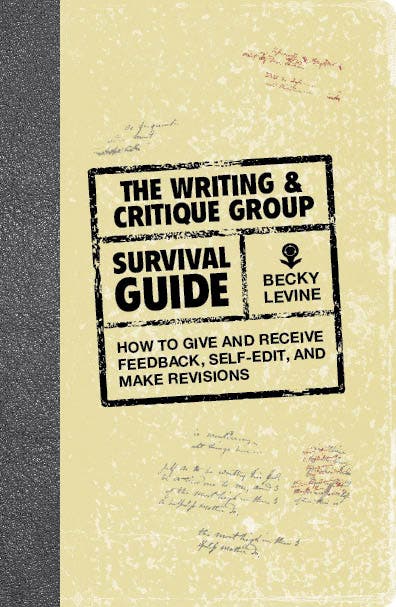

In Boulder Creek author Becky Levine's book, "The Writing & Critique Group Survival Guide," she not only explains how and why to start or join a critique group, but she goes into detail about how to critique various genres and components of a manuscript, such as character, plot, description and dialogue.
Here, she talks further about her book and the critiquing process.
Santa Cruz Patch: What was your road to publication of The Writing & Critique Group Survival Guide?
Find out what's happening in Santa Cruzfor free with the latest updates from Patch.
Becky Levine: My road to publication was a surprise turn. I was at a conference with Jane Friedman, and someone asked about a critique book. Jane said Writer's Digest didn't have one. I took a breath and pitched the idea, then sent a TOC (Table of Contents) and sample chapter (both of which went through my critique group!) and got my "yes."
Patch: How important is it for writers pursuing publication to belong to a critique group?
Find out what's happening in Santa Cruzfor free with the latest updates from Patch.
Levine: I believe a critique group is the biggest gift we can give our writing. We don't just learn by being critiqued, but by giving critiques, by explaining to someone what isn't yet working ... and why. I've read great books and taken wonderful workshops, but I've grown my craft the most in critique groups.
Patch: Are critique groups beneficial for non-fiction writers as well as fiction writers?
Levine: I think so. There may be fewer nonfiction critique groups available than fiction groups. Still, if you're heading into nonfiction writing, it's worth your time to find a group of other writers working in that market.
Patch: How should an individual or group deal with what is considered to be an unfair or rude critique?
Levine: Don't jump down the critiquer's throat. Everyone has bad days. However, if someone gives consistently harsh feedback, talk about it. Explain how you feel, clarify your writing goals and ask them to modify their critiques. It's not an easy step but an important one.
Patch: Should each member of the critique group be at the same skill level?
Levine: Not necessarily. Some of the best critiquers I've had were unpublished. Critiquing, like writing, can be learned, and any member can become a valuable contributor to the group.
Patch: Many writers, especially those just starting out, are shy, nervous or intimidated about the idea of sharing their work with others. What advice do you have for them as far as joining a critique group?
Levine: Go for it. First, what are your critique-group goals? Motivation and support or substantial feedback? Coffeehouse meetings or an online group? Paranormal romance or picture books? Knowing these answers will make your search more focused and more successful. If you're comfortable in a group, stay. If you're consistently unhappy, respectfully leave the group. Try another. It's worth the hunt.
Patch: As far as online versus in-person critique groups, do you think one is more beneficial than the other?
Levine: It's a matter of making choices for your comfort zone but also being aware of available options. Matching your schedule to an in-person group can be tricky. Online, there are no time restrictions, and groups exist for every writing genre.
Patch: What's up next with your writing? Any new books in the works?
Levine: I'm working on a historical YA [young adult] novel and writing my first picture book.
Patch: Do you have any final comments or tips for our readers?
Levine: If we're serious about our writing, we need to commit to it. Joining a critique group can be a big piece of that commitment.
For more information or to contact the author: beckylevine.com.