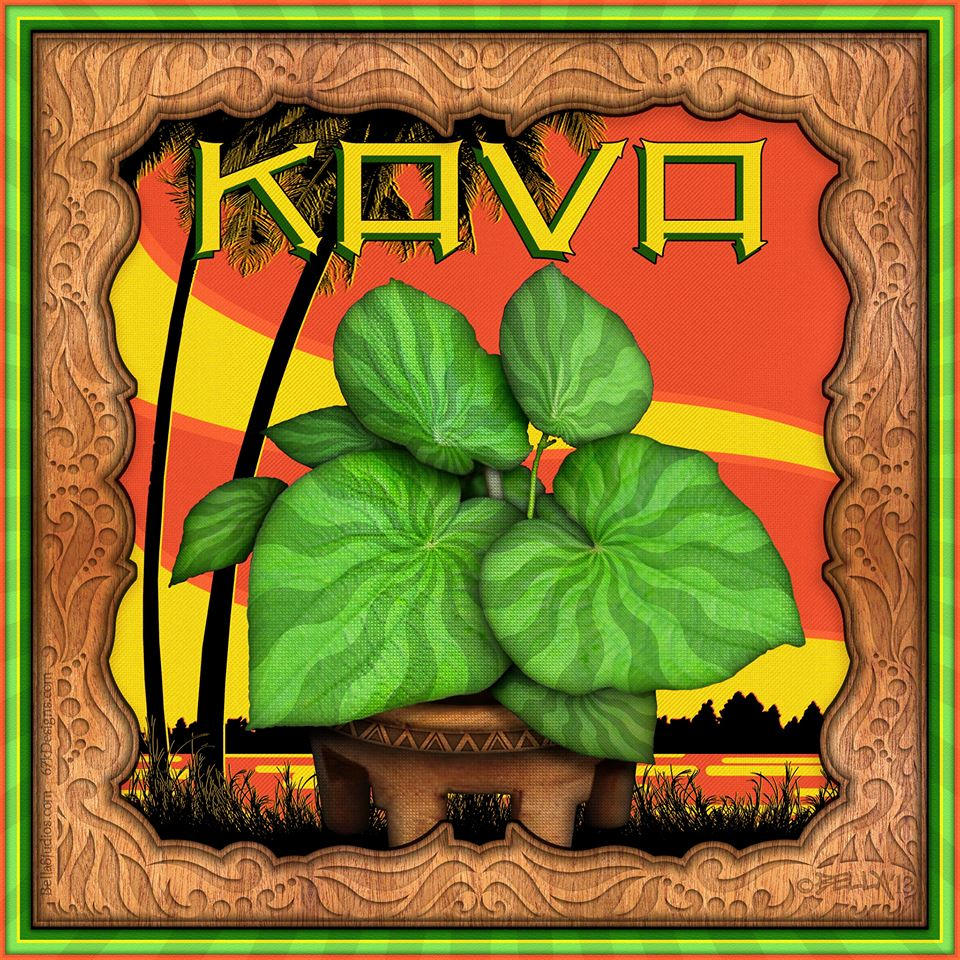
A recent study shows that the Kava plant may be safe and effective as an alternative treatment for clinical anxiety disorders.
The root from the South Pacific kava plant may not only offer a safe and legal way to blissfully relax, and experience pleasant visionary dreams, new research shows that it may help to treat clinical anxiety.
University of Melbourne researchers recently completed a clinical study demonstrating that the South Pacific plant can significantly reduce symptoms of anxiety.
Chemical compounds identified in kava called “kavalactones” help to relax the muscles, have anxiolytic effects, reduce stress levels, and calm the mind.
The plant has been used by South Pacific islanders for at least 3,000 years, as a beverage made from the root, that is traditionally drunk out of coconut shells in ceremonial rituals, after the root is chewed and pulverized in the mouths of young, “sexually pure” virgin girls or boys.
In the 1800s Christian missionaries claimed that this practice of kava mastication was unhygienic and used this claim as a rationale to seek a ban on kava, which they called “the devil's drink.”
Kava has been available in America for over a hundred years, and it was offered for sale in the Sears Roebuck catalog at the turn of the previous century.
For the many people who already enjoy kava’s calming effects, this new Australian study may barely seem like news--as the anti-anxiety effects of kava seem so obvious--however, this was the first study of its kind that clearly demonstrated that kava has medical applications.
The recently published study showed kava plant extracts to be specifically effective as an alternative treatment for Generalized Anxiety Disorders (GAD), with less risk of dependency and less potential for side effects than conventional pharmaceutical treatments.
The study also showed that people have genetic differences that predispose their brains to respond to kava differently, and that future studies will allow us to determine who will respond best to kava with a genetic test.
Several years ago, a few studies and a report from Germany, linked kava use to liver damage--and according to CNN, the highly publicized report decreased sales of kava extracts and teas for several years, because many people believed that kava caused liver toxicity.
However, other researchers now say that this report was flawed--one study used last-stage alcoholics as subjects--and that additional research has demonstrated that kava is safe for the liver and causes no observable problems.
Two studies conducted by Duke University Medical Center showed kava to be safe for the liver, and according to CNN reporter Jerry Nelson “After several years and reviews by many research teams, the kava liver toxicity report was found to be shoddy and baseless.”
While the internet is ripe with convincing conspiracy theories about pharmaceutical companies creating the kava scare to prevent the plant from competing with their anti-anxiety drugs, there also does appear to be evidence that some kava supplements may be taxing on the liver for some people.
A study at the University of Hawaii found liver-toxins in the leaves and stems of the kava plant that weren’t in the roots, so some kava drinkers suggest that only the natural root should be used when preparing the beverage,
In the new Australian study that I summarized at the beginning of this column, there was no significant difference in liver function when using kava, and none of the subjects developed a hepatic abnormality.
Personally, I’ve enjoyed kava teas and extracts for several decades. I began using kava when I was in high school and use it occasionally to this day.
I find that mild doses of kava extract can be helpful for relieving social anxiety, and facilitate emotional bonding, much like alcohol or valium, without clouding one’s judgment.
Some people use mild to moderate doses of kava to enhance their yoga or meditation practice, as it relaxes the body, while allowing one to maintain clarity of mind.
Stronger doses can be surprisingly euphoric, causing major muscle relaxation and intoxication, physical uncoordination, and sedation.
Very strong doses of kava can induce sleep, or prolonged dreamy twilight states of pleasant visionary reverie, that can be mildly psychedelic.
Powerful doses of kava sometimes evoke lucid dreaming experiences, and can cause sensitive people to report out-of-body experiences and “astral projection.”
However, I find that if I start using kava regularly, the positive effects tend to diminish, and dark feelings of depression with it tend to increase.
Some people report that their reaction to kava changes over time, and it seems to work best for me when I just use it occasionally.
Health care providers generally suggest that kava be used for short-term treatment, as long-term use is known to cause (reversible) skin rashes.
I’ve also noticed that different brands of kava extract and teas can feel significantly different from one another.
It seems that different sources of the kava plant have varying ratios of the kavalactones present, and--as with the varying cannabinoid ratios in cannabis plants--this leads to an interesting range of different psychoactive effects.
As a result, some forms of kava tend to be more sedating and others tend to more stimulating, so experimenting with several different brands of kava helps people to find the particular plant strain that works best for them.
Many people also enjoy mixing kava with cannabis or alcohol, as it will generally increase the euphoric effect of both.
To learn more about kava see: Kava: The Pacific Elixir: The Definitive Guide to Its Ethnobotany, History, and Chemistry by Vincent Lebot, Mark Merlin, and Lamont Lindstrom.
If you enjoy my column, and want to learn more about psychedelic and cannabis culture, “like” my Facebook page: www.facebook.com/pages/David-Jay-Brown/115740098445882?ref=ts and follow me on Twitter: http://twitter.com/#!/DavidJayBrown