Community Corner
Psychedelic Drugs & Eastern Religion: Holy Inspiration or Blasphemy?
Evidence suggests that psychedelic plants played an inspirational role in the foundation of Eastern philosophy--and the connection remains strong to this day.

In a previous column I discussed recent research at Johns Hopkins University with psilocybin, the psychoactive component of the magic mushroom, which has been shown to help inspire life-changing religious experiences.
According to the researchers, these encounters with the divine are in every way indistinguishable from those experiences that have been reported by mystics throughout history.
This week I thought that it might be fun to take a look at how cannabis and psychedelic plants may have influenced the foundation of some of the Eastern religious traditions--as so many people in the West first became interested in Eastern philosophy after experimenting with psychedelic drugs.
Find out what's happening in Santa Cruzfor free with the latest updates from Patch.
Some scholars argue that all of the major world religions were originally inspired by psychedelic experiences--as offshoots of shamanism--and in a future column we’ll explore the role that psychedelic plants may have played in the formation of Western religious traditions.
In India, the origins of Hinduism--the world’s oldest living religious system--stem from Vedic philosophy, which is also where Yoga, Tantra, and Ayurveda traditions originate. The inspiration for Vedic philosophy is seemingly closely linked with a psychedelic experience brought about by an unknown plant (or plants) called “Soma.”
Find out what's happening in Santa Cruzfor free with the latest updates from Patch.
The actual botanical identity of Soma remains lost in the cracks of history, although scholars generally agree that it was most likely a psychoactive plant, several psychoactive plants, and/or a psychoactive mushroom of some sort.
A number of scholarly books have argued for different botanical candidates as being Soma’s true identity--such as cannabis, a species of mushroom that contains psilocybin, Syrian Rue, or the Amanita muscaria mushroom.
Although I’m certainly in no position to make any kind of qualified judgment in regard to this long-standing mystery, I did very much enjoy reading Chris Bennett’s well-researched book, Cannabis and the Soma Solution, which presents a compelling case for cannabis as being Soma.
Recently, while pondering what the lost identity of Soma might be, I had a conversation with religious scholar Robert Forte, who helped to shed some light on this ancient mystery.
Forte suggested that Soma may not have actually been a single plant, but rather, the word could have been a catch-phrase that meant, basically, a special plant that got you high, gave you visions, and connected you with the divine.
In other words, “Soma” may been similar to the contemporary slang term “ecstasy.” “Ecstasy” originally meant “MDMA,” but over time, at raves the word has come to mean any drug that has psychedelic/amphetamine-like effects.
While Forte’s solution to the “Soma” problem wasn’t new to students and scholars of the mystery (others, such as German anthropologist Christian Ratsch had suggested this), it was new to me, and intuitively it seemed to make sense, although it’s likely that we’ll never know for sure what the truth is.
When I asked Chris Bennett about this, he said, “I agree with Forte, about different plants being consecrated as Soma, but only in the later situation. My view is the cult originates with cannabis, substitutions came later.”
Whatever plant, plants, or plant mixture Soma was, it was considered sacred, and was worshiped as a living God, serving as a fundamental offering in the Vedic sacrifices.
And regardless of whether or not cannabis and Soma are one and the same, cannabis is specifically discussed in the Vedas--the 2600 to 4000 year old sacred texts, upon which Vedic philosophy is based.
According to The Vedas, cannabis was one of five sacred plants, and a guardian angel resides in its leaves.
The Vedas refer to cannabis as a source of happiness and liberation, that was compassionately given to our wayward species as a way to help us overcome fear and attain delight.
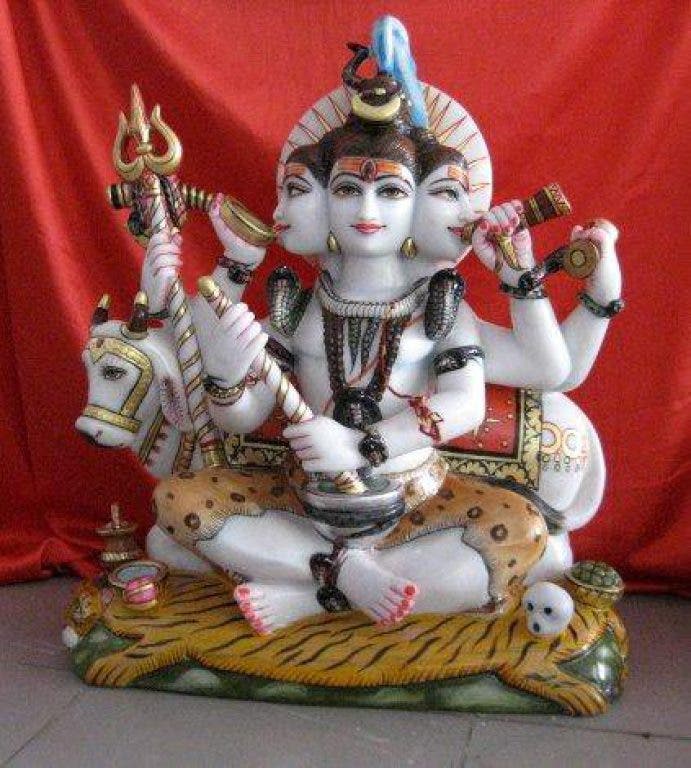
Cannabis is frequently associated with the god Shiva, who, it seems, stays perpetually stoned. This divinely-inspired, super-stoner has earned the title “the Lord of Bhang.”
According to Chris Bennett, cannabis also played “a big role in the origins of Taoism.” which many Westerners are familiar with.
It’s no secret that many people in the West became interested in Taoism and Buddhism after having a psychedelic experience.
The premier Buddhist magazine Tricycle devoted a whole issue to the subject of psychedelics and Buddhism, and a book of essays, edited by Allan Hunt Badiner, called Zig Zag Zen was published on the subject.
The relationship between psychedelic plants and the foundations of Buddhism are more obscure, although there may be some connection, especially with what is known as “Bon” Buddhism, where there are references to the shamanistic use of plants in the sacred texts.
However, the history of Bon is obscured, as the earliest surviving documents referring to the religion come from the 9th and 10th centuries, which is well after Buddhist fundamentalists began to suppress indigenous practices and beliefs.
Nonetheless, there is a connection between Buddhism and psychedelic drugs in the present day. According to numerous Buddhists that I’ve spoken with, a lot of people become interested in Buddhist philosophy after having had an experience with psychedelic drugs.
Psychedelic drug researcher Rick Strassman, author of DMT: The Spirit Molecule, received lay ordination in a Western Buddhist order, and he co-founded (and for several years administered) a lay Buddhist meditation group associated with the same order.
When I asked Strassman how his interest in Buddhism helped to guide his psychedelic drug research, he replied:
“I was first drawn to Buddhism because of its unabashed manner of describing rather exotic and lofty states of consciousness in a relatively objective manner.”
“The techniques and concepts of the mind, as defined and affected by meditation, appealed to me--it seemed that even the most outrageous states of consciousness could be held, described, even “objectified.”
“Particularly, the Buddhist Abhidharma (the canon of psychology in Buddhism) approach to mind as a composite of a small number of mental functions, appealed to me as a facile means of developing a rating scale, a tool, for measuring the states of consciousness I anticipated finding in our psychedelic research.”
“This rating scale has been a legacy of the DMT research, and has been translated into several languages, used to measure effects of several different drugs, and has held up well in comparison to some of the other more traditional ways of measuring drug effects.”
“Later on, when I actually started practicing Zen meditation, I found it very grounding and powerful, and the state of active passivity, so to speak, or alert quietness, was useful as a means of holding the DMT sessions themselves, on my end.”
“I also saw that some of the principles I had learned about meditation, and from teaching it, were useful in coaching the volunteers on how to deal with the things they encountered, or might encounter, during their sessions.”
Interested in learning more about the relationship between psychedelic drugs and Buddhism?
Psychologist James Fadiman will engage in a public dialogue with zen teacher Kokyo Henkel on this topic, at the Santa Cruz Chi Center, on October 20th at 6:30 PM. The Santa Cruz Chi Center is located at 21511 B East Cliff Drive in Santa Cruz. Hope to see you there!
To learn more about the relationship between Soma and psychedelics see: Cannabis and the Soma Solution by Chris Bennett and Krishna in the Sky with Diamonds by Scott Teitsworth.
If you enjoy my column, and want to learn more about psychedelic and cannabis culture, “like” my Facebook page:
www.facebook.com/pages/David-Jay-Brown/115740098445882?ref=ts
and follow me on Twitter: http://twitter.com/#!/DavidJayBrown
Like what you see?
You can keep up with all news in Santa Cruz on Patch. Subscribe to the daily newsletter; Like us on Facebook; follow us on Twitter.