Health & Fitness
Tick Season Underway In Santa Cruz County Hills
The western black-legged tick (Ixodes pacificus) is the primary vector of Lyme disease and other tick-borne illnesses in Santa Cruz County.


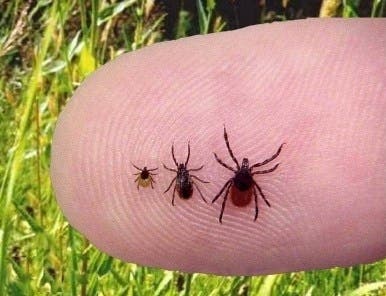
SANTA CRUZ COUNTY, CA — In 2019, there have been 12 reported cases of Lyme disease in Santa Cruz County, which is on par with the annual average for the region. But winter is a time of high tick activity in Santa Cruz County's coastal hills, so officials are reminding residents to protect themselves.
The western black-legged tick (Ixodes pacificus) is the primary vector of Lyme disease and other tick-borne illnesses in Santa Cruz County, officials said. According to county figures, approximately 2 percent of adult western black‐legged ticks tested are infected with the bacteria that can cause Lyme disease.
The county recommends the following to reduce the risk of being bitten by ticks:
• Wear long pants and long‐sleeved shirts.
• Walk in the center of trails and avoid logs, tree trunks, trail margins, brush and tall grass.
• Shower and thoroughly check your entire body for ticks after time outdoors. Parents should examine their children, especially on the scalp and hairline.
• Keep your pets on trails as well, and check and remove ticks after time outdoors.
• Use EPA‐registered repellent for use against ticks; always follow label directions. Products with a concentration of 20 percent DEET or higher, and/or treating clothes and shoes with permethrin before entering tick habitat are recommended.
• Launder clothes (and dry on high heat) soon after activity in tick habitat.
Find out what's happening in Santa Cruzfor free with the latest updates from Patch.
Removing a tick shortly after it attaches (less than 24 hours) can prevent transmission of Lyme diseases and other tick-borne diseases. To remove a tick, gently and firmly grasp it close to its head and pull it straight out, preferably with fine-pointed tweezers. Save the tick for identification (Santa Cruz County Mosquito & Vector Control can help with tick identification; see more info below); keep the tick alive by placing into a sealable bag or container with a moist cotton ball in a refrigerator or cooler.
Thoroughly wash hands before and after tick removal, and apply antiseptic to the bite area. Insecticides, Vaseline, lighted matches or gasoline should not be used to remove ticks because these techniques are ineffective or unsafe, according to county officials.
Find out what's happening in Santa Cruzfor free with the latest updates from Patch.
Consult your healthcare provider if you have been bitten by a tick or were in an area where ticks occur and are concerned about Lyme disease. Painful redness that occurs less than 24 hours after a tick bite and does not expand is likely a local allergic reaction to the tick bite.
Early Lyme disease can include flu‐like symptoms and often an expanding, painless rash. Lyme disease is treated with antibiotics and most patients recover without complications, particularly when the disease is diagnosed early. If left untreated, Lyme disease can progress to arthritis and in some cases serious nervous system problems.
Santa Cruz County Mosquito & Vector Control can help with tick identification, Monday-Friday, 8 a.m. to 3 p.m., 870 17th Avenue, Santa Cruz.
Phone: 831-454‐2590
Email: Pesthelp@agdept.com
Website: www.agdept.com under “Mosquito abatement/Vector Control”
Also visit: www.cdph.ca.gov for more information on ticks and tick‐borne diseases.
Get more local news delivered straight to your inbox. Sign up for free Patch newsletters and alerts.