Schools
UC Santa Cruz Prepares for Proposed $500 Million Budget Cut
Cuts could be equal to the cost of educating 1,500 students, says vice chancellor.
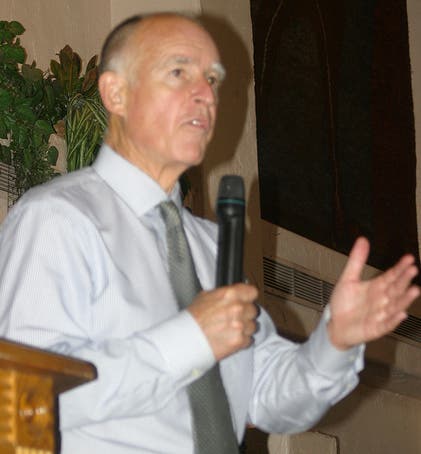


Gov. Jerry Brown’s proposed $500 million budget cut to the University of California system for the 2011-12 fiscal year looms on the horizon, and UC Santa Cruz begins to prepare itself for the impact.
Although it is not clear yet exactly how much of the proposed cut will be shouldered by UCSC, Vice Chancellor Alison Galloway estimates UCSC’s share at $31 million, or 6 percent, judging from its share in past cuts. This amount, according to Galloway, is equal to the entire budget of the university’s Physical and Biological Sciences Division—or to the cost of educating 1,500 students.
With the fee increases and budget cuts UCSC has made over the past few years, however, the estimated shortfall is more like $19 million.
Find out what's happening in Santa Cruzfor free with the latest updates from Patch.
“Last year, we continued to make steeper budget cuts, because we believed that state revenues would decline,” says campus spokesman, Jim Burns.
The prudent preparations helped, but still, $19 million is no small number.
Find out what's happening in Santa Cruzfor free with the latest updates from Patch.
In a recent legislative forum moderated by UCSC Chancellor George Blumenthal, faculty, political leaders and students discussed the potential impact of the cuts.
“People say just cut administration," says Burns. "Well, in order to administer this cut, we’d have to eliminate our entire business and administrative services division administration—that's police, fire, grounds and custodial services, transportation and parking,” says Burns.
Instead, Galloway’s preliminary budget targets distributes the burden across academic units, academic support units and institutional support units, with the highest targets assigned to the academic support and institutional support areas.
“Lower targets are assigned to the academic divisions to protect the curriculum and our core instructional activities,” says Galloway. “We must provide a stable financial climate in which the university can function in its 'new normal,' in which we are less reliant on state support and increasingly reliant on student fees."
These budget assumptions, although subject to change, do not include any additional fee increases for next year, nor do they entail further salary reductions or furloughs. Campus-wide furloughs reduced paychecks last year by 4 to 10 percent, saving $12.5 million. The fee increases were strongly protested against by students who experienced a decrease in available classes and services.
The $500 million budget cut hinges on the assumption that California’s voters will vote to extend the temporary income, vehicle and sales tax increases now in order.
“If, in fact, those temporary taxes are not extended by the voters this June, then we could conceivably be looking at double this cut,” says Burns.
Republican state legislators oppose putting the measure to extend taxes on the June ballot.
“We’re not asking all of the legislators to support the measure; we just hope they let the people decide how much more they want to decimate services, including higher education,” says Burns.
Chancellor Blumenthal says he plans to lobby state representatives in Sacramento on behalf of UCSC and higher education in general.
“This proposed cut to UC accelerates a pattern of disinvestment in higher education by the state,” Blumenthal wrote in an announcement to the UCSC community on Jan. 10. "As a campus, we have weathered deep cuts before, always managing to preserve the integrity of this beloved institution.”