Politics & Government
Breaking Down the 2011 Blackout: What Happened and What's Been Fixed?
Doug Curlee explains the Southland blackout step-by-step and asks some questions that are on everyone's mind.
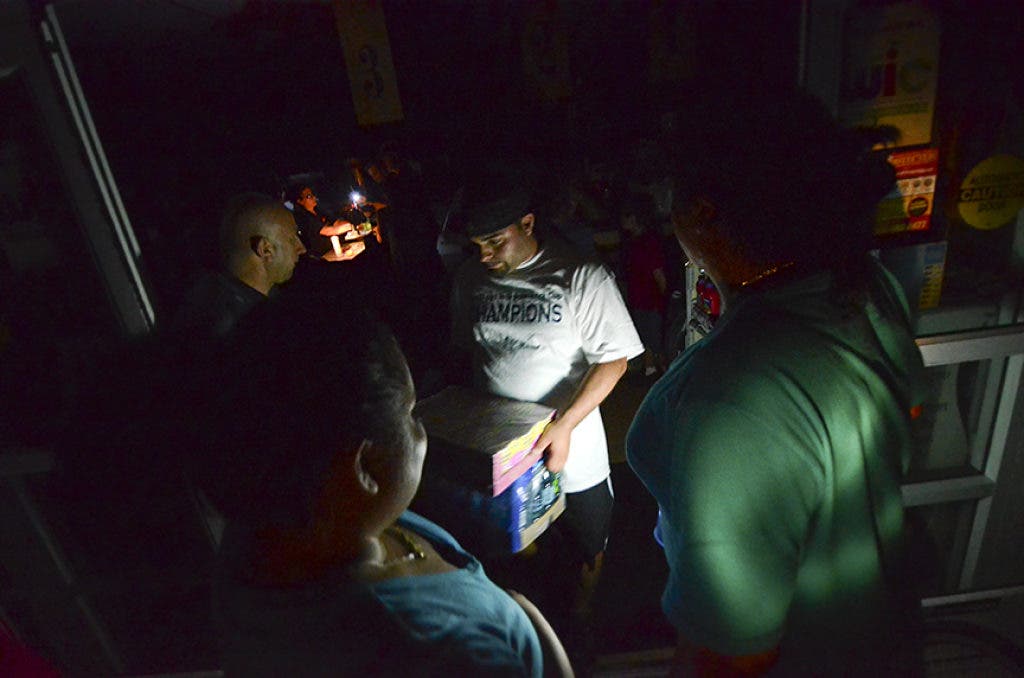
So now we know - the big blackout.
At least, we think we do.
Find out what's happening in Santeefor free with the latest updates from Patch.
And, at the risk of being castigated for saying, “I told you so."
.
Find out what's happening in Santeefor free with the latest updates from Patch.
If you read the entire, mind-numbing 153-page report put out by the Federal Energy Regulatory Commission (and I did- every single page of it) you see that what was admittedly speculation on a lot of peoples’ part last September proves to have been pretty much on the money.
Two points in particular bear repeating:
1. The various entities involved- SDG&E, Arizona Public Service (APS), Imperial Irrigation District, Southern California Edison and Mexico’s Comision Federal de Electricidad, weren’t very good at talking to each other- and
2. There was indeed a mistake by an Arizona Public Service technician that triggered the power imbalances and surges that caused the regional power system to shut itself down in order to avoid much more massive damage.
Let’s deal with the technician mistake first.
Demand on the Southwest Power link was much heavier than planned for in a period when demand should actually be decreasing somewhat- they call it a “shoulder” season, meaning that the time of year SHOULD dictate less demand, not more.
September 8 was a very hot day in the desert, and that demand, and the constant shifting of electricity to meet those demands, started causing some smaller circuits to trip offline.
That could have been compensated for by the system, and it was being compensated for, until the fluctuations in electrical flow brought about the shutdown of a huge 500Kv line at the Hassayampa-North Gila substation of Arizona Public Service.
The situation might still have been saved, because it’s not a big problem to switch out from one 500Kv line to another at the North Gila sub.
What it does require, though, is a very specific set of steps that must be taken, IN ORDER, and within a set time frame to switch capacitor banks.
That would have accomplished to switch, and we might have been OK.
Because he was preoccupied dealing with other people trying to help, the by-then-overloaded techician missed two steps in the process .
He found himself with massive amounts of electricity arcing from one area to another.
Still, APS believed the situation could be saved.
They were wrong.
As a result, the other component parts of the regional distribution network began trying to reroute surging power to meet demand, and couldn’t do it.
That’s when the system began shutting itself down to save itself.
It became the ripple effect it was designed to be- and we were in the dark.
The other question is: “Doesn’t anybody around here talk to anybody else?”
Apparently, they didn’t talk much then- one hopes steps have been taken to reverse that.
The FERC report is very critical of the the lack of communication between and among ALL the partners in this Charlie Foxtrot episode.
SDG&E president Mike Niggli says at the time.
Am I the only one who finds that just a bit hard to swallow?
Are there now methods of instantaneous communication in place so that ALL the affected agencies can talk LIVE to each other?
Are there now methods in place that will provide instant monitoring of ALL the agencies, and the means of INSTANTLY responding to troubles ANYWHERE along the system?
All of that is technically possible...
The question is: Does it exist?
I think we’d ALL like the answers to those questions, wouldn’t we?