Politics & Government
Underground Storage for Santee Water? Experts Eye Old Aquifer for Padre Dam
Federal testing began Tuesday and will take place daily except Sunday through March 23.
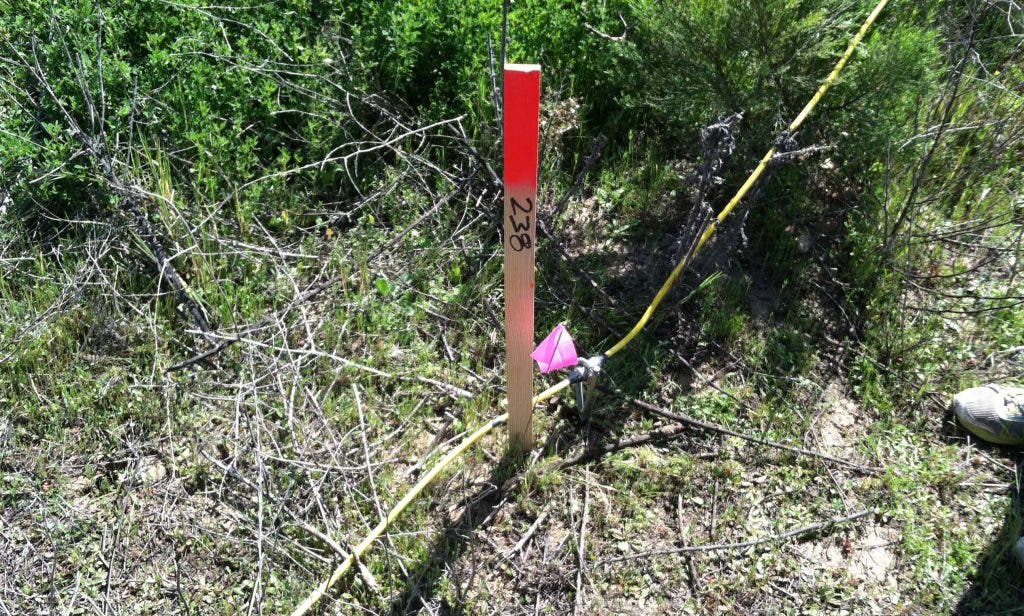


Federal scientists Tuesday began work to see if Santee has storage capacity for up to 10 percent of the city’s water needs.
In August 2011, engineers of the Padre Dam Municipal Water District began thinking about the underground aquifer that used to hold much of Santee’s water—in the days before El Capitan reservoir.
When El Capitan went operational, it held the water that used to charge the aquifer.
Find out what's happening in Santeefor free with the latest updates from Patch.
Could the aquifer be somehow resurrected—revitalized—to provide storage capacity for our current needs?
Could it become the place where reclaimed water, purified, could be pumped underground, allowed to go through the same process of natural purification as most well water and eventually delivered as drinking water?
Find out what's happening in Santeefor free with the latest updates from Patch.
The district wanted to know, and so did the federal Bureau of Reclamation.
To that end, work crews around the San Diego River basin Tuesday began running cables and putting electrical sensors in the ground every 20 feet.
Through a process called electrical receptivity testing, electrical charges read by a computer program will eventually create a very detailed map of what’s under Santee Town Center and the areas north and east of it.
The testing is expected daily except Sunday through March 23. Working hours are expected to be about 7:30 a.m. to 5:30 p.m.
The Denver-based Reclamation Technical Service Center will complete resistivity profiles totaling some 25,000 line feet in the area between Cuyamaca Street and Magnolia Avenue, and north and south of the San Diego River, according to the water district.
Supervising geophysicist Dan Liechty says results should be known by the end of April.
“We’ll be able to tell how deep the bedrock actually is—what it’s composed of—and just how much space there is in that aquifer.”
The bureau is partnering with Padre Dam on the testing—formally called the Santee Basin Aquifer Recharge Study—because the bureau has the equipment and the expertise.
When final results come in, Padre Dam with then have to decide whether it’s worth proceeding further.
Amid the continuing battle between the San Diego County Water Authority and the Metropolitan Water District of Southern California, Padre Dam officials might find some comfort in the concept of having 10 percent of demand available instantly.
It would be something of a buffer against the fact that Padre Dam has to buy all the water it sells customers, since Santee has no natural source of its own.