Sports
Paddling Down the L.A. River: Sounds of Silence in the City
Serenity and tranquility on the L.A. River made for a thrilling journey that took my breath away.
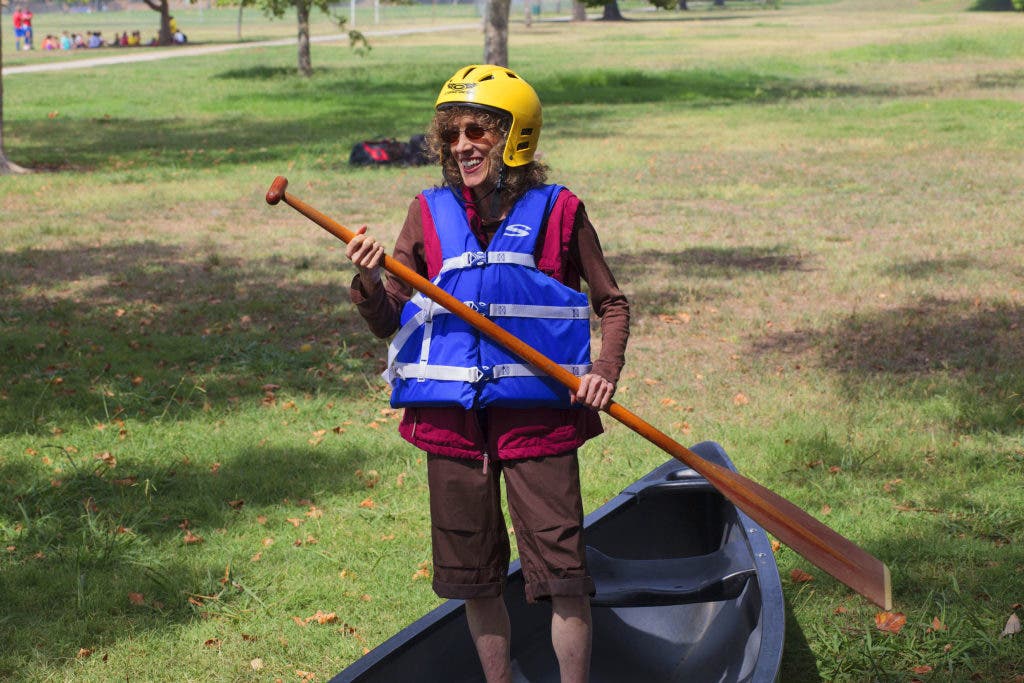


I would never imagine in my wildest dreams that I could be in the middle of the San Fernando Valley traversing between Balboa Park and the Sepulveda Dam and not hear the sound of a single car or the whir of the freeway.
Believe it or not there I was, canoeing down the L.A. River as part of the, in the company of an amazing crew of passionate and environmentally conscious citizens.
It was a privilege to be with a group which included representatives of ’s office, Congresswoman Lucille Roybal-Allard’s office, the Mountains Recreation and Conservation Authority, and the L.A. Conservation Corps.
Find out what's happening in Sherman Oaksfor free with the latest updates from Patch.
As I paddled downstream through this 1.5 mile non-channelized section, I was privy to several fishermen on the banks, stunning egrets, blue herons, gorgeous trees, flowering plants and the murmur of stillness as the sun beamed, glistening in the water.
To find such a haven in the midst of the hustle and bustle of the city moved me to tears of awe. I didn’t want the two-hour trip to end. Afterwards, I was extremely beholden to have been one of the chosen for this mind boggling opportunity, memorable beyond what words can describe.
Find out what's happening in Sherman Oaksfor free with the latest updates from Patch.
Because this segment of the L.A. River is behind the Sepulveda Dam, it wasn’t necessary to add concrete to prevent flooding after the 1939 catastrophe that killed over 100. Therefore, the original bottom remains, attracting magnificent wildlife, vegetation and other natural phenomena.
Not only did I have the occasion to spend a calm and exhilarating morning, but I shared a canoe with Joel Shapiro, who in 2008 travelled the entire 51 miles of the L.A. River along with the Pilot Program Head Tour Guide, and Melanie Winter of . This occurred before the River was declared navigable by the Environmental Protection Agency or approved for use by the U.S. Army Corps of Engineers.
The excursion in 2008 was a record breaking event, paving the way for us to enjoy the River and hopefully for future generations as well. I was honored to be paddling with Shapiro and touched by the fact that the canoe we traversed in was dedicated to his deceased brother David, whose name is engraved on the side. Shapiro was so knowledgeable that he made my trip incredibly informative and exciting.
a 17-year Studio City resident, co-director of Save L.A. River Open Space and office manager for Sen. Pavley, also attended the tour. For Cohn, spending time on the River was “so peaceful, so beautiful, and so much fun,” and a pleasure to be with a group of dedicated individuals.
Cohn didn’t feel like she was in Los Angeles and loved seeing the birds and especially “gliding with paddles out of the water experiencing true peacefulness and quiet.”
In 2006, Cohn was one of the heads of the committee that formed the non-profit corporation, Save Studio City Golf and Tennis. It was later renamed Save L.A. River Open Space, allowing donations from supporters to be used for hiring land use preservation experts, environmental attorneys, and landscape architects. Their goal was creating an “alternate green vision” in opposition to the development of condos on the old site.
Cohn’s wish is that access to the L.A. River will be incentive for interested parties to volunteer, contribute money to all non-profits associated with the river, attend FoLAR (Friends of the Los Angeles River) cleanups, L.A. River Open Space events and more.
Kimberlee Tachiki, who hails from Mar Vista, represented Congresswoman Roybal-Allard, one of the first elected officials to support revitalizing the LA River. As the field staff person who covers water issues for the Congresswoman, Tachiki stated that it was valuable for her to know firsthand what everyone encounters during the boat tours.
Roybal-Allard represents the 34th Congressional District consisting of the cities of Bell, Bell Gardens, Bellflower, Commerce, Cudahy, Downey, Huntington Park, Maywood, and Vernon; the communities of Boyle Heights, Downtown Los Angeles, Little Tokyo, South Park, and Walnut Park; and portions of Chinatown, East Los Angeles, Florence, Pico Union, and Westlake.
“Thinking back to several years ago when Councilman Ed Reyes first approached Congresswoman Roybal-Allard with the idea of revitalizing the River, it is fascinating to see something like this Pilot Program actually happen, which has been a team effort by all of the partners,” Tachiki declared.
She expressed how remarkable it is that so many residents are enthusiastic about exploring an area of Los Angeles that has not been accessible to the public. Tachiki wishes more Angelenos will get the chance to appreciate this adventure sometime soon.
“I want to thank everyone who worked on this project to make it a success,” she continued, which ensured her trek was a satisfying one.
Tachiki liked learning about the River from the guides and fellow boaters, spotting blue herons and snowy egrets, and listening to the sound of paddles hitting the water.
Her only challenge was climbing down the rocks on all fours. “My foot slipped on one of the rocks and I got a small bruise and a scrape on my shin. Thank goodness the L.A. Conservation Corps and the MRCA guides were there to help push/pull me through certain points when I got stuck.”
At the end of our marvelous expedition, we went around a circle and each participant indicated what the ride had meant to them. When it was my turn, I became so choked up, I could barely speak.
I was finally able to utter words of gratitude deep from my heart with the desire to share the same with my daughter and others yet to come.
It was a spiritual awakening of sorts forever changing my perspective of what’s important in my community.