Schools
Whiz Kid of the Week: Lydia Kerns
National Honor Society, varsity sports and service to the community through Rotary's Interact club make Lydia our featured student of the week.
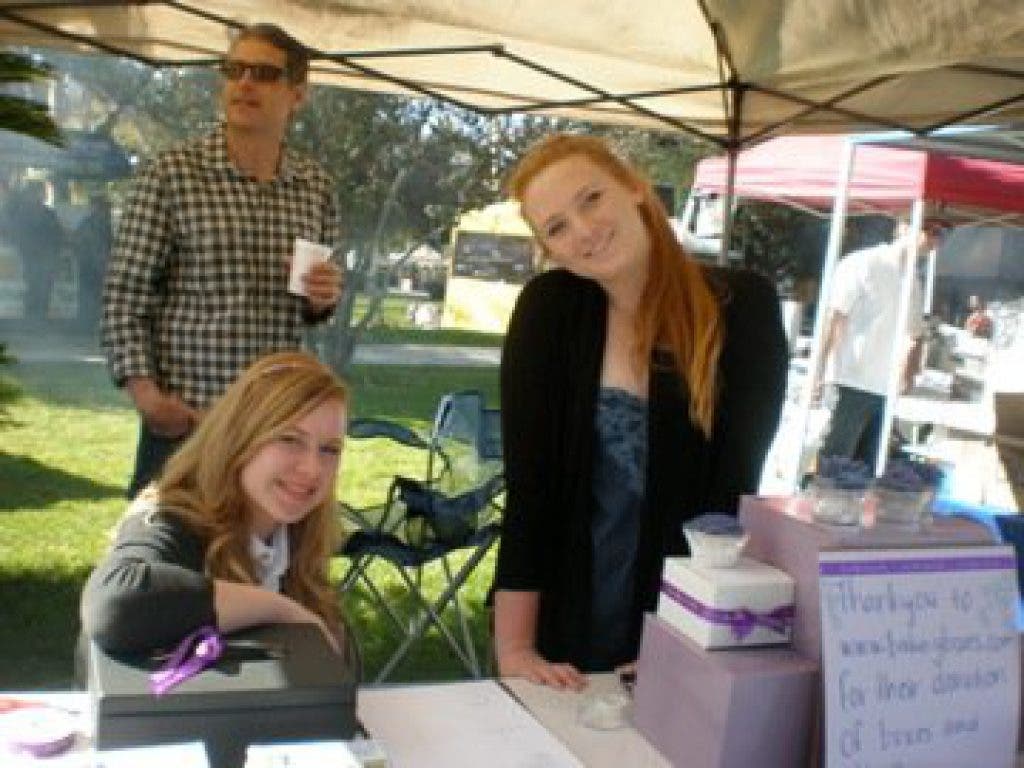


This week’s Sierra Madre Patch Whiz Kid of the Week is Lydia Kerns, a junior at Pasadena High School.
Kerns is active in the Interact club, the high school Rotary organization. She also holds a board position there, as director of community service.
She comments, “Interact does a variety of different service projects. Recently we have been active in raising money to donate (automobile) booster seats to families who may not know that their child needs one or who cannot afford them. We are also planning to help with the LA toilet exchange in April to help improve household water efficiency by replacing old toilets with new more water efficient ones.”
Find out what's happening in Sierra Madrefor free with the latest updates from Patch.
In addition to her Interact responsibilities, Lydia is also a varsity member of Pasadena High School’s swim and water polo teams, and a member of the National Honor Society. In her “free” time, you’ll also see Lydia working at Village Pizzeria in downtown Sierra Madre.
On Tuesday, February 8, Kerns presented her Rotary Ethics Essay Contest submission to Sierra Madre Rotary’s weekly meeting at Hart House in .
Find out what's happening in Sierra Madrefor free with the latest updates from Patch.
The ninth annual George R. Hensel Ethics Essay Contest is cosponsored by Sierra Madre’s local Rotary Club, and was open to all students enrolled at any public or private high school in the Sierra Madre area. Kerns’ essay was to analyze ethical issues confronting students in today’s complex world. She will compete with other entrants for a $3,000 college scholarship and interim level awards.
Kudos, Lydia!
Her essay submission appears below:
The Two Words that Make a Difference
One of my earliest memories is of my mother’s Birthday List. She made this list, without fail, at every one of my birthday parties from when I was in kindergarten until I was in seventh grade. As I eagerly opened my presents, my mom sat in a corner diligently recording the names of each person who gave me a gift and what he or she gave me. This list was kept so that, after all of the guests had gone, I could write each guest a personal thank you note. At the time, this was a task I dreaded-spending minutes of my precious playtime trying to think of how to thank each person in a unique way. However, as I have grown older, I have realized what my mom knew all along-that saying thank you is about so much more than simply being polite.
Saying thank you is the most basic form of ethical treatment, but I believe that it is the most important one. Ethics are, by definition, the system of moral standards by which others should be treated. Saying thank you is the cornerstone of such treatment. I believe that it is the base upon which all other forms of ethical treatment are built. Thanking someone makes it difficult not to treat that person ethically. You would not treat your parents, friends, or teachers in an unethical way. This is because you view these groups of people as equals who deserve the same rights and privileges that you yourself deserve. In the same way, when you say thank you to someone, you establish that person as an equal.
By taking the time to show your gratefulness to someone, you also show that person that you value him or her, and that you appreciate his or her work, morals, or sacrifices. When you say thank you to someone, you also act as a mirror. Some of the goodness that you see in that person is reflected in yourself. To say thank you is to recognize the humanity in someone else and to show that individual your own humanity. So, though it can often be misinterpreted as mere courtesy or even as sarcasm, giving thanks means much more than that. Giving thanks is demonstrating to someone your genuine respect for him or her.
Showing thankfulness can transform a whole community. As well as revealing your respect for a person when you thank him or her, you are also giving that person more respect for you. This mutual respect is the foundation of a thriving relationship. By reflecting a person’s goodness in yourself, you are helping that person to see his or her own goodness more clearly. This, in turn, encourages that individual to continue to do good and to look for the goodness in others. Thanking someone, in effect, creates a chain reaction- a ripple of respect and positive action that can transform a community from a cold, unfriendly place into a warm and welcoming one.
The opportunity to give thanks is everywhere, once you begin to look. The next time the man at the bank opens the door for you, you can enjoy the smile that crosses his face as you thank him for his small act of kindness. As an employee at a local restaurant, it always brightens my day when a customer thanks me for what I have done. Being thankful does not always have to mean saying the words “thank you.” Actions can say these words as well. Volunteering to help clean up local parks or natural reserves shows unspoken gratitude for one’s environment. Donating time to help out at local schools shows thankfulness for what those schools do.
In today’s complicated world, we often look for complicated ways to show ethical behavior. But I suggest looking at the true meaning of ethics. “Ethics” as I interpret it, is treating others as valued individuals. Looking at ethics in this way can direct us toward a more fundamental path of ethical behavior, beginning with saying thank you. Once you have said those words, you may find that other ways of living an ethical lifestyle will become clear.
If you know of a local Whiz Kid you'd like to nominate for Patch's Weekly Acknowledgement of the area's great kids, send us the information!