Health & Fitness
Patch Blog: Red Flag—The Math Situation at SPHS
A pair of meetings at SPHS reveals confusion and frustration among parents about student performance and several aspects of teaching in a variety of math classrooms.
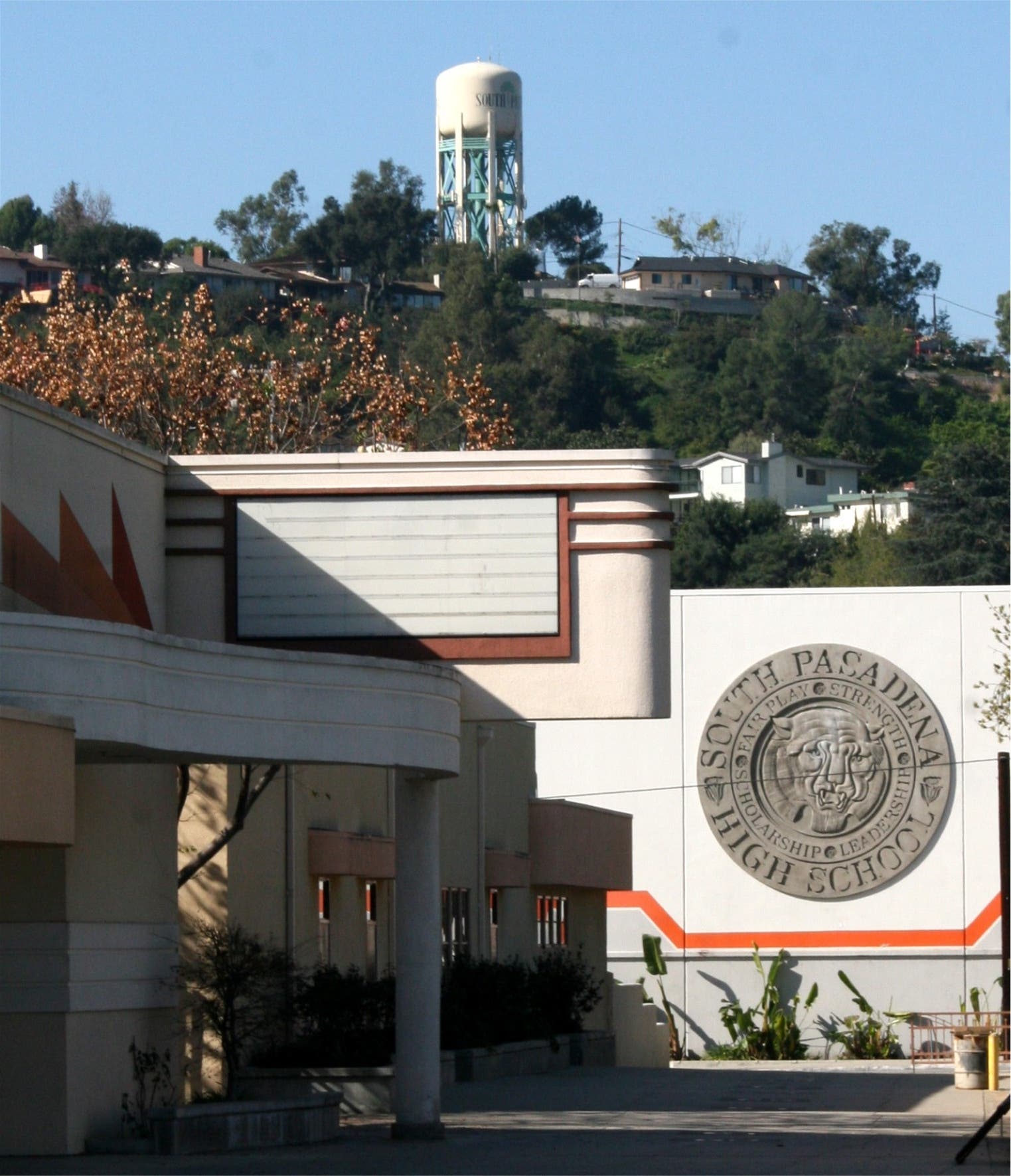
If you've lived in South Pasadena for any length of time, and if you've had children headed toward the you've probably heard horror stories about the school's math department.
I have, I do, and I have, but I didn't get a real taste of the problem until this year when I started talking to other parents whose mostly sophomore-year children (all "A"/"B" math students) were suddenly struggling, like "D"/"C" struggling, with algebra II.
My own son fell into that category, and I had never seen him so confused and hopeless about an academic situation. But after talking with him and a cohort of his fellow students it was very clear to me that something was wrong inside his classroom. This was not a case of a few lazy students not working hard, or a few math-challenged students stumbling over a rather high math hurdle. It was an overall teaching, learning and comprehension issue.
Find out what's happening in South Pasadenafor free with the latest updates from Patch.
This conclusion was reinforced by the fact that almost every parent I spoke to was already tutoring their child. But the tutoring, for the most part, was simply having no practical effect in the classroom. At that time, I asked a few students to describe those things that were bothering them the most about their math classrooms.
I edited their input into a critique of sorts and shared that critique with a school counselor and several school administrators. Generally speaking, I learned that the school was aware of problems "across the board in algebra II" so it was somewhat comforting to learn that the issues outlined in the critique were not confined to any one class, and that the administration had some awareness of the problem at large.
Find out what's happening in South Pasadenafor free with the latest updates from Patch.
Interestingly, the high school set up a special "math night" just before the Christmas Holiday to discuss the geometry and algebra II programs. Well, for a Tuesday night in December, that meeting was rather well attended. Over 100 parents (I was stopped the day after by a parent who had actually counted heads) crammed into the library and were treated to a Power Point presentation that attempted to educate the attendees about changes in state standards and teaching methodologies.
That was all very well and good, but it was not going over particularly well, because what the administration failed to comprehend was that these 100 plus parents were a frustrated and angry group less interested in math standards and more interested in how their children were going to actually pass math! To their credit, the administration promised to schedule another meeting where parents would be free to "express" themselves.
That follow up meeting took place last Monday, the 30th, and after another rocky start featuring, you guessed it, a Power Point presentation, the mics were finally opened and the people spoke.
They spoke about unfair or extremely difficult tests that were not always consistent with what had been taught. They talked about incomplete classroom review of homework assignments. They talked about students losing respect for their teachers who were alternately described as confused, confusing and often dismissive of student concerns. There was talk of "lack of continuity," "lack of basic skills mastery," but the biggest "lack" I discerned in the room that night was a lack of understanding among parents about how to get anything done about the situation.
Who, how, what, where could change be implemented to improve, what in fairness, could be described as a math department under stress?
Nobody I have spoken to is on a witch hunt, nobody is on an anti-public school crusade, nobody is out to crucify teachers or administrators. Quite the opposite actually. The over-arching sentiment I detected is one of cooperation and support, but make no mistake, parents want to see positive results. Unfortunately, it is at this juncture, when community and schools intersect to solve problems that things seem to bog down and go nowhere. Is it institutional inertia? Rules and regulations? The intricacies of union policies? All of the above?
From my particular point of view, I see a high performing school district, a silver medal school, demonstrably strong and tutored students struggling in a challenging, but not super-advanced math class, and I see a red flag. I guess what many of us are wondering is does the school board, do the teachers, and does the SPHS administration also see that flag, and what are they going to do about it?