Community Corner
Locals Ed Begley Jr. and Bill Nye Discuss Tsunamis, Earthquakes and Nuclear Power
Over the past week, two Studio City residents have appeared as experts on national news shows.


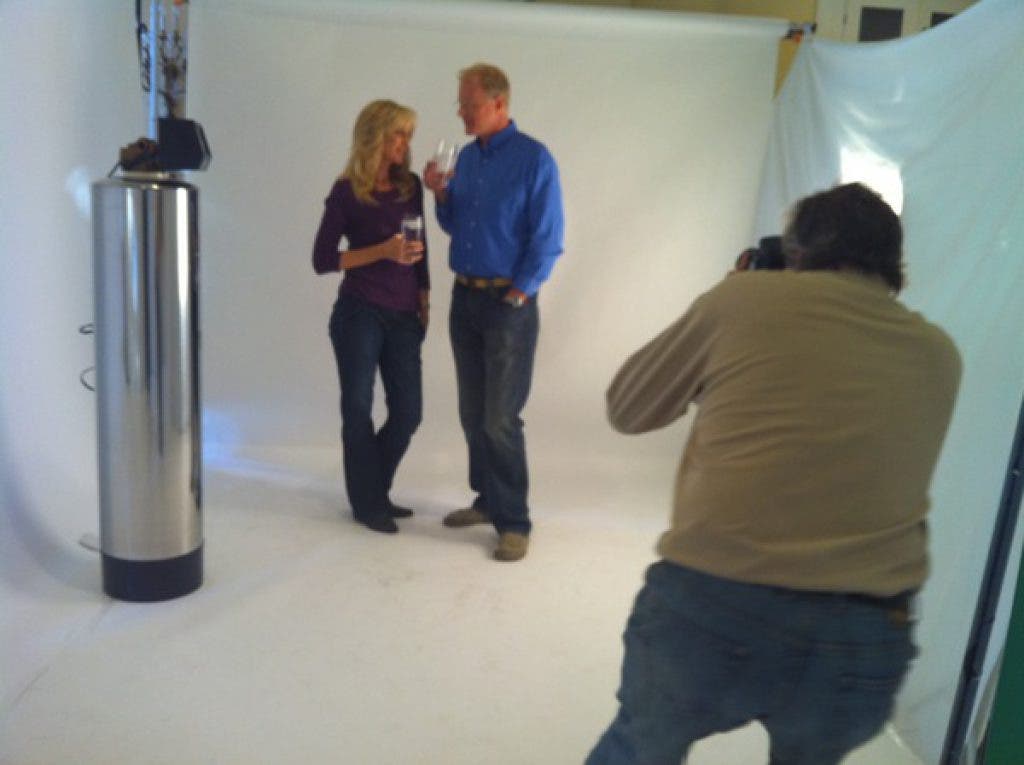


Over the past week on major news channels, two Studio City residents, Ed Begley Jr. and Bill Nye the Science Guy, have appeared to discuss what they know about alternative energy in the wake of the disaster in Japan.
Begley biked up to the CNN building in Hollywood to be on The Joy Behar Show for Headline News last week, appearing with Nye, who happens to live across the street from him in Studio City.
“I wanted to ride my bike over, it was a nice day,” Begley said.
Find out what's happening in Studio Cityfor free with the latest updates from Patch.
Behar wanted to know about the safety and viability of nuclear power, and that’s something Begley knows a lot about. He has spoken many times about how the large nuclear power plants in fact used lots of energy, and poison the environment.
“Solar and wind generators can be put anywhere there’s a need,” Begley said. “They can be put on existing generators, you can’t do that with a nuclear power plant.”
Find out what's happening in Studio Cityfor free with the latest updates from Patch.
Not only are Begley and Nye neighbors in Studio City, but they are on the board of the Union of Concerned Scientists. That’s why Nye, who is known as “the Science Guy” from his children’s TV show, is also considered a respected leading expert in science.
Here are excerpts of what they’ve said this week, and check out video clips of their appearances to the right in our photo gallery. For the full transcript of the TV show, click here.
BEHAR: There is now a nuclear emergency in Japan as several power plants are down and radiation levels are up. Back with me now to talk about that is Bill Nye the Science Guy and joining us actor Ed Begley Jr., an outspoken critic of nuclear power. Bill, we keep hearing worse and worse news all day. I mean, we keep hearing about meltdowns and—and steam in the air atmosphere. How big is this going to get?
NYE: Well, it looks to me like it`s going to get a lot worse before it gets better. That—apparently the nuclear fuel has gotten very, very hot. They`ve released a bunch of gas that`s carrying a little bit of that fuel material; some cesium is being carried into the air. And that`s—that got to indicate that if not big breaches, big holes, there are leaks someplace and certainly they`re venting things. And so as soon as you start pouring seawater on the thing to cool it off –
BEHAR: Yes.
NYE:—then it indicates you kind of—as a engineer, you`ve kind of given up. You`re never going to get that plant running again. . . .
BEHAR: I see. So you know, when the Chernobyl catastrophe occurred, things happened like first of all cancer rates are soaring in that vicinity. The atmosphere is polluted and they are saying for months, maybe years, maybe even millennia and of course the water is also polluted. Could that happen in Japan? . . .
BEHAR: And I go to Ed, do you—what do you think about nuclear power stations? They are being built like crazy all over the world. Are they safe?
BEGLEY JR.: I`m a big fan of nuclear power, Joy. There`s a wonderfully safe reactor sited in a very safe locations 93 million miles away from us. It`s called the sun, and that`s the kind of nuclear power I`m most interested in. And it`s running my house and charging my electric car, so before I have any further discussion, though, my heart goes out to the people in Japan, the survivors, the people we`ve lost already, the families. And I hope everybody opens their hearts and their wallets and goes to—you know, one of the many Web sites that can help, you know, Red Cross, et cetera, or 808-88 and you know, text them some money. It`s very easy to do. So do something. But yes, I think there are other alternatives, Joy. I know they work because I`ve had a wind turbine since 1985 that`s put out many homes worth of power. I bought it as part of an investment at a wind farm in the California desert.
BEHAR: I know.
BEGLEY JR.: I`m still getting checks and many homes worth of power—I know that wind power works.
BEHAR: Can I say something? I was reading in The New York Times this weekend, an article about progressives like yourself and like me. And a lot of people who consider themselves progressives do not want these things in their vicinity, they don`t want bike lanes, they don`t want turbine. I mean, if you can`t get that from progressives how are you going to get it from conservative, people who believe in nuclear energy no matter the risks?
BEGLEY: It`s a real challenge, Joy, you`re right. And Bill, my dear friend Bill said it correctly. A lot of people want a lot of energy, where are you going to get it from. And that`s the challenge. I think the first place to get before you even start talking about wind turbines or solar panels, you should put every dollar you can. Every minute you can into energy efficiency. I just had a full home energy audit in my home just a few scant years ago. I cut my very low bills in half. If we all did that, everybody had a home energy audit, did everything they could to conserve power, we wouldn`t need so many nuclear plants or coal plants or any kind of plant. And then as you go forward, instead of putting up more nuclear plants, what we have is what we have that is going on today.
BEHAR: But there`s never any thought ahead for what to do in the future. As Bill says, we have seven billion people on this planet. It`s too many people
BEGLEY: Wind power and solar power work I think are two big answers and I know they work. I`ve been using them since the mid-`80s.
BEHAR: Do you think Obama will reconsider nuclear power because they are all over it right now? This might even be a wake-up call. What is your opinion, Ed, on that?
BEGLEY: I think we should certainly put the brakes on new nuclear plants. We can find the energy to compensate for those new plants we wanted to build through energy efficiency, through smart controls, Lutron controls in our house and smart strips, turning of power strips with things at night. There`s many inexpensive ways. Energy-saving thermostats, weather stripping, energy-efficient light bulbs that people on the lowest budgets can do. Many utilities have the wisdom to give people free home energy audits. Talk to your local utility. You get a free home energy audit in many locations and you will save many, many kilowatt hours a month. So do that right away. Save that energy and prevent them from having to build new plants. And then as you go forward, more wind and solar which we know works very well.
BEHAR: And how about writing to your congressman and telling them that you don`t want any nuclear power plants built? I mean let me ask you something, Bill, this is just from my point of view being in New York. Is there any danger of any of this radiation coming over here?
NYE: I don`t think so. It`s shooting from the hip, or actually I haven`t thought about it for a few hours I would say no. This isn`t the problem.
BEHAR: Where does it all go? Doesn`t it stay -- it stays in the atmosphere. I remember those movies about these above-ground testing of a- bombs. It`s in the atmosphere. Isn`t this the same thing?
NYE: This is not above-ground testing of a nuclear weapon.
BEHAR: So it`s a different thing.
NYE: This is a use from a modern dual containment vessel power plant. But on -- to Ed`s point, if we were -- people do studies of this. If you were to invest using let us say, government money, to create programs for conservation, you could have, by reasonable estimates, about 30 percent of your energy conserved, electricity conserved. This would be electricity for air conditioning, heating and other household appliances. If we were to subsidize that, oh heavens --
BEHAR: They`ll start yelling "socialism.”
NYE: I know, if we were to provide those means to people, then you would not have to build let`s say by now or by extension 30 percent of the power plants that are planned. That`s an enormous amount of power.
BEGLEY: Enormous.
NYE: 30 percent. And then as -- if we were to invest in innovation and so on, the way people want to, we could probably get to 50 percent without much trouble. For example, my watch is solar-powered. These solar panels are 15 percent efficient. What if they were 50 percent or 60 percent? We would change the world. Thank you.
Begley recently attended the Akron Home and Flower Show http://www.akronhomeandflowershow.com/
Ed will be speaking at 1 p.m. on Saturday, March 26 at the Spring Cottage Life Show in Mississauga, Ontario and appear at the Envirolet booth #1319 in Hall 3 to meet customers and sign autographs. Click here for more info.
Get more local news delivered straight to your inbox. Sign up for free Patch newsletters and alerts.