Politics & Government
How Much Has Bridge Construction Hurt Colfax Businesses?
The Colfax Bridge needed to be replaced, but impatient residents and business owners wonder when it will be finished.
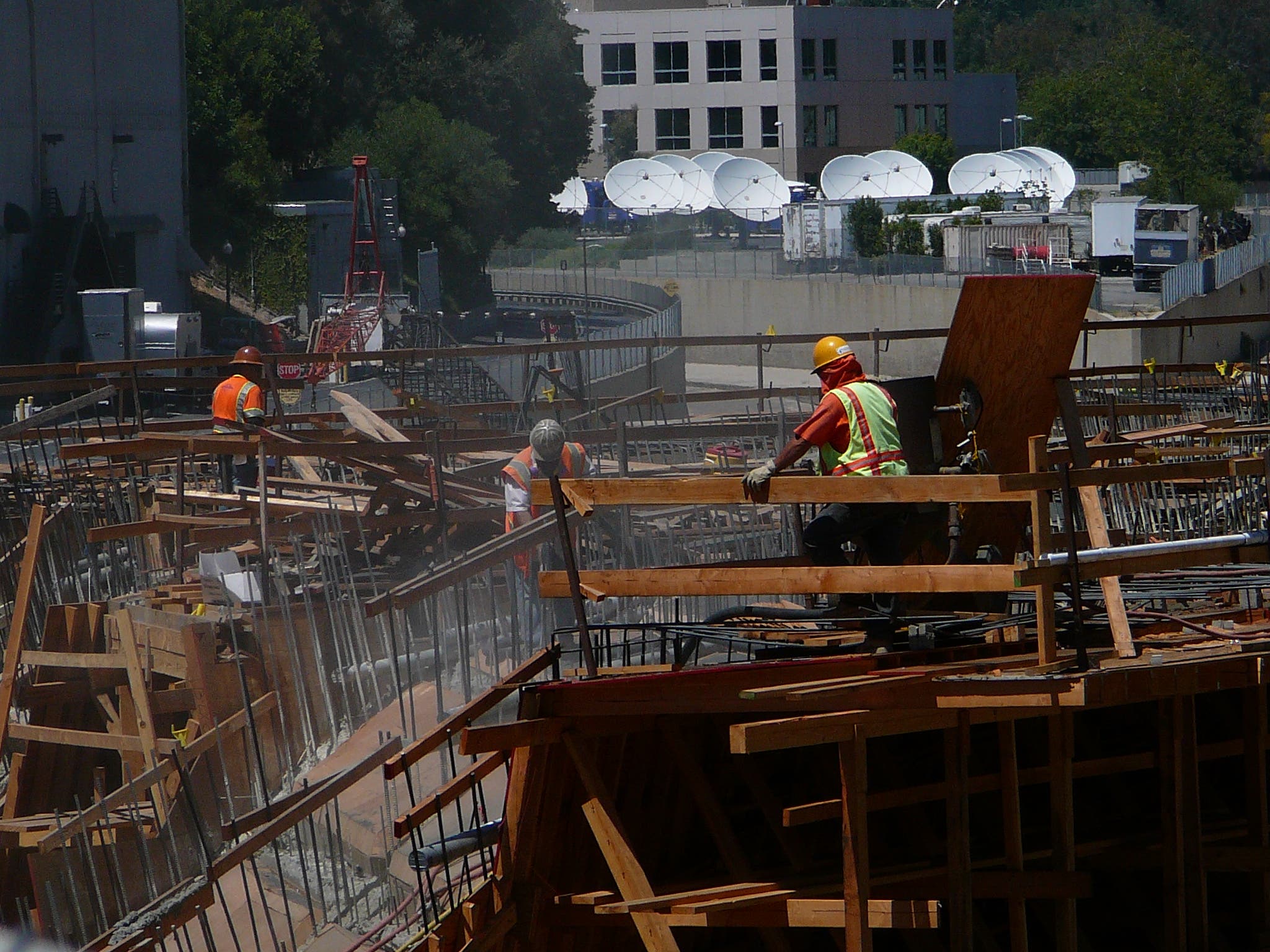


For eight years, Ronnie Gilani has owned and operated a Subway sandwich shop at the corner of Colfax Avenue and Ventura Boulevard. At lunchtime, the venue would be packed with patrons. But since the Colfax Avenue Bridge was torn down in June 2009, the lines have thinned. Gilani has started to worry.
"My sales are down 35 percent compared with last year," Gilani said. "This is the worst business has ever been."
Though Gilani at first thought the diminished sales could be attributed to the economic recession, he quickly realized other businesses in the same mini-mall were affected. He began to ask customers why they were shopping at his store less frequently. They told him that it was because of the inconvenience created by continuing construction on the Colfax Bridge.
Find out what's happening in Studio Cityfor free with the latest updates from Patch.
Paul Hatfield, a member of the Neighborhood Council of Valley Village, is one of those Valley residents who is not up for trekking down to Tujunga Boulevard or sitting in now increased traffic on Laurel Canyon Boulevard to visit businesses on the other side of the river in Studio City. He worries that some businesses may no longer be open by the end of the project. Like many residents, he doesn't understand the duration of the project.
"We're not talking about reinventing the wheel here. A bridge is basically a bridge," Hatfield said.
Find out what's happening in Studio Cityfor free with the latest updates from Patch.
The original Colfax Avenue Bridge, which was 350 feet long and 50 feet wide, was torn down in June 2009 for safety reasons: It featured the same steel-deck truss design as the faulty I-35 Minneapolis bridge that collapsed in 2007, killing 13.
Tonya Durrell, the City of Los Angeles Department of Public Works Spokesperson, said the new bridge will be built to seismic code and be 28 feet wider to accommodate a bicycle lane and a wider sidewalk for pedestrians.
The amount of traffic the new bridge will accommodate will be the same — one lane in each direction. It will feature a more modern style, a lookout area and LED lighting. Durrell said that the design incorporates input from residents at a number of community meetings and that the bridge will open to through traffic in March 2011. That's on schedule.
For some residents, that date feels too far into the future. Lisa Sarkin, the Planning & Development chairperson of the Studio City Neighborhood Council, said the city is violating the initial agreement it had with residents on what hours they would work to complete the project.
"They agreed not to work on Saturdays, then said only six Saturdays. Now we don't have a quiet summer Saturday at all," said Sarkin.
Durrell said the construction team is permitted to work weekdays from 7 a.m. to 6 p.m. and on Saturdays from 8:30 a.m. to 4:30 p.m.
Sarkin also referred to an early morning incident that violated the agreed-upon working hours.
"They are only supposed to work from 8:30 a.m. to 5:30 p.m., yet they are delivering stuff at 4 in the morning," she said. "This is an abuse of the process."
Durrell explained the incident, saying a company independent of the subcontractor was hired to pick up a crane. The company was told to do so during the agreed upon working hours, but could not make it during that time and decided to come by at 4 a.m. She acknowledged that the noise upset the community and said that the company hired to pick up the crane was not affiliated with the city and is no longer being used for this project.
"The contractor was warned that if another incident were to happen, we would have a report at the end of the project that could possibly ruin their chances of working within the City of L.A. again," said Durrell. "We do apologize for this instance of excessive noise. We are monitoring noise levels to ensure that they do not exceed the previous noise levels generated by traffic across the demolished bridge."
Hatfield questioned why incentive-based contracts—such as the one that inspired workers to construct the replacement for the Minneapolis bridge in 13 months for bonus pay—were not employed by the city to finish the project in a speedy manner.
Durrell said, "Incentive-based contracts are not generally utilized unless there is a very strong reason to complete it early as it usually ends up costing more overall. For our case, using the standard contracting vehicle, the contractor will be hit with a penalty if the project is not completed on time."
Durrell acknowledged the community's frustrations. "The Council Office and the Bureau of Engineering appreciate the community's patience," she said.
Some residents don't feel patience will solve the harm the project has caused businesses during an already tumultuous economic time.
"I'm not looking for a world free of inconvenience," said Hatfield. "I am asking the city to use some common sense and to weigh in the impact it has on the people that depend on access for livelihood."
At Amir's Falafel, a family-run restaurant located in the same mini-mall, business is down 40% since the bridge came down. Jonathan Amir, who will take over the business, said that many lunch customers have fallen off because they simply don't have time to go around to Laurel Canyon or Tujunga on their lunch breaks.
"We were thinking of going to the government by ourselves and getting some sort of subsidization, but as far as I know there are no programs that do that so we need to figure this situation out," said Amir, who is considering circulating a petition with other business owners to request compensation.
Gilani is considering the same course of action. But it is possible these businesses voiced their concerns too late.
Durrell said no businesses have raised concerns about lost profits (at community meetings during the planning process) and the issues were not addressed. She said that because funding for the project was provided mainly by the federal government via CalTrans, these sorts of fiscal impacts were not incorporated into the construction funding. But she said the Los Angeles Council Office could answer further questions regarding the effect on local businesses.
Some businesses located near the bridge have recovered some profits since construction started. Studio City Café cashier Tommy Peacock said that, though lunch and dinner sales are down, little by little the regulars have returned and dinner has picked up. He said he's looking forward to the bridge's reopening in about six months. The Café started a new promotion after construction started in order to lure customers back—$1 beers all day long.
"We're still excited," said Peacock. "People are still coming through the door. We're still making money."