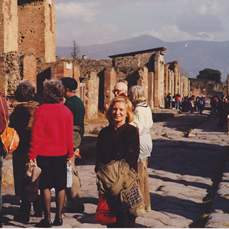
When in Rome, do not order a cappuccino past 11 am unless you don’t mind being the subject of ridicule. You might want to avoid wearing the white tennis shoes and hanging that dopey huge camera around your neck. Try not to be loud and obnoxious. We can spot most Americans abroad – they often question certain customs or foods and want to know why things are different in other countries, or why their legal system is different from ours. Please do not compare our country with others while visiting theirs and please wipe that vacant-eyed expression off your face.
Far too many students and teachers travel to Rome and southern Italy each summer without an iota of intelligence about how to integrate themselves into the daily life of a Roman (Neapolitan or Sicilian) or how to assimilate into the culture. Be observant and listen instead of judging how the host country goes about its daily life. You can enjoy travel so much more by blending in and doing things on the cheap. Walk or take public transportation, speak to locals, stop at shops and restaurants, ask questions and be polite. The whole world will not stop revolving because “you are here”.
After you’ve taken in the sites of ancient Rome, climbed the Spanish steps, walked through the Colosseum and ancient Forum, eaten your share of pasta and gelato, viewed the Vatican treasures and tossed your coin into the Fountain of Trevi, you must visit the wonders that lie south along the Bay of Naples. I highly recommend that you make the lovely town of Sorrento your base of operations for a few days. This will afford you sufficient time to explore Pompeii, Herculaneum, Paestum, Capri, Positano and the Amalfi coast. Also keep in mind that there are more Greek temples in Sicily than in Greece, but that’s another trip About Pompeii – it was completely covered by an enormous volcanic eruption of Mount Vesuvius on August 24 AD 79. Excavations began in 1748. Buildings, public spaces, shops, restaurants, a hotel, baths, gardens with outdoor grilling facilities, communal toilets, paintings and frescoes are all in excellent condition, giving you the opportunity to realize what life was like in ancient Roman times. Since the Mediterranean was the frontier of Ancient Rome, Pompeii was a lively port town of about 20,000 inhabitants. It had bars and brothels as rest stops for sailors who unloaded many a commercial shipload of wares from around the world (think New Orleans!). The communal toilets seated about 40 or so people at a time and there was a bandstand featuring live entertainment by a combo of musicians. Needless to add there were a few very wealthy merchants who lived a lavish lifestyle on the outskirts of town.
Find out what's happening in Studio Cityfor free with the latest updates from Patch.
Pompeii (possibly named for five hamlets) was originally founded in the 8th to 6th century BC. It is now visited by 2.5 million tourists each year. You'll be amazed by how advanced their civilization was and how many of their ideas are still used in our technologically-advanced society.