Community Corner
The Squeeze On LA Renters Is Worse Than You Thought: USC Study
USC researchers employed a new methodology to figure out just how far how of reach rents are for wage earners in Los Angeles.


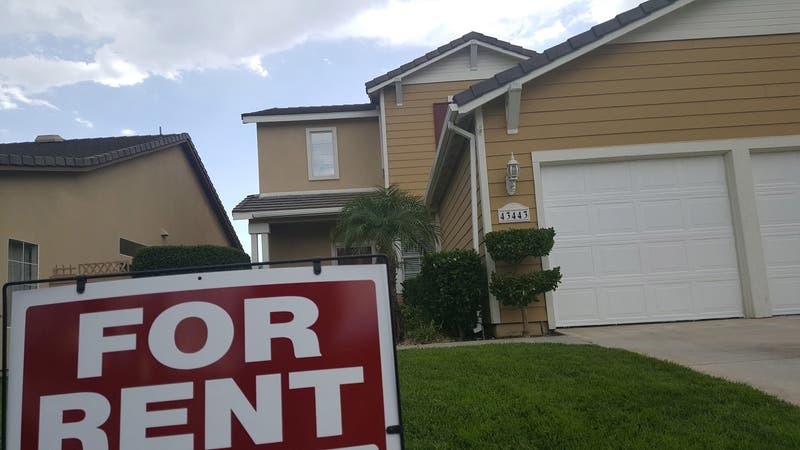
LOS ANGELES, CA — Trying to survive in Los Angeles as a renter is even harder than previously understood. A news study by researchers at USC, uses a new methodology to break down the disparity between rent and wages, finding that Los Angeles and Washington, D.C., have the nation's widest disparity between income and rental housing affordability.
It's a reality that workers and renters intuitively know, but a new statistical model puts it into stark perspective. The study released Tuesday revealed the problem is worse than previously thought, and it poses a hardship on companies in Southern California as well as workers. But the affordability problem isn't just an issue in big coastal cities, researchers concluded. Much of the United States is struggling, too.
"The study shows a growing mismatch of rents and incomes, how rents are rising faster than wages. It's an affordability problem acute among the poorest people, but it affects a much broader constituency of people," said Dowell Myers, professor of urban planning and demography at USC Price and director of the school's Population Dynamics Research Group.
Find out what's happening in Studio Cityfor free with the latest updates from Patch.
Washington, D.C., is the least affordable metropolitan area for workers nationwide. But to no one's surprise, the overall region where workers endure a tight squeeze is Southern California where three of the 10 least affordable metros are: San Diego, Los Angeles, Riverside-San Bernardino. Elsewhere in California, Sacramento also made the top 10 least affordable rental markets. The nation's most affordable cities are inland, including Atlanta, Salt Lake City, Las Vegas and Phoenix.
The findings come from a new method by researchers at the USC Price School of Public Policy to provide policymakers a more accurate picture of rental market conditions. It helps show ratcheting pressure on working people as well as the challenges companies face in recruiting labor. The findings also underscore how traditional methods of calculating rent burden often substantially misrepresent real-world conditions.
Find out what's happening in Studio Cityfor free with the latest updates from Patch.
Washington, D.C., was the least affordable metropolitan area overall in the nation. Four of the 10 least affordable metros are in California: San Diego, Los Angeles, Riverside-San Bernardino and Sacramento. The nation's most affordable cities are inland, including Atlanta, Salt Lake City, Las Vegas and Phoenix.
The newly published study appears in the peer-reviewed, policy research journal Cityscape, which is produced by the U.S. Department of Housing and Urban Development.
The prevailing method of assessing lack of affordability is excessive rent burden, measured by the percentage of renters who spend more than 30% of their household income on rent. But this technique has shortcomings because it does not distinguish degrees of local affordability very well. It also leads to anomalies, such as finding that affordability in San Francisco or Washington, D.C., is better than the national average, Myers said.
Instead, the new method the researchers used is designed to measure the growing mismatch between rising rents and incomes in a way that can distinguish metropolitan areas more accurately over time, while also isolating problems at both low and middle-income levels. It employs an indicator the researchers call the "constant quartile mismatch," which uses the same census data in a different design to compare changes in rent and income distributions from their values in a base year -- 2000 in this study, which precedes both the housing bubble and the Great Recession, to 2016.
Rent distributions have shifted upward in the nation and most metropolitan areas, while income distributions have improved very little. For example, since 2000, the median rental payment nationwide increased by 17.2% (in 2016 dollars) while the median annual income of renters has actually declined slightly, from $38,468 to $37,500 (-2.5%).
City News Service and Patch Staffer Paige Austin contributed to this report.
Get more local news delivered straight to your inbox. Sign up for free Patch newsletters and alerts.