Neighbor News
The California Forever Debate continues in the 2026 elections
Lets hope everything that comes out of this is really the right decision for Solano County Residents

My Mixed Feelings on California Forever
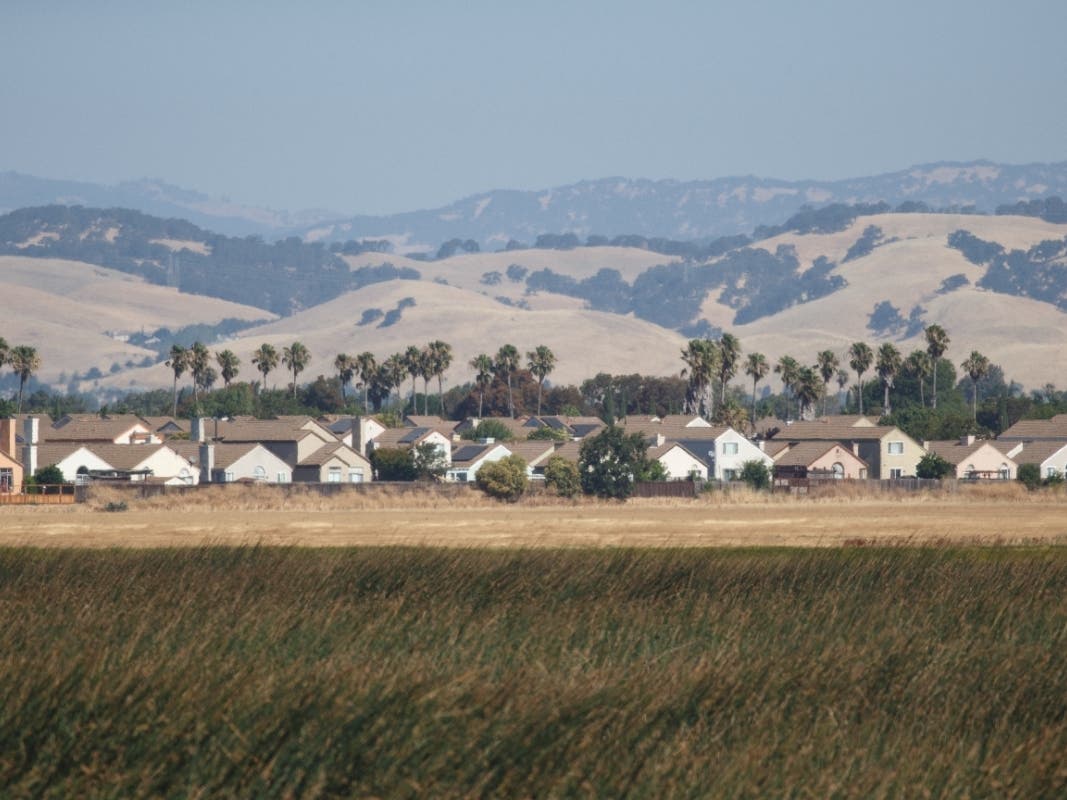
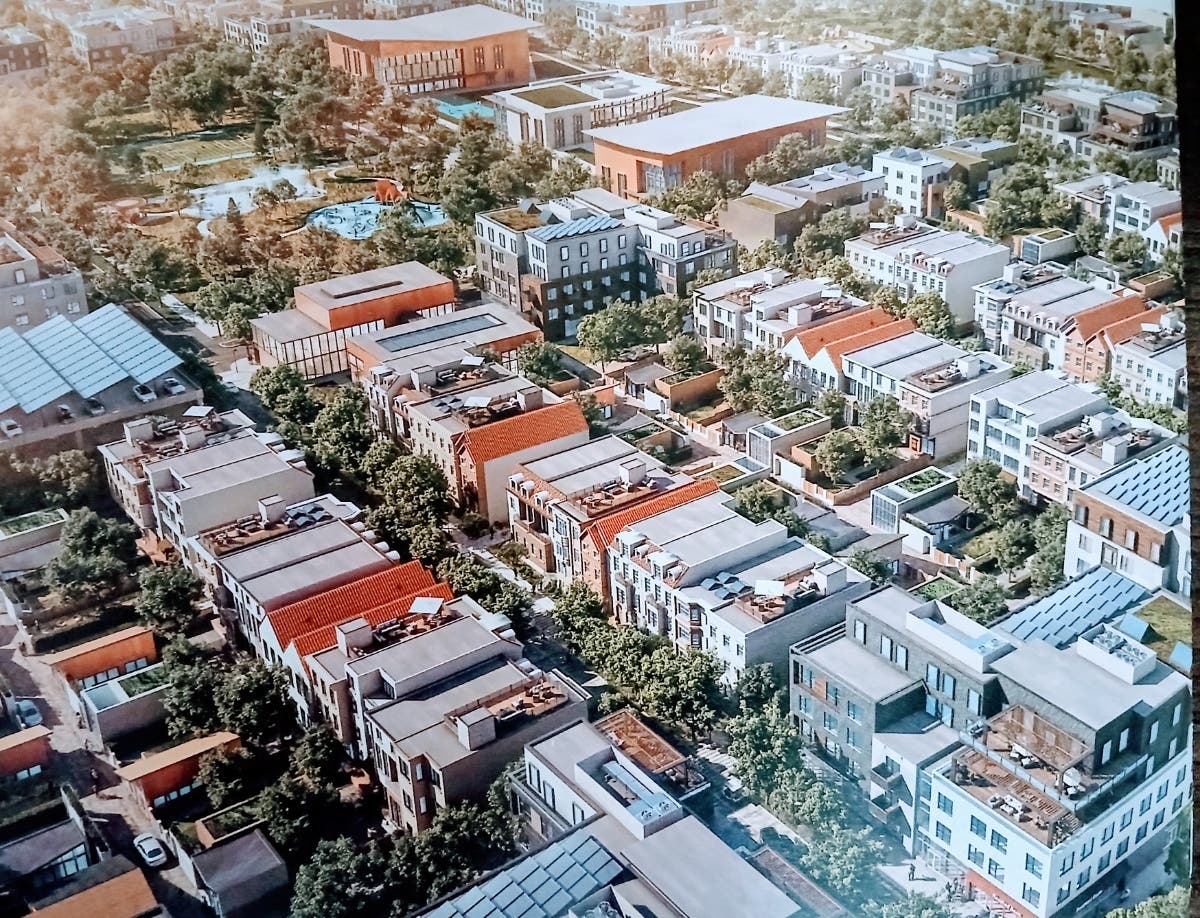
For nearly a decade, a group of tech billionaires has been quietly acquiring tens of thousands of acres of farmland in Solano County with an audacious vision: build a new city from scratch, complete with walkable neighborhoods, bike lanes, manufacturing hubs, and even a shipyard. Now, after years of local opposition and a failed ballot initiative in 2024, California Forever is back with a new strategy—one that turns to Sacramento rather than Solano County voters. As someone who wants to see economic opportunity flourish in the East Bay, I find myself caught between genuine hope and deep unease. I want the jobs this project promises. But I also worry that the people who have called Solano County home for decades—many of whom fled gentrification in San Francisco and other Bay Area cities—could become the very ones displaced by the very forces they sought to escape.
The Promise: Jobs and Economic Revival
Find out what's happening in Suisun Cityfor free with the latest updates from Patch.
There is no denying that Solano County could use an economic shot in the arm. The region has long been overshadowed by its more prosperous Bay Area neighbors, and the promise of tens of thousands of jobs is not something to dismiss lightly. California Forever’s latest proposal envisions a major shipbuilding operation alongside a manufacturing hub, with proponents estimating the project could bring roughly half a million jobs to California. More immediately, the prospect of luring Saronic Technologies—a defense company building autonomous vessels for national security—offers the tantalizing possibility of thousands of jobs and badly needed housing in a state where affordability has reached a crisis point.
The project’s backers have enlisted some of California’s most powerful Democratic insiders to make their case: former Senate President Pro Tem Darrell Steinberg and former Senate Majority Leader Bob Hertzberg, both architects of landmark environmental laws. They argue that without legislative action, California will lose billions in investment and tens of thousands of jobs to Texas and other states. This is a compelling argument, especially in an era when red states are aggressively poaching California businesses with promises of lighter regulation and lower taxes.
Find out what's happening in Suisun Cityfor free with the latest updates from Patch.
I understand the urgency. I understand why unions, realtors, peace officers, and pro-housing groups have lined up behind this project. People need work. Communities need investment. And there is something almost inspiring about the ambition to build something new—a “next great American city”—from the ground up.
The Concern: Process and Transparency
But ambition, however grand, does not excuse a lack of transparency. And this is where my enthusiasm begins to curdle.
California Forever’s history is one of secrecy. The group, originally operating under the name Flannery Associates, spent roughly $900 million quietly buying up more than 50,000 acres of farmland beginning as early as 2017, all while refusing to disclose who was behind the purchases. When the identity of the backers finally emerged—a roster of Silicon Valley billionaires—the reaction from Solano County residents was not warm. In 2024, the group pulled a ballot measure after polling showed that 70% of county voters would vote against it. Their original plan to build a city of 400,000 in rural Solano County was so unpopular that they withdrew it entirely.
Now, rather than going back to voters, California Forever is trying a new approach: lobby the state legislature to fast-track the project through budget trailer bills, bypassing county restrictions and local control. The developers are seeking permission to rely on an 18-year-old environmental impact report, limit legal challenges to 270 days, and allow Suisun City to annex their land if needed—all without putting the question directly to Solano County voters.
This troubles me deeply. Solano County has a 40-year-old “orderly growth” ordinance that was designed precisely to prevent this kind of end-run around local decision-making. When a group of billionaires can hire powerful Sacramento insiders to rewrite the rules—rules that exist to protect communities from exactly this kind of development—it raises fundamental questions about who really governs California. Is it the people of Solano County, or is it whoever can afford the best lobbyists?
As one opposition group, Solano Together, put it: the project represents a “lack of transparency” and an attempt to “circumvent Solano County and its voters by lobbying for special treatment”. They are not wrong to be angry.
The Gentrification Fear
Then there is the issue that keeps me up at night: gentrification.
Solano County is not a blank slate. It is home to communities like Vallejo, Fairfield, and Suisun City—places where working-class families, many of them people of color, have put down roots precisely because they could afford to live there. Many of these residents came from San Francisco, Oakland, and other Bay Area cities where rising housing costs have pushed out longtime communities. They fled gentrification. They came to Solano County seeking stability, affordability, and a place where they could raise their families without being priced out.
Now, California Forever wants to build a new city right next door—a city of up to 400,000 people—with all the attendant pressures on housing, infrastructure, and local services. Even if the project’s backers have the best of intentions, the economic forces they are unleashing are predictable: new high-paying jobs will attract wealthier workers, housing prices will rise, property taxes will increase, and longtime residents—especially renters and those on fixed incomes—will find themselves squeezed.
This is not hypothetical. It is the story of every major development project in the Bay Area over the past two decades. And while California Forever’s website features testimonials from Solano County residents who support the project for its “new growth opportunities”, the question remains: growth for whom? Will the new jobs go to local residents, or will they be filled by newcomers who can afford to outbid locals for housing? Will the new housing be affordable, or will it be priced for the tech workers the project hopes to attract?
These are not abstract concerns. They are the lived reality of communities across California that have been transformed—and not always for the better—by waves of investment from outside. As one University of California, Berkeley researcher noted, Solano residents have “reason to be suspicious of wealthy but distant developers who are disconnected from local needs”. That suspicion is earned.
The Environmental Question
There is also the environmental dimension, which the project’s proponents have sought to minimize. The proposed development would convert vast farmlands into factories and shipyards, with potentially significant impacts on the surrounding ecosystem. The group is seeking to expedite or bypass environmental reviews under the California Environmental Quality Act—a law that Steinberg and Hertzberg themselves helped shape. The irony is not lost on critics.
California Forever says the shipyard will bring a windfall of jobs and potentially $93 million in local tax revenue. But environmental advocates argue that the details about the project’s environmental impact remain scarce. Relying on an 18-year-old environmental impact report for a project that has evolved dramatically—from a walkable utopia to a shipbuilding and manufacturing hub—seems like a recipe for unintended consequences.
What I Hope for This Election Season
This brings me to my final, perhaps most important, point. If California Forever is going to move forward, the conversation about it needs to happen in the open—and it needs to happen during this election season.
The 2026 elections offer a crucial opportunity for Solano County residents to have their voices heard. Polling commissioned by California Forever itself shows that support for the project is far from unanimous: one recent poll found 51% supported the Suisun Expansion Plan while 49% opposed it. This is not a mandate. It is a community deeply divided.
Opposition groups like Solano Together are organizing rallies and pushing for advisory votes. They argue, correctly, that the project should not be rushed through the legislature in a backroom deal. “Nearly 80 percent of Solano voters say the county needs more homes that are affordable, while 70 percent say the local economy is struggling”. These are legitimate concerns that deserve a full and fair hearing—not a legislative shortcut engineered by Sacramento insiders.
I want to see the flaws of this deal discussed. I want to hear the developers answer tough questions about environmental impact, housing affordability, traffic, schools, and—most of all—the fate of the people who already live in Solano County. I want to know what binding commitments California Forever is willing to make to ensure that local residents benefit from this project, rather than being displaced by it. I want to see the promises put in writing, with legal teeth, not just aspirational language on a website.
Conclusion
So I am left with mixed feelings. I want Solano County to thrive. I want jobs, investment, and opportunity for a region that has too often been overlooked. I want to believe that a new city—built with vision and care—could be a model for sustainable, inclusive growth.
But I also know that the history of development in California is littered with broken promises and displaced communities. I know that when billionaires hire powerful insiders to rewrite the rules, it is usually the little people who pay the price. I know that the people of Solano County deserve better than to have their future decided in a Sacramento backroom.
California Forever could be a great thing for Solano County—or it could be another chapter in the long, sad story of gentrification and displacement. The difference will depend on whether this project is subjected to the scrutiny, transparency, and democratic accountability that it deserves. That is why this election season matters. That is why we need to talk about the flaws, the risks, and the hard questions. And that is why, for now, I remain cautiously hopeful but deeply uncertain.
The people of Solano County deserve a voice in their own future. Let’s make sure they have one.
The Starbase Precedent
If Solano County residents want to understand what California Forever could become, they need only look 1,800 miles east to the southern tip of Texas, where Elon Musk has just done exactly what California Forever is trying to do—only with far less resistance.
In May 2025, residents of Boca Chica Village voted to incorporate Starbase, Texas, as an official city. The vote was 212 to 6. Of the 283 eligible voters, nearly all were SpaceX employees or their family members. The new mayor? Bobby Peden, a SpaceX vice president. The city commissioners? All current or former SpaceX employees. Turnout was over 75 percent—remarkable for any election, let alone one where nearly everyone eligible works for the same company.
There was no campaigning. No yard signs. No real debate. Just a foregone conclusion.
And now, Starbase is using its new municipal powers exactly as critics feared. The city commissioners approved a request from SpaceX to install gates at entry points, accessible only by access code, effectively cutting off public access to the community. The Texas legislature has granted Starbase authority to close Boca Chica Beach during launches, transferring control from Cameron County to a city run by SpaceX employees. The city contracted with SpaceX itself for fire response and emergency services. And Starbase is now helping SpaceX apply for multimillion-dollar state tax refunds through the Texas Enterprise Zone Program.
As the Roosevelt Institute put it, Starbase represents “dominant corporations devising new ways to escape democratic accountability through jurisdictional secession”. It is a “beta test for a rising oligarchy that seems intent on transforming America from the inside out”.
The Parallels Are Uncomfortable
The similarities between Starbase and California Forever are striking—and deeply troubling.
Both projects involve wealthy, out-of-state interests acquiring large tracts of land and seeking to create new municipalities from scratch. Both involve bypassing or minimizing local democratic input. Both promise jobs and economic development while raising serious questions about who actually benefits.
But there are also important differences, and they cut both ways.
In Texas, the process was technically democratic—residents voted. But because nearly all the voters were SpaceX employees, the outcome was never in doubt. This is democracy in name only: a company town voting to incorporate itself, with the company's employees as the electorate, the company's executives as the candidates, and the company's interests as the only agenda.
In California, by contrast, California Forever tried the ballot box in 2024 and failed—polling showed 70% of Solano County voters opposed to the project. So now they are trying a different route: lobbying the state legislature to fast-track the project through budget trailer bills, bypassing county restrictions and local control entirely. This is arguably worse. At least Starbase went through the motions of an election, however rigged the electorate. California Forever is seeking to avoid an election altogether.
The Gentrification Connection
What makes Starbase particularly relevant to Solano County is the pattern of displacement that has already begun in South Texas.
Housing costs near Starbase have doubled since 2014. Eighty residents of nearby communities have filed a class-action lawsuit against SpaceX, alleging that rocket launches are literally destroying their homes—one plaintiff needs $100,000 in foundation repairs. While SpaceX's expansion has brought jobs and global attention to one of America's poorest regions, it has also fueled lawsuits, environmental concerns, and a growing divide among the region's 1.4 million residents.
Sound familiar? It should. This is exactly what gentrification looks like: outside investment arrives, property values rise, longtime residents are priced out or pushed out, and the benefits flow disproportionately to newcomers and the companies that employ them.
Solano County residents know this story because many of them lived it in San Francisco, Oakland, and other Bay Area cities. They came to Solano County precisely to escape the relentless upward pressure on housing costs. Now California Forever threatens to bring that same pressure to their new home—and Starbase shows exactly how that story ends.
The Public Goods Problem
There is another parallel that deserves attention: the question of public access and public goods.
In Starbase, the new city has effectively privatized what was once public. Boca Chica Beach, a beloved destination for fishing, camping, and recreation, can now be closed at the city's discretion. Environmental and indigenous groups worry that this will effectively create a “de facto private beach”. The Texas legislature has backed this up, passing legislation to transfer beach closure authority from Cameron County to Starbase.
What happens when a company town controls public resources? The company's interests come first. Public access, environmental protection, and community wellbeing become secondary considerations.
California Forever raises the same concerns. The project would convert tens of thousands of acres of farmland into factories and shipyards, with significant impacts on the surrounding ecosystem. The group is seeking to expedite or bypass environmental reviews under CEQA—the very law that was designed to protect communities from exactly this kind of development. If Starbase is any guide, once the city is built and the company is in control, public goods will be sacrificed for corporate convenience.
The Taxpayer Subsidy Question
There is one more parallel worth noting: taxpayer subsidies.
In Texas, Starbase is helping SpaceX apply for multimillion-dollar tax refunds through a program designed to create jobs in economically distressed areas. The new city—created and run by SpaceX employees—nominated two SpaceX projects for the Texas Enterprise Zone Program, which could result in refunds of up to $3.75 million each in state sales taxes.
This is a remarkable feat of circular logic: a company creates a city, the city applies for tax breaks on behalf of the company, and taxpayers foot the bill. Meanwhile, the company's rocket launches are damaging homes and disrupting communities, and the company's new city is restricting public access to beaches that have been used for generations.
California Forever's proponents make similar promises about jobs and tax revenue. But as Starbase demonstrates, the benefits of these projects often flow upward—to the company and its executives—while the costs flow downward to local residents and taxpayers. The promised jobs may materialize, but they may go to newcomers rather than locals. The promised tax revenue may materialize, but it may be offset by tax breaks and subsidies. And the promised community benefits may materialize, but they may be reserved for company employees while longtime residents are left behind.
What This Means for Solano County
The Starbase precedent should give Solano County residents pause—not because California Forever is exactly the same as Starbase, but because it follows the same playbook.
Both projects involve wealthy outsiders seeking to create new municipalities with minimal democratic accountability. Both involve promises of jobs and economic development that may or may not benefit existing residents. Both involve pressure on state legislatures to override local control. Both involve concerns about environmental impact, public access, and gentrification.
The difference is that Starbase has already happened. We can see the results: a company town controlled by company employees, public resources privatized, longtime residents displaced or damaged, and taxpayer subsidies flowing to a billionaire's enterprise.
California Forever could be different. It could be better. The developers could commit to binding protections for local residents, transparent governance, meaningful community input, and genuine affordability. They could agree to subject the project to full environmental review and local democratic approval. They could learn from Starbase's mistakes and do things differently.
But so far, they have not. Instead, they are following the same playbook: secretive land acquisitions, powerful insiders lobbying the legislature, and an end-run around local control. The pattern is recognizable. And the pattern should worry anyone who cares about Solano County's future.
Conclusion
Starbase is a warning. It shows what happens when a company town is allowed to incorporate itself, when public resources are privatized, when democratic accountability is sacrificed for corporate convenience. It shows the gentrification, the displacement, the environmental degradation, and the taxpayer subsidies that follow.
Solano County residents have a choice. They can accept California Forever's promises at face value and hope for the best. Or they can look at Starbase and ask the hard questions: Who will really control this new city? Who will benefit from it? Who will be displaced by it? And what happens when the promises are broken?
The answers to those questions should determine whether California Forever moves forward—and on what terms. But those answers will only come if the project is subjected to the scrutiny, transparency, and democratic accountability it deserves. That is why this election season matters. That is why we need to talk about the flaws, the risks, and the hard questions. And that is why, for now, I remain cautiously hopeful but deeply uncertain.
The people of Solano County deserve a voice in their own future. Starbase shows what happens when they don't have one.