Health & Fitness
Senior Care: Why We are Afraid of Alzheimer's
Do we really know what a person with Alzheimer's is thinking?
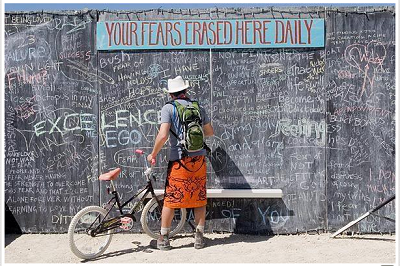
Are you afraid of Alzheimer’s? I would like to introduce you to retired physician and accomplished author, Dr. David Hilfiker. He was diagnosed in 2012 with a progressive mild cognitive impairment, which he says is most certainly Alzheimer’s disease. He offers his readers a profound perspective of what it’s like from inside the diseased mind. This information come from an article he wrote Why We Might Fear Alzheimer’s in the August 2013 AgingCare.com online magazine.
Find out what's happening in Suisun Cityfor free with the latest updates from Patch.
Admit it. Most of us are afraid of Alzheimer’s because of what we see of a person from the outside looking in. Most of us are seeing what the pop culture shows, which is Alzheimer’s in a person with the advanced disease. I’ve see them on television having anger or paranoia issues; wandering around lost; unable to recognize children; and then there are the ones sitting mutely in a wheel chair staring into space. Maybe you have been around severely demented people, whose blank expressionless faces caused you to become embarrassed by not knowing what to say.
Our fears are reinforced by stories of stressed out caregivers, who work hard caring for their loved ones. You might know about caregivers who have lost the comfort from the person they loved and depended on for many years. You hear about the deep suffering from the part of the caregiver, but you don’t hear the actual experience of the one being cared for. I have written many articles on how caregivers can stress less, how they need exercise to be strong to take care of their loved one and the importance of belonging to support groups.
Find out what's happening in Suisun Cityfor free with the latest updates from Patch.
What is the person with Alzheimer's thinking?
BUT I have never written about the loved one and what is going on in his or her mind. So we really don’t know because of our fear, our embarrassment, and the shame that surround Alzheimer’s. Because of this no one with Alzheimer’s is going to share a story. For that reason we know very little about what that person is experiencing. So we will ask Dr. Hilfiker to speak for himself:
We know little about the stages of the disease (many of which are not so scary).
Are our fears real or imaginary?
Dr. Hilfiker goes on to say that our fears don’t come from know what the loved one is experiencing, but from our imagination and our imagination is often triggered by not spending time with someone with Alzheimer’s. We imagine what it must be like to forget the name of our spouse or our child. We imagine what it must be like to repeat the same thing you just said many times already. We imagine what it is like to stand silent, unable to join in a conversation. We imagine what it must be like vegetating in a nursing home bed.
But these are the products of our imaginations and have no basis in reality because we can’t know how a person with Alzheimer’s actually perceives the world. Could we have a distorted view here?
Dr. Hilfiker says:
Here are some counter-examples that do show each of these stages but the images are far different from what we'd expect.
He closes by saying that he has received many emails from people taking care of a loved one in the advanced stages of the disease who have wonderful relations filled with love, humor, closeness and deeper meaning. Old hurts are forgotten, reconciliation happens and both people stay completely in the present. We don’t know what we will be like if we develop dementia. So why are we afraid?
For more great information, please come visit the blog at our Sequoia Senior Solutions website.