Community Corner
'Dog And Pony Show' Temecula Mayor Says Of SDG&E's Open House For Power Transfer Line Project
SDG&E hosted the open-house Q&A at Temecula's Embassy Suites on Wednesday, leaving residents with more questions than answers.


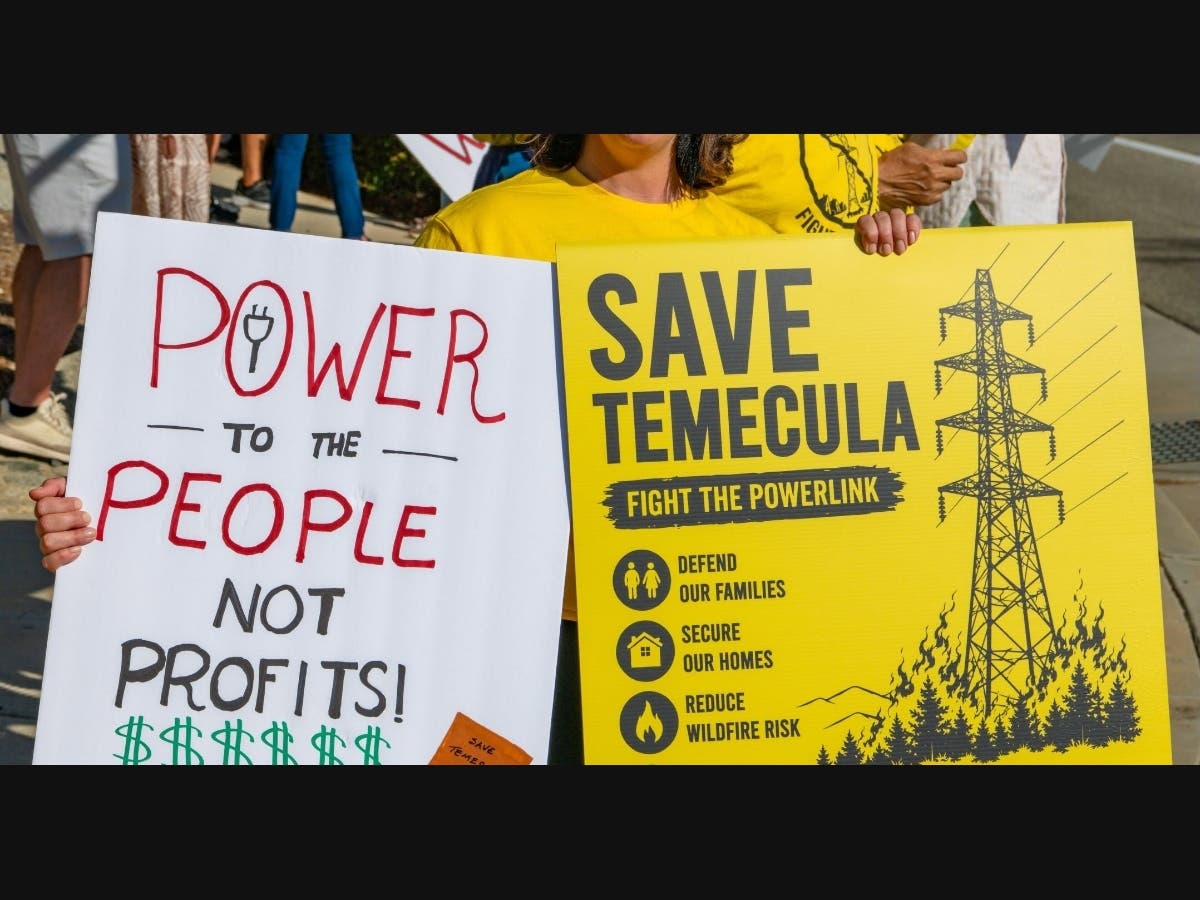
TEMECULA, CA — Hundreds of concerned Temecula residents in yellow "Save Temecula" shirts braved the August heat Wednesday to get answers from SDG&E on their many questions regarding the proposed Golden Pacific Powerlink power line route eyed for the city.
The open house took place at the Embassy Suites on Rancho California Road, from 4 to 7 p.m. Wednesday. Before the event opened, the meeting room's air conditioner "froze up," leading the hotel to fill the elbow-to-elbow meeting space with cooling fans. Many left early. Still, others remained to speak with the project's representatives, who did their best to answer questions about why Temecula is their preferred route for the project.
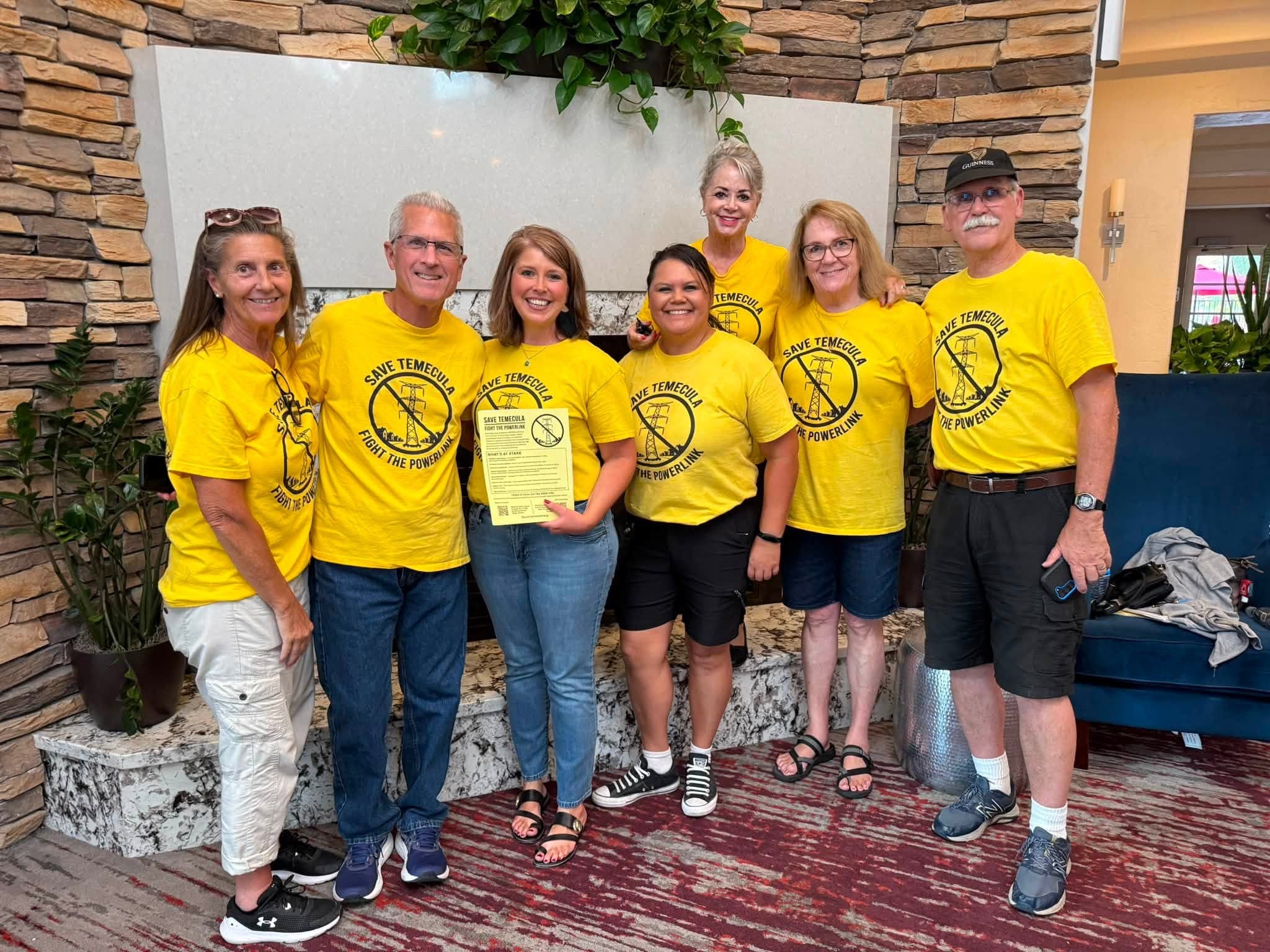
Members and supporters of Save Temecula, a non-profit grassroots coalition representing thousands of area residents and businesses, were in attendance throughout the evening, as were concerned residents and community leaders. All attempted to glean answers to better understand the utility's plans and lodge concerns or complaints.
Find out what's happening in Temeculafor free with the latest updates from Patch.
Michael Scalise, Temecula resident, said he gained no new insights from the Open House.
"SDG&E provided flyers and posters, but it was nothing new," he said. "It's the same information they provided at the Temecula City Council meeting in May. Their plan is disastrous to Temecula's residential areas and the environment."
Find out what's happening in Temeculafor free with the latest updates from Patch.
Temecula resident Cheryl Brown said she left the SDG&E Open House feeling very disappointed.
"I was hoping to learn more than I did at their online presentation months ago, but instead I found a small, crowded room with no air conditioning and staff who had nothing substantive to share," said Temecula resident Cheryl Brown. "It felt like being invited to a full-course dinner where the host wasn't prepared for the guests. There were plenty of servers, but no real information. We left hot, tired, and hungry for answers, which we didn't get."
The San Diego Gas & Electric team, in charge of the Golden Pacific Powerlink project, has a pre-planned route for 190-foot-tall energized power lines through South Temecula. This route has become the mission of "Save Temecula," a nonprofit established to inform the public and show the opposition to the project in a sea of yellow t-shirts, yard signs and flyers.
“This open house was nothing more than a perfunctory exercise,” said Mark Winkler, President of Save Temecula. “SDG&E continues to go through the motions of community engagement while pressing forward with its bid to the CPUC. Temecula residents have made their opposition to this project abundantly clear over the past few months, and yet SDG&E has done nothing to change course or incorporate community feedback.
“The vague, incomplete—and at times, misleading—answers SDG&E gave to the Temecula community today demonstrated that this was not about genuinely listening to residents or addressing their concerns. An exercise designed to quiet public outrage rather than answer real questions is a failure of transparency.”
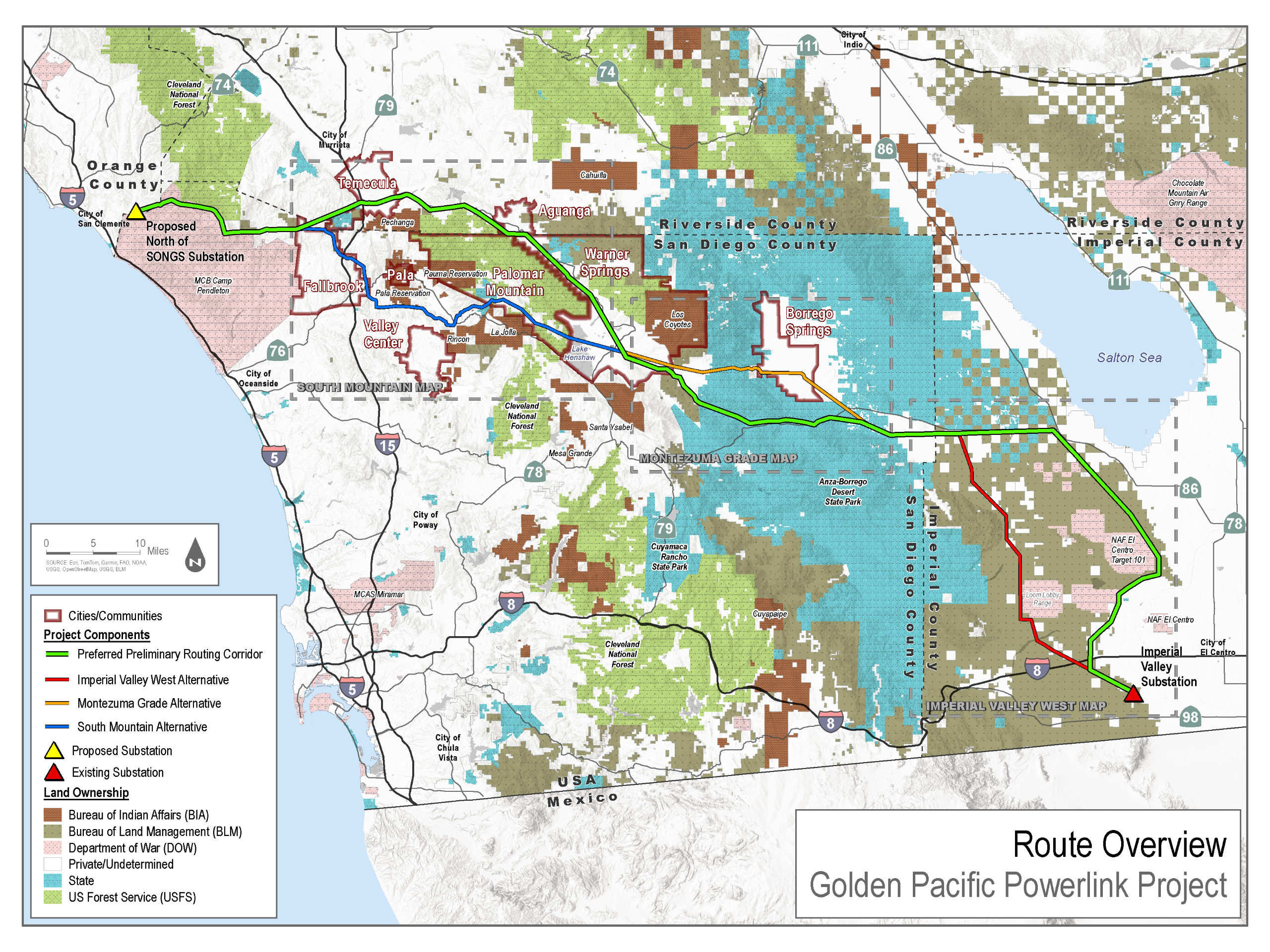
With other pre-planned routes also up for discussion, this open house was one of several planned for anyone concerned to come and ask questions.
"The feedback process doesn't stop when we submit our application; that is when the public scoping meetings happen, when the hearings happen, where you can actually speak to the California Public Utilities Commission. We just wanted to submit this now, so that the CUPC already has a starting point."
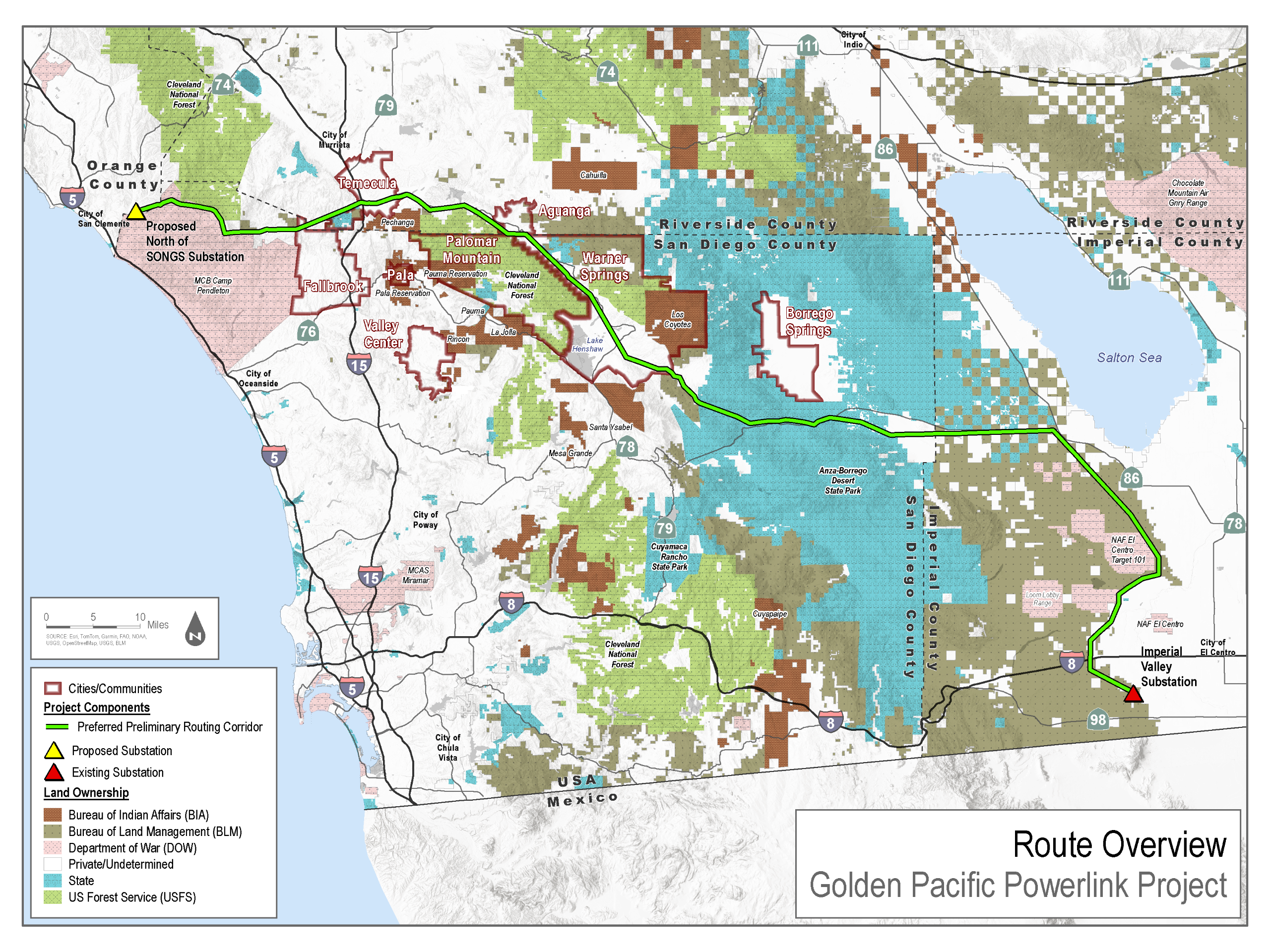
That starting point, the straight green line right through the sensitive Anza-Borrego State Park, a wildlife habitat in south Temecula, horse country, wine country, schools, churches, and homes, is by definition "the path of least resistance."
But Temecula is resisting, according to those present, and Temecula Mayor Jessica Alexander, who said she felt the open house was merely a "box-checking exercise" for the utility.
"Thank you so much, SDG&E, for showing up and doing nothing. All you did was check a box. All you did was create a dog-and-pony show in our city," Alexander said. "But I truly thank every individual who showed up, and to everyone who came out with questions. We will continue to fight together, to stand together, and we will continue to resist what they want to force through our corridor here in Temecula."
According to councilmember James "Stew" Stewart, the open house was "very small, with literally hundreds of people trying to get in to hear the same company line," he said. "It was very hot in the small room."
Stewart reaffirmed the council's commitment to stopping the construction of these 200-foot towers.
What attendees found when they arrived:
Due to the ballroom's capacity of under 200, only groups of that size were allowed inside. Unfortunately, the air conditioning "decided to pop off," an SDG&E spokesperson said. Fans were brought in, but many took to fanning themselves with the informational flyers provided by the energy company.
Those flyers, also available for reading on the SDG&E Golden Pacific Powerlink website, stated that the project is currently at its midpoint.

Multiple tables staffed by SDG&E representatives, including green-shirt-wearing subject-matter consultants, answered questions one-on-one.
Tables included: EMF, Wildfire, Engineering, Purpose & Needs (manned by CAISO or SDG&E reps), CEQA & NEPA Process, Land & Real Estate, Environmental Resources.
Guests could walk up to a table, speak with one of the reps stationed there, ask questions, and then rotate to other tables. In the flood of first arrivals, many became frustrated. Several wrote down their questions and comments at an additional table where individuals were asked to lodge their concerns not covered by the topical tables.
Patch spoke with Jayme Ackemann, spokesperson for the California Independent System Operator, whose job it is to identify transmission projects needed to meet the state's energy goals. Those goals, primarily in accordance with SB-100, require a fully electrified power grid by 2045, while maintaining grid reliability and affordability.
"This is just one of our proposed routes; we are the transmission planner, and ultimately, the CUPC is the deciding factor," she said.
CAISO's challenge is to transfer energy from abundant solar and other renewable power-generating sources to areas with high power demand.
"Those solar and wind farms are built in some of California's cheapest land, in Imperial Valley and Coachella Valley. That energy must get where it is needed to balance the grid," according to Jayne Ackemann.
SDG&E is hoping to file its application "around Thanksgiving," Patch was told.
The next two years would be spent on filing, permitting, and approvals. Then, construction would begin in the fall of 2029 for energized transmission lines that would start delivering power to Orange County and other areas, excluding Temecula or Riverside County homes or businesses, starting in 2032 and ending in 2045.
Many who attended mentioned a lack of air inside the meeting room. Patch spoke with the Temecula Embassy Suites sales manager, Kaylie Thorson, who explained what went wrong:
"There was air conditioning working in the room during the event; however, with the doors being opened, it didn't keep the room as cool. The AC was working, as our engineers said. It was just uncomfortable for that many people."
High capacity was expected; the hot air inside was not.
Get more local news delivered straight to your inbox. Sign up for free Patch newsletters and alerts.