Community Corner
Temecula Inventor Celebrates 25 Years Of Astronauts Living, Working In Space
A Temecula inventor, with help from a Space Station camera aimed at Earth, is helping to change people's perspective, one device at a time.


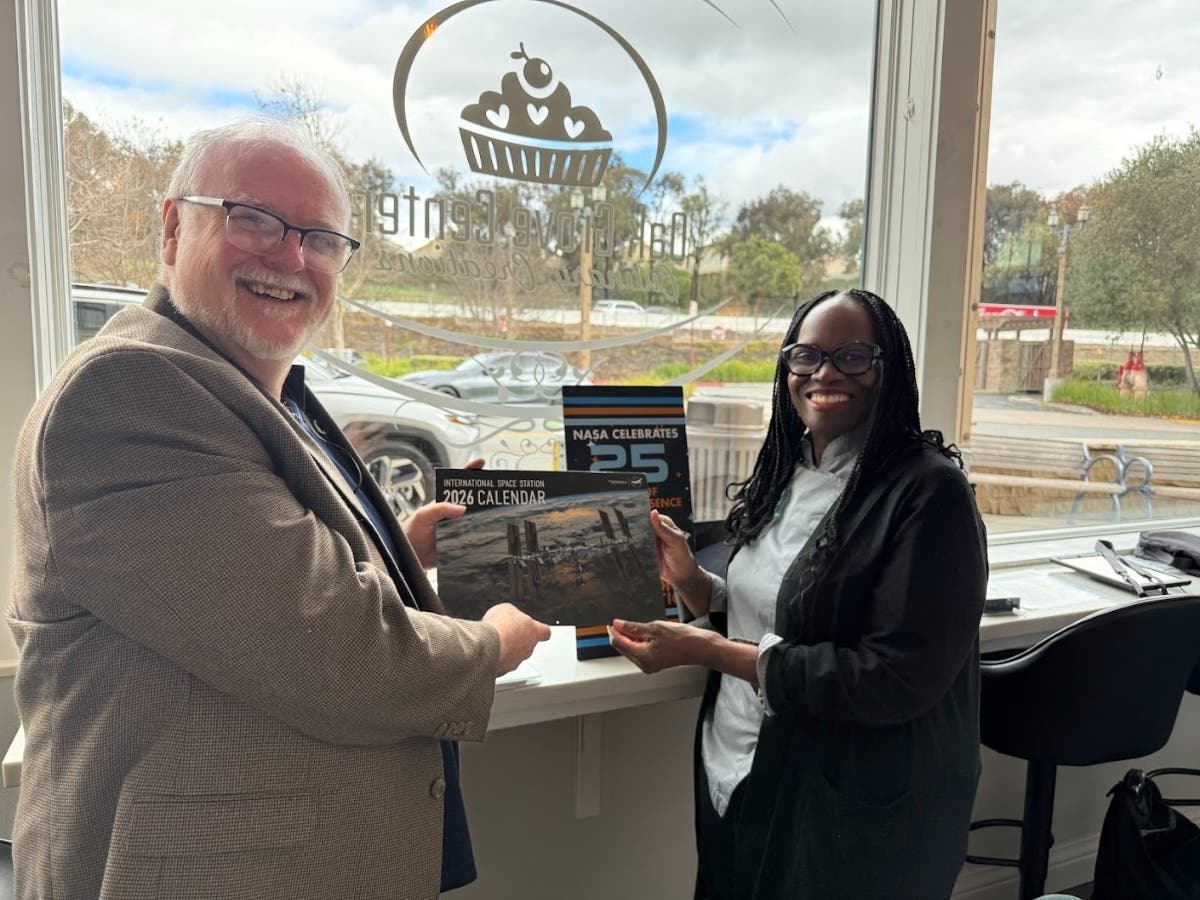
TEMECULA, CA — Temecula held one of the few celebrations for the International Space Station's 25th anniversary, thanks to Liam Kennedy, a resident who's turned his passion for the stars into a lifelong mission of education.
Kennedy, teamed up with Robin McCoy, executive pastry chef of Culinary Creations of Oak Grove in Old Town Temecula, to hold a party for the anniversary in November and a fundraiser for the Oak Grove Center in Murrieta. The anniversary was passing by without a whisper, during the government shutdown, and that was not something Kennedy would abide. He got official signage from NASA and held a proper celebration.
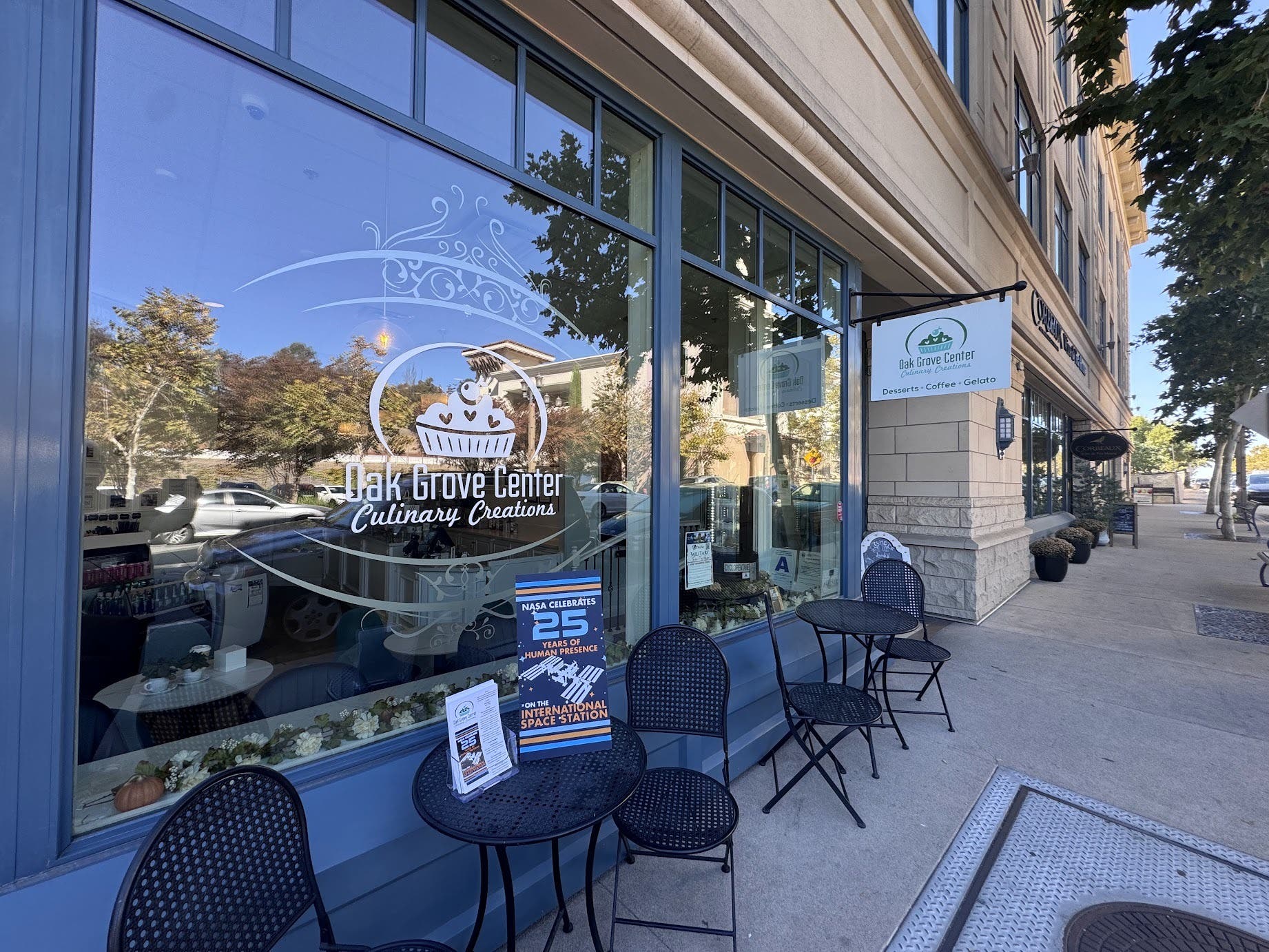
"For 25 years, humans have lived and worked in space every day," he said. "Every day. They've eaten, worked, slept, looked down at Earth, flown over head multiple times a day, watched the world change. It deserved to be celebrated."
Find out what's happening in Temeculafor free with the latest updates from Patch.
Friends and family attended the event for custom ISS anniversary custom logo decorated cupcakes and the fundraiser for Oak Grove.
“Even a local science teacher appeared at the opening of the shop, unaware there was a party going on, and she bough 12 of the custom cupcakes for her class and even donated to the fundraiser,” he said.
Find out what's happening in Temeculafor free with the latest updates from Patch.
Over the day, the event raised over $1,300 for Oak Grove Center and all learned fun facts about the ISS program.
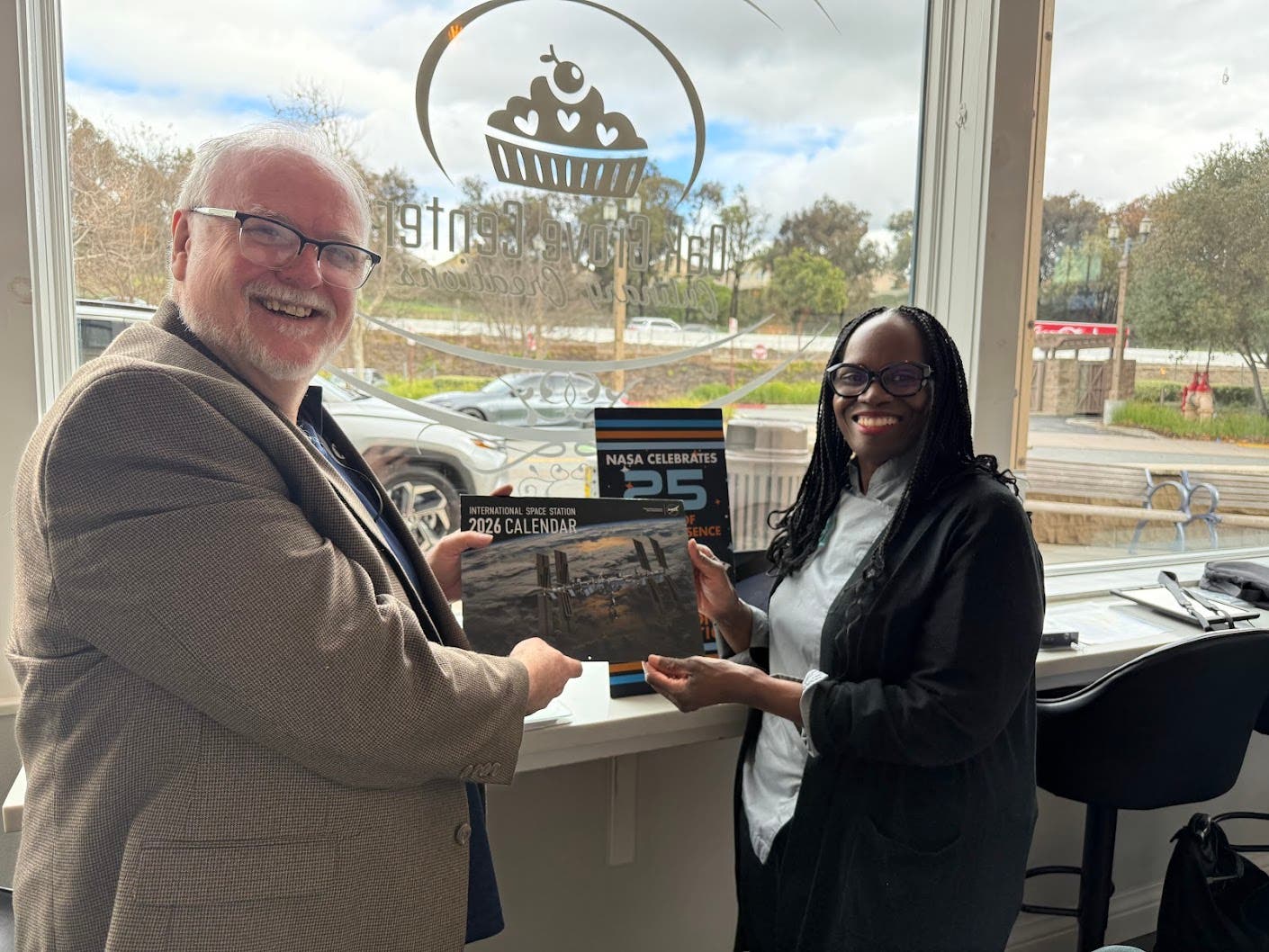
In turn, this month, NASA engineers from the Johnson Space Center shared their thanks for the attention with a special acknowledgement to Kennedy and McCoy. "NASA appreciated what was done here, locally," he said.
McCoy was visibly moved by the gift. "The more I hear of your passion for NASA and the ISS, I feel very privileged to be involved."
Then, Kennedy told us, "You can't eat cake in space. Did you know that?"
Just one of a hundred interesting facts he has to share.
"They have to package food in a way that is compatible with eating in zero gravity. Air doesn’t move the way it does on the ground," he taught us. "Air doesn’t move, so flavors aren’t the same. Food needs to be shelf stable. Crumbs don’t work in zero gravity.”
Kennedy's enthusiasm has an infectious quality. He's befriended Bill Nye the Science Guy, among others, and has a bevy of supporters and friends across the globe. He works a problem until he finds a solution and then, he keeps going. He watched the space station be built when he lived in Irvine with his family, and helped with Orange County Astronomers.
"We used to aim a telescope at the sky, when the space station was near and I'd point out that there were people up there," he said. "Then, I'd point out the space shuttle, immediately behind, where more people were working on and building the space station."
The love of watching the space station being built, and wanting to share that with his oldest grandson, was his impetus for building ISS-Above, a way of tracking the comings and goings of the space station. When it lights up, it appears like a brightly lit "Flux Capacitor" of sorts from a "Back to the Future" movie. Now, his youngest grandson, Connor, is also learning to watch for the lights.
The device is a way to engage children of all ages, to see when the space station is overhead, he said. It's at schools across the nation. He's even built custom devices for use at some NASA locations.
An online software engineer and amateur astronomer, Kennedy carved a niche career for himself by way of the humans who live and work inside the space station. His work has engaged NASA engineers at Johnson Space Center, astronauts on the space station, itself, and a global company, Sen, that created the camera that would work in synch with his program.
Now, his ISS-Above educational tool, is linked to the station, where a Sen-built attached camera records constant video of the world, for everyone to see.
"I tried a lot of things that didn't work, first, Now, it's a dream," he told us of the system that flares to life in a riot of flashing lights when the space station is coming. "I wanted to be a cool grandpa. Now I get to play in so many different realms."
When he started that project, his grandson was three. Now, 12 years later, schools and libraries across the nation have his device that alerts to the space station, and sends classrooms to their monitors to see the view of their home from space.
Kennedy evolved his work to perfecting ISS-Above, and helping with specifications for a camera that Charles Black, CEO of Sen, constructed for the space station. In 2024, that 4K camera, officially named the SpaceTV-1, was launched into space. Astronaut Sunita "Suny" Williams helped unwrap that payload, pull the lens caps off, and then install the camera on the outside of the space station via the Candadarm managed by a team on the ground.
"It changes you, when you see the world from the perspective of the space station," he said. From the curvature of the Earth, to the California coastline, Kennedy showed us a video of the space station flying over Temecula.
"There's California, Baja, Long Beach, San Diego," he said as the camera quickly moved across the region. "There's Temecula. We're right here."
And there it was. On the video, you could see the line of the Santa Rosa Plateau, the I-15, the stretch of the city, all from hundreds of miles above.
It gives one an immediate sense of perspective.
Everything came in full circle, when in January, 60 minutes asked to share footage from the Sen camera for a reflections piece, interviewing SUNY Williams, he told us.
"Human space flight actually brings out the best of us. In order to be a human in space, you have to be the best of us," he said. "We all think of astronauts as being the end all be all, but there are thousands on the ground doing excellent work. It pulls for humanity to be better to one another."
Learn more about the ISS-Above program, and watch Sen on Youtube to see the view of our planet from the International Space Station.
Check with Temecula Valley Astronomers on Facebook for their clear-night star parties at Europa Village, often on Friday nights at 6:30 p.m. Take the opportunity to look through their telescopes and and talk with Astronomers, and ask for Liam when you go. He'll probably be there, his telescope aimed at the night sky.
You can support your local school with an ISS-Above system or look at Sen's videos, to gain a little perspective from hundreds of miles above.
Get more local news delivered straight to your inbox. Sign up for free Patch newsletters and alerts.