Politics & Government
Temecula Traffic, Homelessness, Flooding: Feds Spending On Fixes
Congressman Ken Calvert secured $18.6 million for projects within his 42nd District, which includes Temecula. Biden signed off Tuesday.


TEMECULA, CA — More than $18 million in federal dollars are coming to help pay for a slew of Southwest Riverside County projects, including some in Temecula. The "Community Project Funding" is part of the $1.5 trillion 2022 Consolidated Appropriations Act that President Joe Biden signed on Tuesday.
Congressional Rep. Ken Calvert (R-Corona) secured $18.6 million for projects in his 42nd District that includes Corona, Lake Elsinore, Menifee, Murrieta, most of Temecula, Wildomar and other nearby areas.
Among the local projects that impact Temecula are the Loma Linda Mobile Emergency Operations Trailer project and the Southwest Riverside County Regional Homeless Services project. The projects received $600,000 and $500,000, respectively.
Find out what's happening in Temeculafor free with the latest updates from Patch.
The funds for Loma Linda University Medical Center Murrieta will allow the facility to purchase a new, mobile emergency operations trailer and associated medical and functional equipment.
"The emergency assets would help the region better respond to emergency situations, disasters and other significant crisis events. The emergency operations trailer could also be deployed onsite in the Loma Linda University Medical Center Murrieta parking lot during incidents of unusually high volumes," according to the request for funding submitted by Calvert's office.
Find out what's happening in Temeculafor free with the latest updates from Patch.
In a released statement, Calvert said the cities of Lake Elsinore, Menifee, Murrieta, Temecula, and Wildomar joined together in a Regional Homeless Alliance and the $500,000 in funding will enable additional case management and homeless outreach assistance in the region.
“The cities of Murrieta, Temecula, Menifee, Lake Elsinore, and Wildomar understand neither our community nor the homeless are well served when individuals or families are living on our streets or in encampments," Calvert said. "By addressing the unique mental health, drug abuse, and economic challenges of individual homeless people and providing them with the corresponding assistance and services they need, we can make a positive impact.”
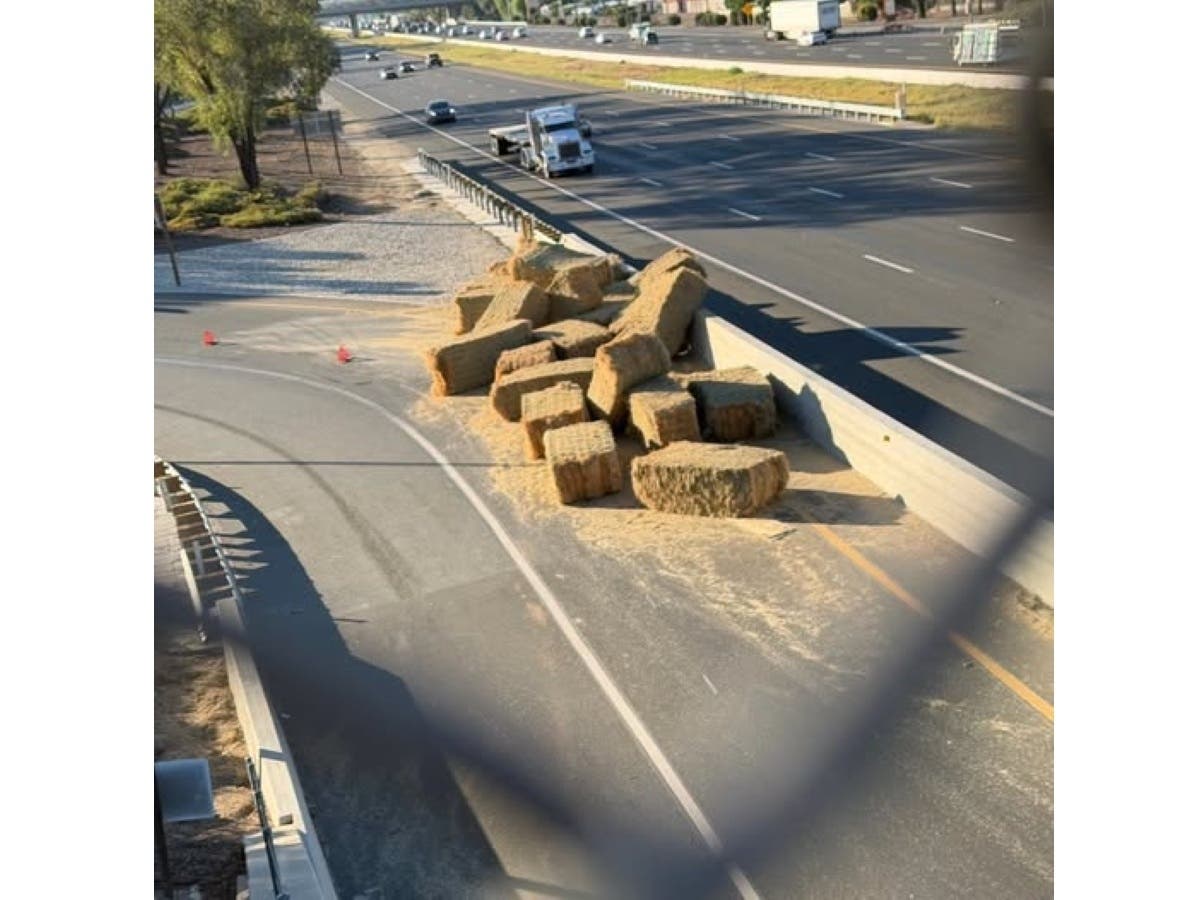
Other secured funding includes $5 million for the I-15 Smart Freeway Pilot Project, which was requested by Calvert on behalf of the Riverside County Transportation Commission. The project — expected to cost $18 million — is designed to improve safety and maintain a steady flow of northbound traffic for an eight-mile section of Interstate 15 from the San Diego/Riverside County line in Temecula to the I-15/I-215 split in Murrieta. The project calls for "state of the art" technology that would track traffic on the roadways while adjusting ramp metering, according to Calvert. The system would also provide real-time traffic flow information to motorists.
Calvert also secured $600,000 for the Murrieta Creek Flood Control project to complete the General Reevaluation Report. The Murrieta Creek Flood Control project is designed to provide Murrieta and Temecula with the flood control necessary to protect residents and businesses, according to Calvert.
Other local projects Calvert secured funding for in the 42nd Congressional District include:
- $2.5 million for the Quail Valley Septic-to-Sewer Conversion Project, which was requested by Eastern Municipal Water District. According to Calvert's request to Congress, "Quail Valley is an ethnically diverse and disadvantaged community in Riverside County that regularly has failing septic tanks that overflow during rain events. As a result, raw sewage impacts the immediate community as well as downstream environments, including Canyon Lake, a drinking water reservoir. To address the significant challenges presented by Quail Valley’s failing septic tanks, Eastern Municipal Water District is working to convert homes to direct sewer connections. The requested funds are intended to construct the first phase of the septic to sewer conversion." The overall project has been identified as a priority for both the California Water Resources Control Board and the Santa Ana Regional Water Regional Water Quality Control Board, according to Calvert.
- $780,000 for the Canyon Lake Water Treatment Plant Phase 1 Improvements Project, which Calvert requested on behalf of the Elsinore Valley Municipal Water District. The Canyon Lake Water Treatment Plant has been offline for approximately 18 months because elevated levels of PFAS chemicals were detected in the runoff. The project calls for upgrading the treatment plant so it can treat water to levels below the California regulatory limit and resume operations.
- $700,000 for the City of Hope CT Scanner Acquisition project, which Calvert requested on behalf of the City of Hope for its new Corona location. The requested funding allows the City of Hope to buy a new CT scanner for radiation oncology support as part of a facility expansion in the city. According to the City of Hope, dedicated imaging for patients in preparation for undergoing radiation treatment is integral to providing radiation oncology services.
- $5 million for the Bradley Road Bridge construction project, which was requested by Calvert on behalf of the city of Menifee. The requested funding will be used to replace a segment of Bradley Road at Salt Creek crossing with a bridge to address flooding issues during heavy rains.
- $400,000 for the Lake Elsinore Main Street Safety and Pedestrian Improvements Project, which was requested by Calvert on behalf of the city of Lake Elsinore. The project will install new crosswalks, safety signage, lighting, and other improvements to enhance walkability and pedestrian safety on Main Street in downtown Lake Elsinore.
- $2.5 million to remove lead paint at Prado Spillway to facilitate the repainting of the Prado Dam Mural. Calvert requested just over $9 million for the project. He said the requested funds would facilitate the re-painting of the patriotic mural on the Prado Dam spillway. A mural celebrating America’s bicentennial was originally painted on the spillway in 1976. The lead-based paint used to create the mural must be removed by the Corps of Engineers.
Not all members of Congress requested Community Project Funding. Rep. Darrell Issa (R-Vista), whose 50th District includes a sliver of Temecula, did not make any requests, according to the House Appropriations website. A request for comment from Issa's office was not immediately returned.
The 2022 Appropriations Bill
Both parties scored political victories in the spending bill. Democrats were able to secure an agreement to increase domestic spending by 6.7 percent to $730 billion, while Republicans prevailed in a 5.6 percent increase in defense-related spending at $782 billion.
The sprawling, 2,741-page omnibus bill — the first major federal spending package of Biden’s administration — also funds the government through Sept. 30, the end of the federal fiscal year, and averted a partial government shutdown that would’ve occurred at midnight Friday.
Here are five things to know about what the bill does and doesn’t do:
1. America’s Roads Finally Getting Fixed
Biden’s signature on the law unlocks billions of dollars to fully fund the $1.2 trillion bipartisan infrastructure law, meaning “America can finally get to work on replacing aging highways, roads, bridges, water and wastewater systems,” American Public Works Association CEO Scott Grayson said in a statement to Route Fifty, a news outlet covering trends in state and local governments across the country.
Earlier this year, the Biden administration released $5.5 billion this fiscal year and $27 billion over five years to fix about 15,000 of the nation’s worst bridges. About 45,000 bridges are rated as structurally deficient. Other funds going to the state transportation departments required the approval of Congress, which the omnibus spending bill accomplishes.
2. The "Boyfriend Loophole" Still Open
The bill renewed the landmark 1990s-era Violence Against Women Act that lapsed during the Trump administration amid bipartisan bickering. And it almost didn't happen this time because of opposition from the powerful National Rifle Association and some Republicans in Congress over wording that would have closed the “boyfriend loophole.”
Democrats backed down from the provision, allowing the federal law to stand as is: People convicted of domestic abuse may have to surrender their guns under current federal law if they are currently or formerly married to the victim, live together, have a child together, or are the parent or guardian. Stalkers and current and former dating partners are excluded.
U.S. Rep. Jackson Lee, a Democrat from Houston, is among lawmakers who aren’t giving up on closing the loophole, The Associated Press reported.
The reauthorized version of the law, which Biden worked on during his days in the Senate, strengthens rape prevention and education efforts as well as training for those in law enforcement and the judicial system.
“One of the ways to help women is to get the gun out of the hands of the abuser,” Lee said. “And this is not an NRA question. This is a human question. This is saving women and children. This is stepping into their shoes.”
3. No COVID-19 Money
The White House wanted $22.5 billion in supplemental funding to bolster the fight against COVID-19, while the House approved more than $15 billion. But Democrats dropped the coronavirus aid package amid disputes that threatened Ukraine aid and other domestic priorities. Among the points of contention for House Democrats was language in the bill that would have pulled the money from coronavirus aid previously allocated to states.
Eliminating coronavirus spending leaves the Biden administration’s new COVID-19 road map in some doubt. It underscores the deep partisan divides over the pandemic and the government’s response to it, but also shows the pandemic is no longer the government’s top priority.
House Speaker Nancy Pelosi said that although it was a “heartbreaking” concession, “we must continue to fight for urgently needed” COVID-19 assistance.
4. The Politics Of Abortion
Republicans reinstalled the Hyde Amendment, a so-called “legacy rider” that prohibits the use of federal funds for abortions, in appropriations legislation. The amendment has been included in annual appropriations bills since it was introduced in the 1970s by Rep. Henry Hyde, an Illinois Republican.
This is another policy battle Democrats pledged to save for later so the omnibus bill, and the urgent Ukraine aid, could move forward. But it’s also a concession that permanently eliminating the decades-long ban on federal abortion spending is all but dead in a 50-50 Senate.
Democrats were also unsuccessful in keeping out the Weldon amendment, included in every federal Health and Human Services bill since 2005, which bars entities that don’t want to provide abortion care from being denied federal money.
It’s also a defeat for Biden, who said in the primary he “could no longer continue to abide by” the Hyde amendment restrictions.
5. D.C. And The Marijuana Conundrum
Voters in the District of Columbia approved recreational marijuana cultivation and use among adults in 2014. Because the District of Columbia can’t control its own budget, Congress has been able to block the local D.C. government from taxing and regulating cannabis through the Harris amendment.
The rider from Congressman Andy Harris, a Maryland Republican, has set up a bizarre situation in which D.C. residents can legally use pot, but they can’t sell it, enabling a black market and depriving the city of the lucrative tax revenue gains experienced by other states with legal marijuana.
The rider creates “a public safety problem,” D.C. Council Chairman Phil Mendelson, a Democrat, told The Washington Post. “I can’t be strong enough about this.”
“We have a burgeoning illegal, unregulated market that’s surrounded with criminal activity,” Mendelson said. “The market’s not only illegal, but there is criminal activity such as robberies around these black-market pop-ups, and we can’t do anything about it because we cannot regulate the sale or distribution of marijuana because of this rider.”
Get more local news delivered straight to your inbox. Sign up for free Patch newsletters and alerts.