Local Voices
Thinking Ahead: Using a Tax Refund to Re-Evaluate Your Vehicle Needs
How tax refunds, timing, and manufacturer incentives can combine to create smarter vehicle decisions—without rushing a purchase.


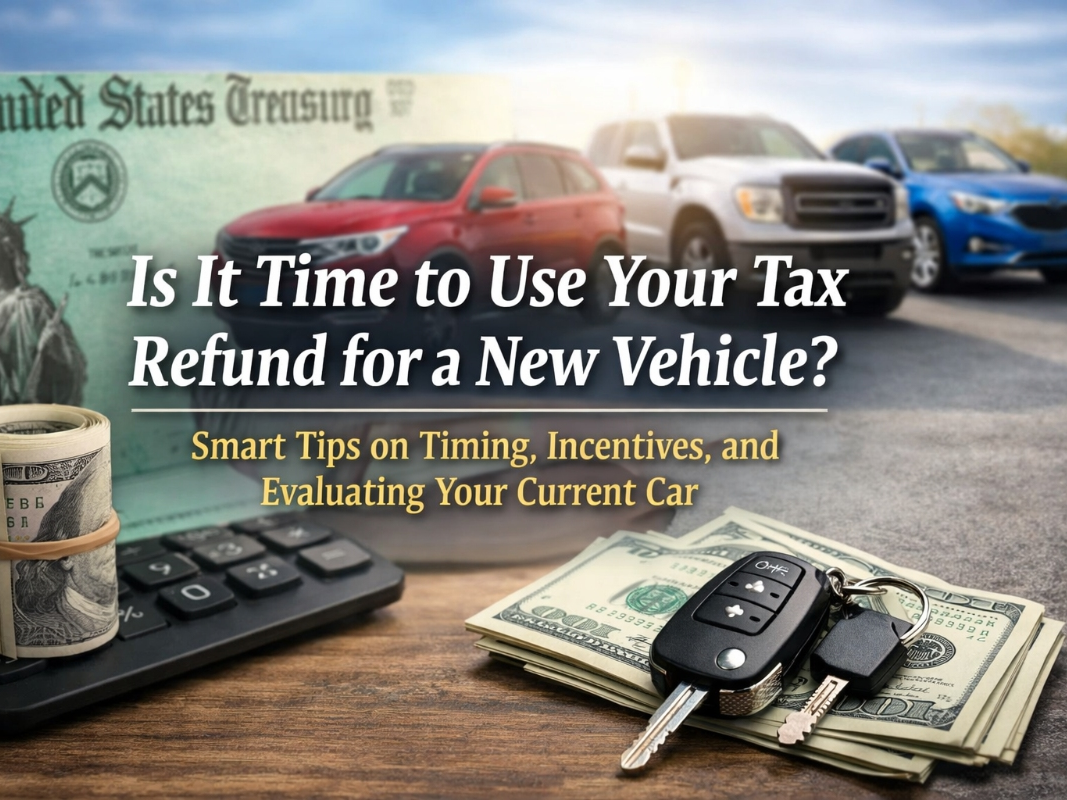
Every year around tax season, many households take a step back and reassess their financial picture. For some, a tax refund—whether large or modest—becomes an opportunity to catch up, plan ahead, or make a meaningful upgrade that improves day-to-day life.
One of the most common questions that comes up during this time isn’t about spending for the sake of spending—it’s about whether a vehicle still fits current needs. Commutes change. Families grow. Fuel prices fluctuate. Technology advances. Safety standards improve. And for many drivers across Southwest Riverside County, a car that made sense a few years ago may not be the best fit today.
As someone who works in automotive strategy and consumer behavior for a living, I’ve seen the same pattern repeat itself year after year: people aren’t looking to splurge—they’re looking to make smarter, longer-term decisions.
Find out what's happening in Temeculafor free with the latest updates from Patch.
This article isn’t financial or tax advice. Instead, it’s a practical framework to help consumers decide whether using a tax refund toward a vehicle decision is worth considering at all.
Start With the Car You Already Own
Before thinking about replacement, it’s important to evaluate what your current vehicle is actually costing you—not just monthly payments, but total ownership impact.
Find out what's happening in Temeculafor free with the latest updates from Patch.
Some questions worth asking:
- Has maintenance become more frequent or unpredictable?
- Are repair costs increasing year over year?
- Is the vehicle still reliable for commuting, school drop-offs, or long trips?
- Does it meet your current safety expectations?
- Has fuel efficiency become a pain point?
For many drivers, the tipping point isn’t a single breakdown—it’s the accumulation of friction. Missed work due to repairs. Stress over warning lights. Rising fuel bills. Over time, those hidden costs can quietly outweigh the comfort of keeping a familiar car.
The Safety Gap Most Drivers Don’t Realize Exists
Vehicle safety has advanced significantly in the last five to seven years. Features that were once reserved for luxury models—automatic emergency braking, lane-keeping assistance, blind-spot monitoring, adaptive cruise control—are now common across many segments.
If your current vehicle predates these systems, it’s worth acknowledging the gap. Safety isn’t about fear—it’s about risk reduction, especially for families, long commuters, and drivers navigating crowded Southern California freeways.
For many households, a tax refund becomes the catalyst to finally prioritize safety upgrades that otherwise keep getting postponed.
Technology Isn’t a Luxury Anymore—It’s Infrastructure
Modern vehicles are no longer just transportation—they’re rolling technology platforms.
Today’s drivers often expect:
- Smartphone integration for navigation and communication
- Advanced driver displays and real-time traffic data
- Improved climate efficiency
- Better visibility and camera systems
When technology reduces distraction, improves awareness, and simplifies daily routines, it stops being a luxury and starts becoming infrastructure—especially for parents, professionals, and gig-economy workers who rely on their vehicle as part of their productivity.
Fuel Efficiency and Changing Driving Patterns
Fuel costs remain one of the most volatile expenses associated with vehicle ownership. Even small improvements in fuel efficiency can translate into meaningful savings over time—particularly for commuters traveling between Temecula, Murrieta, Menifee, and surrounding areas.
Hybrid and fuel-efficient powertrains have evolved well beyond their early reputation. Many drivers are surprised to learn how much real-world efficiency has improved without sacrificing performance or comfort.
A tax refund doesn’t need to cover an entire purchase to influence this equation—it can simply reduce the upfront friction enough to make a more efficient option practical.
The Psychological Side of “Decision Fatigue”
One overlooked aspect of vehicle ownership is mental load.
Unreliable transportation creates constant low-grade stress:
- “Will it start?”
- “What’s that noise?”
- “Should I take the freeway or the streets just in case?”
Reliable transportation removes that friction. When people talk about feeling “relieved” after making a vehicle change, it’s often not about novelty—it’s about predictability.
That peace of mind has real value, even if it doesn’t show up neatly on a spreadsheet.
Why Refund Timing Matters (Without Talking About Taxes)
A tax refund often represents money that wasn’t part of a household’s monthly planning. Because of that, people tend to view it differently than regular income.
Used thoughtfully, it can:
- Reduce upfront costs
- Lower financing exposure
- Serve as a buffer rather than a commitment
- Enable better long-term choices instead of short-term fixes
The key is intention. A refund shouldn’t push someone into a decision—it should give them room to make a more informed one.
Replacement vs. Reset: It’s Not Always “New”
It’s important to clarify that re-evaluating a vehicle doesn’t always mean buying brand-new.
For many consumers, the smarter move may be:
- A newer pre-owned vehicle with modern safety features
- A certified option with extended reliability
- Downsizing or upsizing to better match lifestyle changes
- Transitioning from a high-maintenance vehicle to a lower-cost ownership profile
The goal isn’t novelty—it’s alignment.
A Local Perspective on Mobility
Living and working in this region provides a unique view into how people actually use their vehicles. Temecula drivers balance long commutes, family logistics, weekend travel, and increasingly congested roads.
The most successful vehicle decisions tend to share three traits:
- They reduce friction in daily life
- They anticipate change instead of reacting to it
- They prioritize reliability, safety, and efficiency over impulse
When those factors align, the decision often feels less like a purchase—and more like a correction.
Why Timing Matters More Than the Amount
For consumers who are already considering a vehicle change, tax season can quietly improve the math—not because of the refund itself, but because of how it can interact with existing automotive incentives.
Most major manufacturers adjust incentive programs throughout the year based on inventory levels, model-year transitions, and regional demand. These programs may include customer cash, special financing terms, lease support, or loyalty considerations. Importantly, these incentives are manufacturer-driven, not dictated by individual dealerships.
What many drivers don’t realize is that a tax refund—when used intentionally—can often be layered on top of these programs rather than replacing them.
In practical terms, that means a refund might:
- Reduce the amount financed while still preserving manufacturer-backed incentives
- Offset upfront costs without changing monthly budgeting
- Create flexibility to choose a vehicle with better safety, efficiency, or technology
This is especially relevant for brands with broad lineups that span gas, hybrid, and electric options—such as Ford, Chevrolet, and Hyundai—where incentive structures can vary significantly by model and powertrain.
Rather than pushing buyers into a decision, timing simply creates more optionality. A refund doesn’t need to be large to be impactful; it only needs to be applied strategically, alongside programs that already exist in the market.
From a consumer standpoint, the advantage isn’t about chasing deals—it’s about reducing friction and improving long-term ownership outcomes without stretching financially.
Final Thought: Ask Better Questions Before Making Any Decision
A tax refund doesn’t require action. But it does invite reflection.
Instead of asking, “Should I buy a car?”
A better question is:
“Does my current vehicle still serve my life the way it should?”
If the answer is yes, that clarity is valuable.
If the answer is no, then using a refund as part of a longer-term strategy—not a reaction—may be worth exploring.
Thoughtful decisions almost always outperform rushed ones, especially when it comes to something as central to daily life as transportation.