Up until the 1960's, farming was still big business in Alvarado and Decoto. In the 1930's, local growers realized that they would reach a larger market than just California. They also realized that they did not need large wholesalers to do that business, and could do it themselves. The Alvarado Vegetable Growers Association (AVGA) was formed as a Co-operative between the local growers. The Association handled the shipping of the goods, hiring the men and arranging the rail transportation.
The Association worked out of the Hall Station, a railroad stop just south of Alvarado Blvd on the Southern Pacific railroad line. The Association hired 15 men to pack the vegetables into crates and then into the railroad cars. Lots of the produce was shipped to the East Coast in ice cars. Ice was laid between the crates of vegetables, like cauliflower, and the rail cars were sealed to keep the cold in. When they reached the East Coast a few days later, the produce was still chilled and fresh. As many as 6 cars a day would leave Hall station. It cost $300 per rail car to ship the vegetables east.
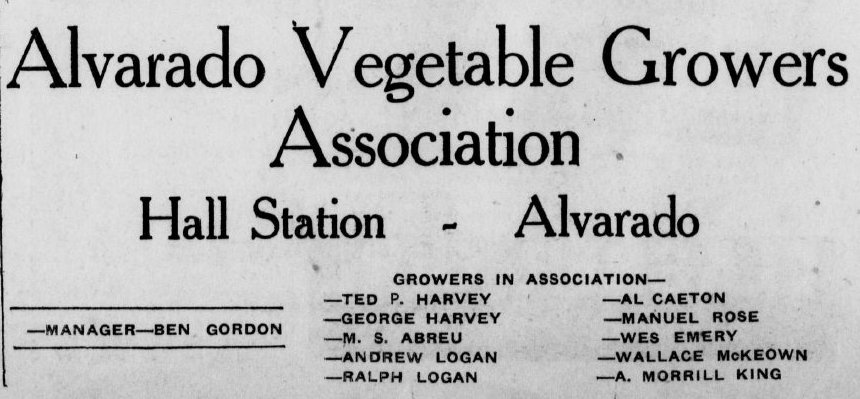
In 1940, there were thirteen farmers represented by the Association: T. P. Harvey, F. C. Harvey, Wallace McCune, Weston Emery, Ed Lebon, Herbert Young, M. P. Rose, Harvey Granger , Joe Langdon, Soares Brothers, Al Caeton, Morrill King, and the Andrade Brothers. Dave Caeton was the manager of the Assocation. By 1945, the Association was down to 10 growers: T. P. Harvey, George Harvey, M. S. Abreu, Andrew Logan, Ralph Logan, Al Caeton, Manual Rose, Weston Emery, Wallace McKeown, and Morrill King. The manager was Ben Gordon.
Find out what's happening in Union Cityfor free with the latest updates from Patch.
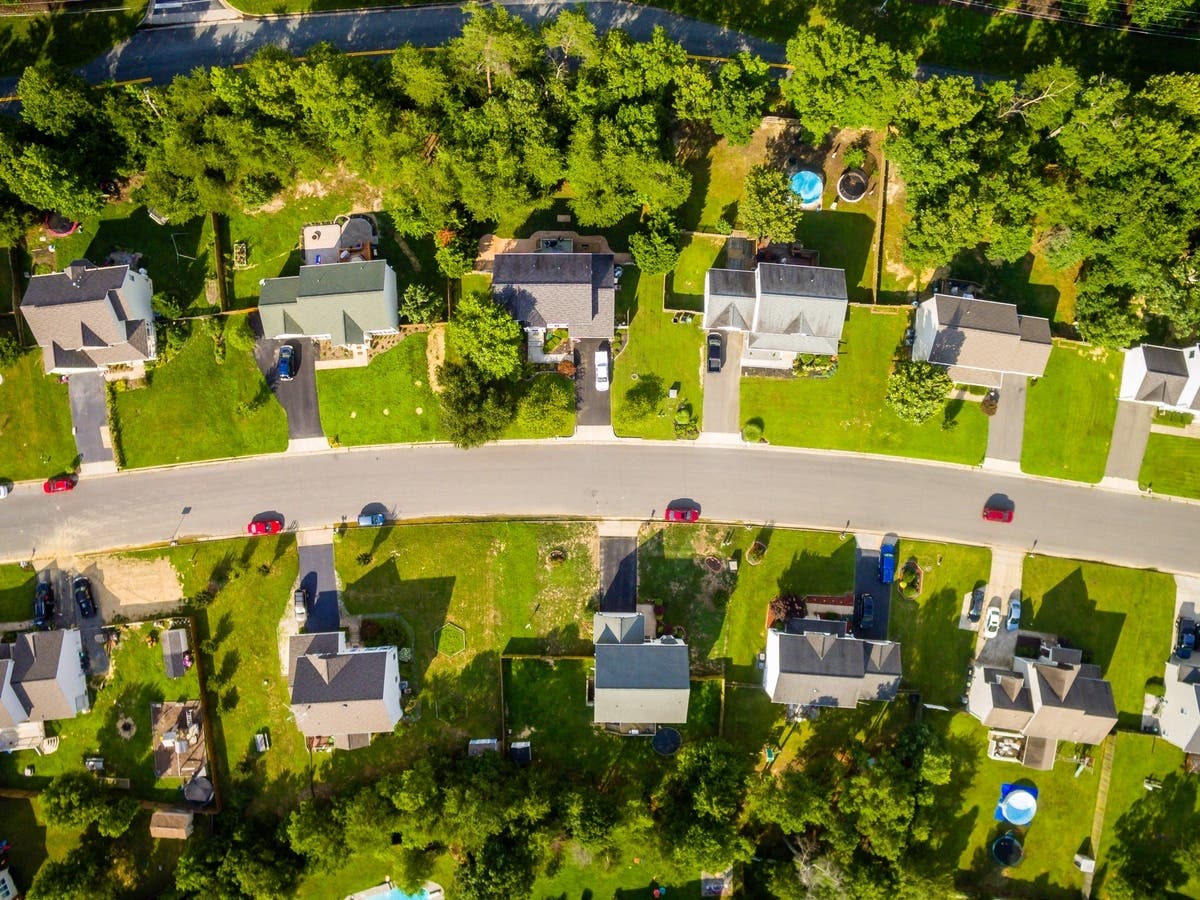
As homes took over the farm lands of Alvarado, fewer vegetables were grown in the area, trains stopped service at Hall Station, and the Association was disbanded.