Health & Fitness
Historic Bay Area Film to Screen in Niles
On February 25, the Niles Essanay Silent Film Museum in Fremont will show "Twin Peaks Tunnel," a rare, recently restored short film shot in San Francisco nearly a century ago.

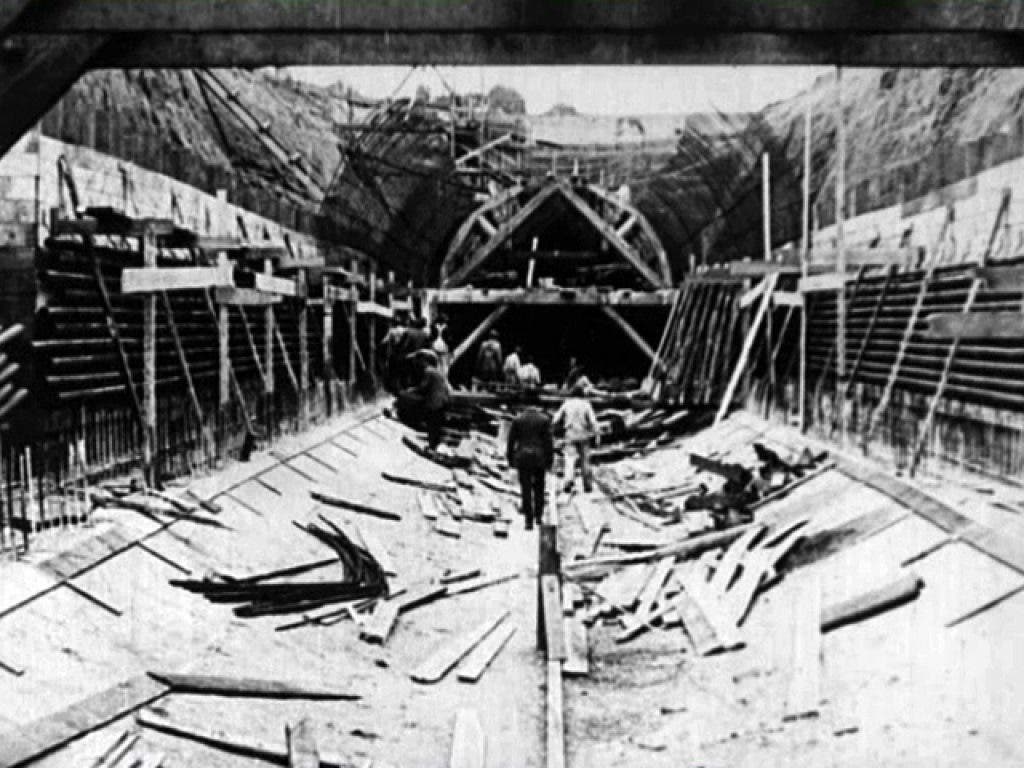


On Feb. 25, the Niles Essanay Silent Film Museum in Fremont will show Twin Peaks Tunnel, a short film shot in San Francisco nearly a century ago.
Until recently, few alive today had seen this cinematic time capsule depicting a key moment in the development of San Francisco. Saturday's screening marks just the second time a recently completed restoration of this historic film will be shown since its debut 95 years ago.
In 2009, a worn copy of Twin Peaks Tunnel was one of 57 films chosen for preservation by the National Film Preservation Foundation. The San Francisco-based group helps preserve the nation's motion picture heritage, including endangered films from the pre-sound era.
Find out what's happening in Union Cityfor free with the latest updates from Patch.
Shot in the years after the 1906 earthquake which rocked the Bay Area, Twin Peaks Tunnel was intended to promote the development of Western portions of the City of San Francisco. An original copy of the 1917 film, now in the possession of the Niles film museum, is described by preservationists as an "unique historical and cultural artifact."
The two preservationists who won a grant to restore the film are David Kiehn and Robert Byrne. Kiehn, one of the founders of the Niles Essanay Silent Film Museum, made news in 2010 - including an appearance on 60 Minutes - when he determined that another historic film, the well known A Trip Down Market Street, had not been shot in 1905 as had long been believed - but in 1906, just four days before the great earthquake and fire. Kiehn discovered the exact date through a combination of historical research and an examination of little noticed details in the film itself. Byrne is an East Bay film preservationist and President of the Board of Directors of the San Francisco Silent Film Festival. Byrne is also the author of Starts Thursday!, a blog which documents the art and history of motion picture coming attraction slides.
Find out what's happening in Union Cityfor free with the latest updates from Patch.
According to Byrne, the value of Twin Peaks Tunnel lies not only in its rarity, but also in the historical detail contained within its moving images.
"This film is an amazing time capsule of Bay Area history, and we're thrilled at the prospect of returning it to the screen," he said.
Twin Peaks Tunnel was shot by the Pathescope film company for a local real estate firm. It documents construction of what was then claimed to be the longest municipal tunnel in the world. The film includes footage of the construction of the tunnel and the clearing of Sutro Forest, as well as development of the West Portal, St. Francis Wood, and Westwood Park neighborhoods of San Francisco. City officials, engineers, workers and ordinary citizens are seen in the film.
Various civic and business concerns promoted the tunnel, and work on the project received considerable coverage in local newspapers. One article from the time in the San Francisco Chronicle referenced Twin Peaks Tunnel, then still a work in progress. "The completed film will comprise what realty men believe to be one of the most comprehensive moving pictures of civic development ever flashed on the screen."
Not all, however, went smoothly. There were delays and cost overruns connected with the project, and three workers died after an explosion rocked the tunnel in 1917. Once completed, the opening of the Twin Peaks Tunnel in February of 1918 was big news on both sides of the Bay.
Today, Twin Peaks Tunnel is considered a "sponsored film." Akin to industrial films or television commercials, such films were made for organizations and businesses in order to promote a cause or product. The better sponsored films, and the ones with widespread appeal, sometimes enjoyed public exhibition. That was the case with Twin Peaks Tunnel.
According to Kiehn, research has uncovered the film was produced for the Baldwin and Howell Real Estate Company, located on Kearny Street in San Francisco. Newspaper advertisements also indicate that the film was first shown on October 13, 1917 - most likely in a San Francisco store front. It was popular enough to be continuously screened for weeks thereafter. The film's extended run was unusual for the time, as most motion pictures shown in theaters ran for just a few days or a week, seldom longer. It's thought Twin Peaks Tunnel has not been seen since.
"Due to its now obsolete 28mm format, it was probably seldom, if ever, screened after its initial exhibition period," Byrne stated.
In 2009, an original 28mm print of Twin Peaks Tunnel was donated by a private collector to the Niles Essanay Silent Film Museum. Byrne said that the Baldwin and Howell markings on its box and packing material associated with the print indicate that the copy the museum received was the same print shown in San Francisco. Examination of the print supports this conclusion, Kiehn said, since their copy features original splices between individual shots as well as between the film's inter-titles.
A fair amount of work has been done to restore the film. The print had yellowing, some splices needed repair, and there was dirt and scratching. Fortunately, no chemical decomposition had taken place, and the film's sprockets were in generally good condition.
Twin Peaks Tunnel has an approximate length of 1,087 feet, with a running time of about 19 minutes. Because of its obsolete format, and due to the fragility of the original stock (which is now in the Niles film vault), the 28mm film was transferred to 35mm. Now that this phase of their project is complete, both Byrne and Kiehn are excited to see it on the big screen.
Byrne stated "The film's premiere will be as eye opening for us as it will be for the audience."
The NFPF preservation grant awarded the two local film preservationists provides support to create a film preservation master and two access copies. Films saved through the NFPF programs are made available for on-site research and are seen widely through screenings, exhibits, DVDs, television broadcasts, and the internet. According to Kiehn, that's the plan for Twin Peaks Tunnel.
Follwoing its debut in Niles, the film will be made available to a worldwide audience through the Internet Archive. That website is also home to the Prelinger Archives, which houses a large collection of similar sponsored films. There, Twin Peaks Tunnel will join related footage of the opening of the the tunnel shot in 1918.
The restored Twin Peaks Tunnel made it’s big screen debut at the Fremont museum on Jan. 21. According to Kiehn, the film was greeted by “a large, enthusiastic audience.”
It’s next public screening is set for Feb. 25, during the Niles Essanay Silent Film Museum 11th anniversary event. Twin Peaks Tunnel will be shown along with four short films by Georges Méliès (the subject of Martin Scorsese's Hugo) and a feature, Scaramouche (1923, Metro), a classic story of adventure and romance set during the period of the French Revolution.
Thomas Gladysz is a Bay Area arts journalist and early film buff with an interest in local history.