Health & Fitness
Why Can't I Stand My Room? Am I Interior Design Challenged?
Article explains some of the psychology behind interior design, and discusses some of the most important psychological variables to consider when designing a room, either in a public or private space.


As a psychologist and an interior designer, I care deeply about how a space I design impacts the psyche of its occupants. How many times have we entered a room and immediately felt comfortable, or uncomfortable, yet we cannot really put our finger on why?
There are several variables that make a great impact and contribute to how we feel in a room.
Besides the most obvious ones, like color and the amount of light in a room, there are other factors that impact us at an even more subconscious level. One of them is proxemics, or to put it simply, how close things are to each other in relation to us.
Find out what's happening in Union Cityfor free with the latest updates from Patch.
This is where a proper space plan is key. This entails not only the safe distance to keep between pieces of furniture - a table from a couch, a side table from a chair, etc., so we don’t hurt ourselves navigating the room - but also the amount of distance that, as humans, we need to be able to relate to each other.
This is something that can even vary by cultures. As we know there is an unspoken, ingrained etiquette that stipulates the proper amount of social distance that must be kept in order for us to feel comfortable in our interactions with others. For some cultures, six inches may be enough, for others 18 inches or more is the minimum.
Find out what's happening in Union Cityfor free with the latest updates from Patch.
These are the kinds of things that, as designers, we have to pay attention to, to make sure the end result is successful for the people who are going to be utilizing the space.
In addition, other key variables are those that relate to our other, less dominant senses, like our smell, touch and hearing. We all know that our sight is, for most of us, the primary way we take in information and make judgments about the space we are about to enter.
But, again, at a more primitive and unconscious level, other senses are also working. Take our most primitive sense - that of smell, which has a direct link to what is considered the “old brain” or the most primitive area of our brain. How many times have you smelled something and a far-away memory has hit you? Perhaps it was something that brought you back to grandma’s kitchen, or being outside on a beautiful day.
We’ve also all heard the idea of having cookies baking in the oven when staging a home for sale. It is a way to draw out positive memories and images for those who are entering into the home. We can’t deny or forget these important connections that our brain makes.
More importantly, design can also drive function. The way we situate a desk or chair - whether it is facing the one next to it, or away from others - promotes interaction or privacy.
In public and private spaces it is important to have areas where people can collaborate and interact, as well as areas where they can be alone, meditate and read a book or just find some seclusion when needed.
These are functions that are brought upon by the placement of furniture and other elements in the space. Again, how many times have we noticed that, after a party, our furniture has been re-configured by the guests themselves? They innately knew what they needed in order to better interact with each other, and they moved the furniture accordingly.
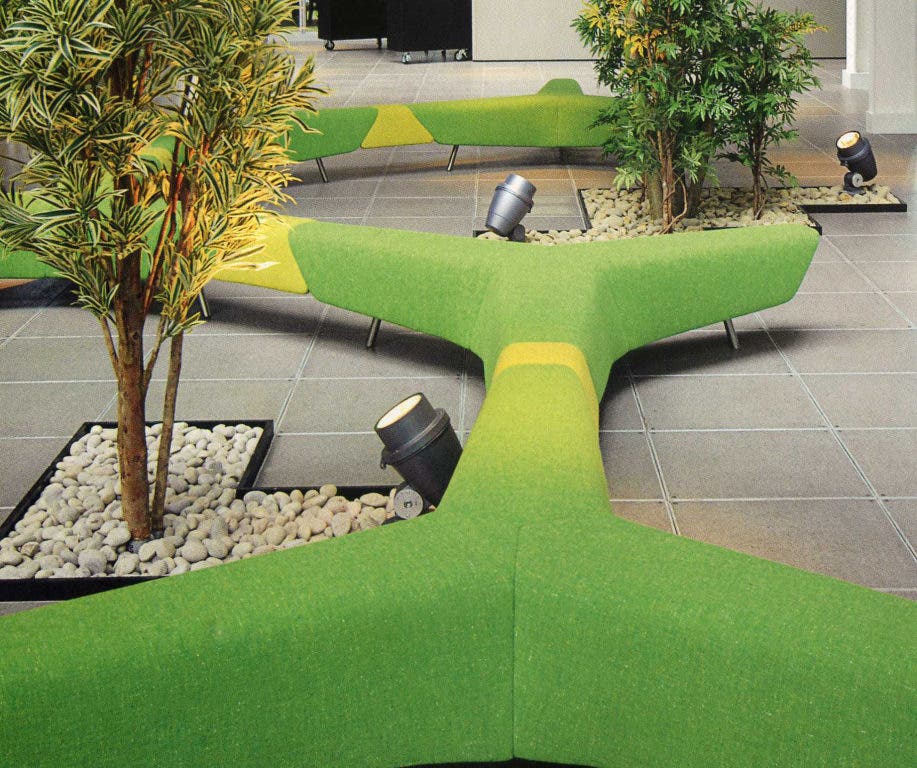
Furniture is not the only way to create these pockets of interaction and seclusion. It can also be accomplished with walls or wall dividers; even plants can serve as a way to create and subdivide an area into smaller ones.
It all goes back to knowing how the room needs to function, and who the room needs to serve, and having its elements follow in line.
It can be argued that psychology plays a big factor in the interior design of a space, whether we are aware of it or not. As humans we are much more intuitive than we often give ourselves credit for, and we do pick up nuances in the environment that lead to certain feelings in us.
Let us strive to make sure we are creating the right kind of feelings in our public and private spaces, and that we are sending the right message to those who use the space. It is only then that we can be ensured of having a successful space that we’ll be able to enjoy and use for many years to come.
If you are feeling "interior design challenged" and would like me to analyze your space and provide some useful suggestions to make your space more functional and effective, please do not hesitate to contact me. For more information please visit my website: www.fullcircleinteriorsolutions.com.