Neighbor News
New Wearable Tech Helps Sutter Solano Medical Center Care for Critically Ill Patients
Now care teams can quickly assess how a patient will respond to IV fluids, supporting safer and more informed treatment decisions
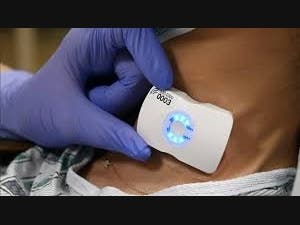
Sutter Health is expanding the use of FloPatch, the first wireless, wearable Doppler ultrasound device, across three additional Northern California hospitals: Sutter Solano Medical Center in Vallejo, Sutter’s Mills-Peninsula Medical Center in Burlingame and the Berkeley campus of Sutter’s Alta Bates Summit Medical Center, as part of its ongoing effort to enhance personalized intravenous (IV) fluid management for patients with sepsis and other life-threatening conditions. The technology helps care teams quickly assess how a patient will respond to IV fluids, supporting safer and more informed treatment decisions.
Giving IV fluids early is a standard part of treating sepsis, a life-threatening condition caused by the body’s extreme response to infection. But not all patients benefit from receiving more fluids. Studies show that nearly one-third of patients with sepsis or septic shock do not respond to additional IV fluids¹. When too much fluid is given, it can build up in the lungs and other tissues, increasing the risk of complications and extending hospital stays².
“Precision matters when caring for patients with sepsis and other critical illnesses,” said Gurpreet Dhanoa, MD, chief medical executive at Sutter Solano. “By expanding access to wearable ultrasound technology like FloPatch, we’re giving clinicians better insight into how each patient is responding in real time. This supports safer, more individualized care while helping our teams deliver the right treatment at the right moment, especially during periods of high demand like flu season.”
Find out what's happening in Vallejofor free with the latest updates from Patch.
"Sutter Health continues to demonstrate that it is a leader in sepsis care innovation," Jon-Emile Kenny, MD, chief medical officer and co-founder of Flosonics Medical. "Expanding access across the Bay Area underscores the value of dynamic assessments, which are evidence-based and improve patient outcomes. There is no one or two sizes fit all for patients with sepsis needing IV fluid; Sutter Health is setting the standard for sepsis resuscitation in California."
FloPatch is an FDA-cleared, wearable ultrasound device that gives care teams real-time information about how a patient’s heart is responding to IV fluids. The small patch can be placed on a patient’s neck and provide an assessment in minutes, then used repeatedly to check whether additional fluids are likely to help. Because it does not require specialized ultrasound training, any member of the care team can use it at the bedside, making this critical assessment accessible without delay.
Find out what's happening in Vallejofor free with the latest updates from Patch.
Tiffany Wallace, emergency department manager at Sutter Solano, said, “Patients with sepsis can deteriorate rapidly, and in the emergency department every minute counts. FloPatch gives our teams quick, actionable information at the bedside so we can make more confident decisions about IV fluids early in a patient’s care. That helps us tailor treatment, avoid unnecessary risks and focus our resources where they will make the biggest difference for patients.”
At Sutter hospitals, FloPatch is being incorporated into sepsis care protocols and broader efforts to improve how fluid decisions are made in the emergency department and intensive care unit. By helping clinicians determine if IV fluid will be effective, the technology supports safer care, and aims to reduce unnecessary ICU admissions, limit avoidable complications related to fluid overload, and optimize resource utilization.
The expansion comes as California faces a moderately severe flu season, with the Bay Area reporting some of the highest flu activity in the state.³ Studies show that sepsis is among the most common complications in flu-related hospitalizations, occurring in nearly one in five cases⁴, making tools that help clinicians optimize fluid decisions particularly critical during peak respiratory illness periods.
References:
¹ Hernández G, Ospina‑Tascón GA, Damiani LP, etal; ANDROMEDA‑SHOCK Investigators. Effect of a resuscitation strategy targeting peripheral perfusion status vs serum lactate levels on 28‑day mortality among patients with septic shock: the ANDROMEDA‑SHOCK randomized clinical trial. JAMA. 2019Feb19;321(7):654–664. doi:10.1001/jama.2019.0071
² American Hospital Directory analysis of FFY2022 Medicare IPPS (MedPAR) claims data
³ San Francisco Chronicle, "Bay Area has second highest flu levels in California," January 2026; CDC FluView, "2025-2026 United States Flu Season: Preliminary In-Season Severity Assessment"
⁴ CDC MMWR, "Influenza-Associated Hospitalizations in the United States, 2024-25 Influenza Season," September 2025