Neighbor News
Not Knowing Is Not a Defense
Yes it's the fallout from Baste Dutertes testimony on conflicts of interest against Sara Duterte

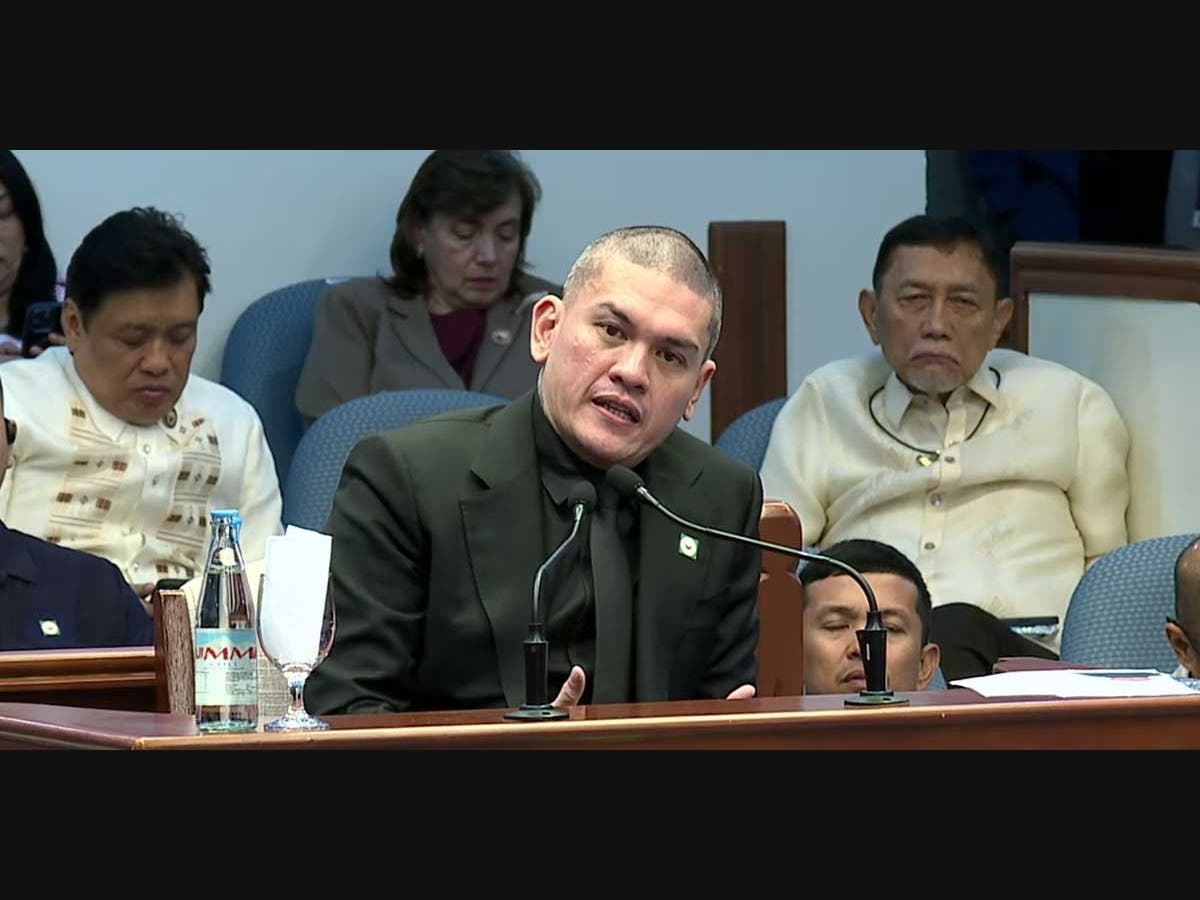
On the thirty-first day of a trial that was supposed to be about the Vice President, the Senate found itself examining her brother. Davao City Mayor Sebastian "Baste" Duterte took the stand under subpoena. By day's end, Presiding Officer Francis "Chiz" Escudero had declared him a hostile witness, ruling that the mayor holds an interest adverse to the prosecution's case. If the allegations of procurement irregularities are proven, Escudero reasoned, the mayor could face direct liability alongside his sister.
A witness compelled to testify in an impeachment trial was found to have a personal stake in its outcome. That is not a procedural footnote. It shows how tightly the Duterte family's public offices and private interests appear to have been woven together, and how little our institutions did to keep them apart.
What is established, and what is not
Find out what's happening in Vallejofor free with the latest updates from Patch.
Precision matters here, so let me be plain about the limits of what we know. No one has been found liable for anything in connection with these contracts. The Senate has not ruled on the Vice President's case. The mayor has denied knowledge of his sister's business interests, and he is entitled to the presumption of innocence. Separate investigations touching the family, including a National Bureau of Investigation inquiry into allegations of cash deliveries, are ongoing, and I will not pretend to know how they end.
But the presumption of innocence governs how courts treat individuals. It does not limit how citizens may judge the conduct of their officials or the design of their institutions. Conduct can be indefensible without being criminal, and a system can be broken without anyone having yet been convicted of breaking it. The record already in front of us supports strong judgments on both counts.
Find out what's happening in Vallejofor free with the latest updates from Patch.
What the record shows
House prosecutors told the Senate that the Davao City government awarded at least fifteen public contracts, beginning in 2022, to GenCorp Industries Inc., a food services firm. The contracts total roughly ₱33.2 million. In her Statements of Assets, Liabilities, and Net Worth for 2024 and 2025, Vice President Sara Duterte declared a financial interest in that same company.
Put those facts side by side. The second-highest official in the country disclosed, in filings under her own name, a stake in a company. That company was collecting contracts from a city run by her brother. The interest was not buried. It was on the public forms.
Then there is the second layer. According to Securities and Exchange Commission records presented by the prosecution, the mayor and his brother, Davao City 1st District Representative Paolo Duterte, are shareholders in a separate entity alongside Jaime Tan Cruz. Prosecutors identify Cruz as a major GenCorp stockholder. He is also a former special envoy appointed by their father, former President Rodrigo Duterte.
So a vice president holds an interest in a firm. That firm's major stockholder shares a business with her two brothers and once served as an envoy under her father. The firm then wins contract after contract from a city hall headed by one of those brothers.
The prosecution's evidence does not, on its own, prove that any bid was rigged or any peso misdirected. That is for the Senate, and perhaps for auditors and prosecutors, to determine. But it does show that whatever wall stood between public duty and family interest in Davao City, it was thin enough to see through. The purpose of conflict-of-interest rules is that citizens should never have to speculate about motives. Here, we are left speculating.
The defense: "I didn't know"
The mayor's answer, delivered under oath, is that he did not know. He testified that he learned of GenCorp only when it came up during the trial and that he never personally reviewed its corporate records. The contracts, he said, were evaluated by the city's bids and awards committee and signed by an aide under delegated authority. Had he known of his sister's involvement, he added, he would have blocked the deals.
Accept every word of that, and it is still a damning answer.
Consider what it asks us to believe. The chief executive of a city sees one supplier receive fifteen contracts over several years and never registers the name. He never asks who owns it. He is unaware of a disclosure his own sister filed publicly, two years running, as a senior national official. He apparently never had a conversation, in years of shared political life, that brought the company up.
Perhaps that is all true. Mayors do delegate, and no one reviews every purchase order. But delegation transfers tasks, not responsibility. A mayor answers for whether the machinery he oversees can detect the single most obvious red flag in public procurement: a relative's stake in a bidder. If the machinery could not catch it, he ran a city with no functioning safeguard against the most elementary conflict there is. If it caught it and no one told him, he presides over an office where bad news does not reach the top. If he was told and looked away, that is worse still. I do not claim to know which of these is true. What I can say is that each of them is an indictment of his stewardship, and the defense offers no version in which he comes out well.
Consider also the sentence the mayor chose. He would have blocked the deals had he known. That is a concession, and a revealing one. He is not arguing that a sibling's stake in a city supplier is unobjectionable. He is arguing that he was kept in the dark. That is a claim about his knowledge, not about the propriety of what happened, and it invites the obvious question: in a city government he controls, whose job was it to know?
If the mayor means what he said, the remedy is simple and within his power. He can open the files. Saying "I would have stopped it" costs nothing. Proving it costs something, and the public should watch whether he is willing to pay.
What "hostile witness" actually signals
It is tempting to read Escudero's ruling as courtroom theater. It is more than that.
The designation lets the prosecution treat a witness more aggressively. But the reasoning is the important part. The presiding officer did not say the mayor was lying. He said the mayor's interests are adverse, meaning that the facts that could sink his sister could also reach him. The man presiding over the Senate's proceedings looked at the evidence and concluded that the mayor is potentially a co-subject of this case, not a bystander to it.
That undercuts the family's preferred story. For months, allies of the Vice President have insisted that the impeachment is a political weapon aimed at one woman. It is harder to sustain that account when the evidence presented begins to implicate a second sitting official, whose only link to the original charges is that his city signed the invoices.
The "it's all about 2028" argument
The mayor also offered a broader explanation. In his perception, he said, the impeachment complaint exists to keep his sister from running for president in 2028.
Political motive in impeachment is real, and Duterte allies are right that a democracy should be wary of legal machinery used to remove rivals. Senators are politicians, and 2028 is on everyone's mind. I do not wave the argument away.
But look at what it does and does not do. It speaks to why the case was brought. It says nothing about whether the documents are genuine. The SALNs say what they say. The SEC filings list the shareholders they list. A prosecution can be politically convenient and factually sound at the same time, and the two are not in tension. Impure motives do not un-file a corporate record.
The argument also proves too much. If every act of scrutiny directed at a Duterte is part of a plot, then no evidence can ever count against a Duterte, because the plot explanation is always available. A claim that no fact can refute is not a defense. It is a refusal to make one. The honest form of the persecution argument would say that the case is convenient for those pursuing it, and so the evidence deserves especially careful examination. I agree. But careful examination means examining the evidence, not gesturing at the prosecutor's motives and stopping there.
The Plan B problem
All of this lands in a larger political context. Analysts and opposition lawmakers have described the mayor as the family's contingency candidate for 2028, a "Plan B" should the Vice President be removed or disqualified. Critics point to his elevation to the presidency of PDP-Laban and the creation of the RAGE Coalition as signs of a national platform under construction. He turns forty in November 2027, making him eligible to run in May 2028. He has said publicly that he is tired of it all and has dismissed a national run.
Take that denial at face value. The question is still being asked, and it matters, because a person who might seek the presidency is a person whose judgment the public is entitled to assess. Here is how he behaved when his family's business interest surfaced in his own city: he said he did not know, and he pointed to his aide and his committee. That is a manager's reflex, aimed at protecting his own position. It is not the reflex of an executive who takes ownership of what happens on his watch.
And a Duterte candidacy would not arrive unencumbered. It would carry the Vice President's sharp decline in public standing over the handling of public and confidential funds. It would carry the legal pressure on the former president, at home and abroad. And it would carry allegations now under investigation, which deserve especially careful handling. The NBI is reportedly examining claims that suitcases holding more than ₱2 billion in cash were delivered to members of the family, with witnesses naming Paolo Duterte, Sara Duterte, and Rodrigo Duterte as recipients. Those are allegations. No finding has been made, and the persons named have every right to contest them. The Marcos administration has publicly challenged the family to answer them. The responsible position is to withhold judgment on the merits while recognizing that allegations of that scale do not stay in their own lane politically. Voters will remember them when any Duterte appears on a 2028 ballot, proven or not.
That is the hazard of a dynastic strategy. A family name is an asset when things go well. When they do not, every member inherits the whole ledger.
The real scandal is the design
I have spent much of this column on individuals, but the deeper failure is structural, and it should trouble Filipinos of every political persuasion.
Our system for catching conflicts of interest relies far too heavily on the honor of the officials it is supposed to police. Look at how the safeguards failed or never existed. A vice president disclosed a business interest, as she was required to, on a public form. Nothing followed. No agency cross-checked that disclosure against government contracts. No procurement office was required to compare its winning suppliers against the declared interests of local executives and their families. The information sat in one government cabinet while contracts were signed in another, and it took an impeachment trial to bring the two together.
If a conflict of this size can sit unexamined for years, the scandal is larger than one family. The same gap exists for every mayor, governor, and legislator with relatives in business. Most of them are not Dutertes and will never see a Senate trial. The absence of a check protects the honest and the dishonest equally, which is exactly why the dishonest prefer it.
Whatever the Senate decides, here is what this moment should produce.
First, mandatory cross-referencing. Every local procurement office should be required to check bidders and winning suppliers against the disclosed interests of the local chief executive, members of the bids and awards committee, and their relatives within a defined degree. This is a database problem, not a moral one, and it is solvable.
Second, public beneficial-ownership records. The link between GenCorp's stockholders and the mayor's and congressman's business partner surfaced through SEC filings introduced by prosecutors. It should not take an impeachment to find it. Ownership information on government suppliers should be searchable by anyone.
Third, recusal with teeth. If an official's relative has a stake in a bidder, that official should be walled off from the process entirely, and violations should carry consequences that do not depend on proving corrupt intent.
Fourth, a full audit. The Commission on Audit and the Ombudsman should examine every GenCorp contract with Davao City, from the first in 2022 forward, and publish the results. If the contracts were clean, the audit will say so and the mayor will have earned real vindication. If they were not, the public has a right to know.
What the mayor can still do
The mayor has an opening if he wants it. He can stop treating this as an attack to be survived and start treating it as a question to be answered. He can release the contract files. He can name the aide who signed and the committee members who evaluated the bids, and let them explain their process. He can request the audit rather than wait to have one imposed. He can tell the public what he has changed since learning of his sister's interest to make sure it cannot recur.
Those steps are what an official does when he believes his own testimony. So far, the public has received a denial, a delegation, and a theory about 2028. Politicians who stonewall generally lose more than those who open the doors, even when what lies behind the doors is unflattering. A mayor who invites scrutiny of his procurement history looks like someone with nothing to hide. A mayor who invokes conspiracy and delegated signatures looks like someone waiting for the news cycle to move on.
The verdict that matters
The Senate will decide the Vice President's fate on the charges before it, and it should do so on the evidence and the law. Separate bodies will weigh the other allegations touching the family, and they should be allowed to finish their work without prejudgment from anyone, including columnists.
But a second question is already before the public, and it does not need a two-thirds vote. How much distance should there be between those who hold public power and those who profit from it?
The Duterte family's answer, as this trial has displayed it, seems to be: not much. A sister with a stake in a supplier. A brother running the city that pays it. A father's former envoy connecting the parties. A set of disclosures that no institution was positioned to notice, and a defense that amounts to saying no one told the man in charge. All of that may prove lawful, or it may not. Either way, it is not a standard a democracy should accept from anyone, whether the surname is Duterte, Marcos, Aquino, or Estrada.
The mayor says he did not know. Perhaps so. But in public office, ignorance of what your own government is doing is not an alibi. It is the thing you were elected to prevent.